GZN News

The Covid infection numbers are rising rapidly in Germany, and our Minister of Health has forecast that the peak of the Omikron wave will probably be reached in mid-February - i.e. about 3 weeks before the courses should start. This means that although we can probably expect the number of infection...

Nussaibah Raja-Schoob and Paulina Nätscher, together with colleagues from the UK, South Africa, Brazil and India, recently published a paper highlighting the effects of colonial history and socio-economic factors on sampling biases in the fossil record. The study shows that 97% of fossil data colle...

We are excited to share the Diversity Dynamics and Crisis in Paleontology speaker series with you all! "Thank you" to the fantastic speakers and to the organisers of the speaker series Nussaibah Raja-Schoob (Erlangen) and Emma Dunne (Birmingham) as well as Jansen Smith (Erlangen). Here’s our YouTub...

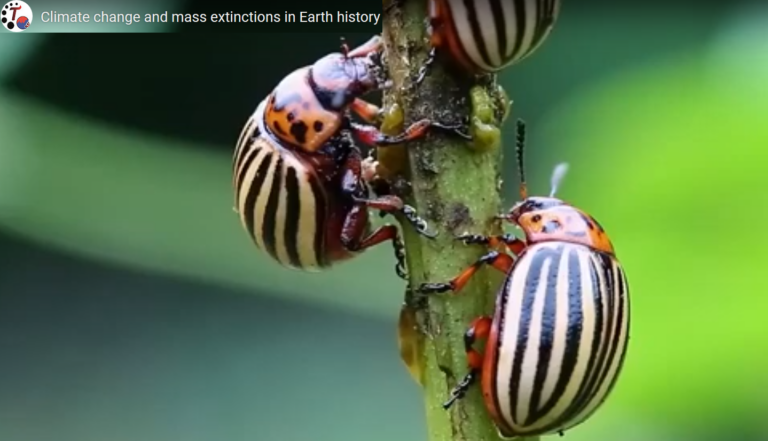
TERSANE proudly announces its first video release. This is part 1 of 3 videos. Stay tuned for the rest! Part 1 of the mini series on the work of the TERSANE research unit on Temperature related stresses as a unifying principle in ancient extinctions. This video introduces past episodes of catast...

Every second year our institute carries out a field trip to Gotland (Sweden). Photos from this year's excursion led by Rachel Warnock and Axel Munnecke can be found here. The next trip to Gotland will be in 2023.

5 – 9th September and 12 – 16th September 2022 Nobody can reliably predict how the pandemic will develop over the next few months, but - thinking positive! - it looks like we can offer two “Flügel-Courses” on carbonate microfacies in September 2022. We are extremely pleased! The courses will tak...

Johannes Barth from GZN took part in an interview by Bayerischer Rundfunk about flooding and the concept of sponge city.   https://www.br.de/mediathek/video/besonderer-hochwasserschutz-nuernberg-will-schwammstadt-werden-av:6102e116ac59d700075f7c31