
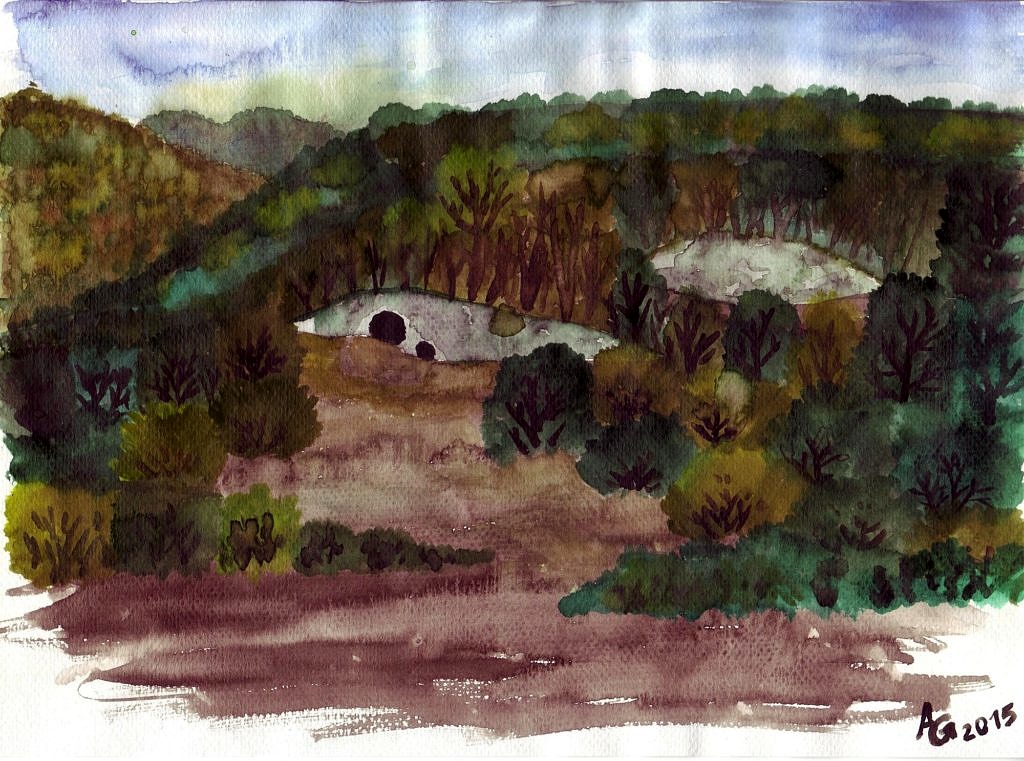
The “Excavation Hunas” – Archaeological and palaeontological research in the “Steinberg-Höhlenruine” near Hunas
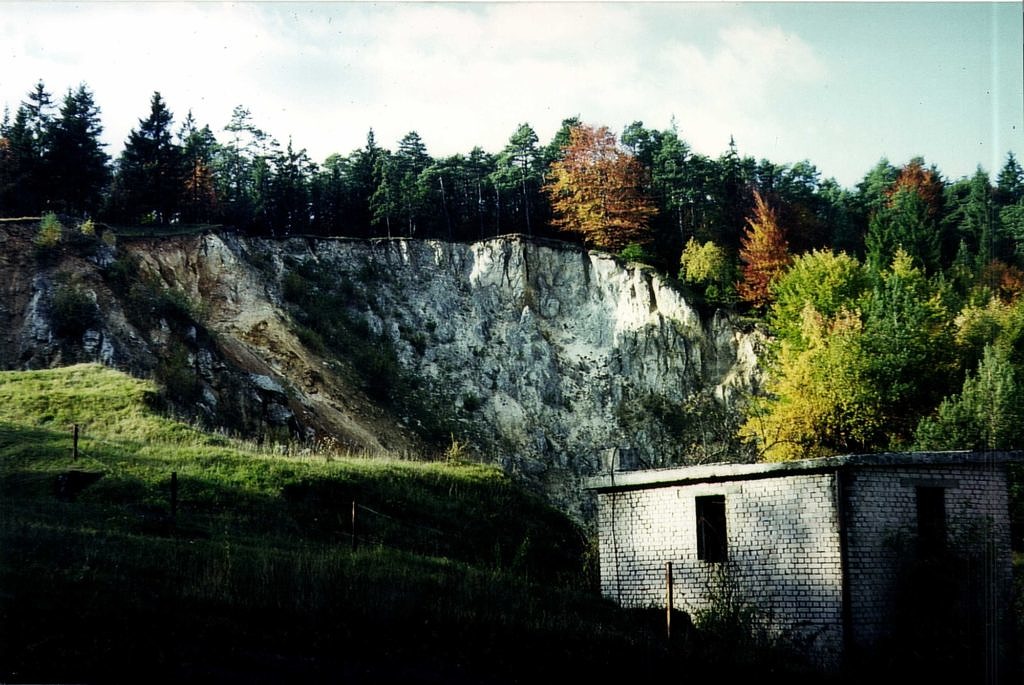
The “Steinberg-Höhlenruine” is located in a quarry of the company Sebald Zement GmbH on the eastern slope of the Steinberg above the small hamlet of Hunas, district of Pommelsbrunn (Nürnberger Land, Middle Franconia). It is located on private property and is no longer accessible.
Since work began in 1956, remains of over 140 animal species have been recovered. Besides mammals, birds, fish, amphibians, reptiles and molluscs are also represented. Among the most important finds include representatives of the primates: in 1986, the molar of a Neanderthal was recovered, as well as more than 30 remains of macaques spread over several years. The presence of the Neanderthal is also attested by numerous stone tools.
- Discovery in 1956 by Prof. Dr. Florian Heller
- Excavation campaigns 1956-1964, 1983-2012
The site was discovered as early as 1956 by Prof. Dr. Florian Heller, Institute of Palaeontology, FAU Erlangen-Nuremberg. This was followed by a first excavation phase from 1956-1964 under the direction of Florian Heller. These 9 excavation campaigns were supported by the Institute of Palaeontology and the Institute of Prehistory and Early History of FAU Erlangen-Nuremberg as well as the quarry owner. The recovered archaeological and palaeontological finds were evaluated and published in a monograph in 1983. After a long break, work was resumed in 1983 because the cave space was acutely endangered by quarrying activities. Annual excavation campaigns of initially up to 6 months were carried out from 1983 to 2012. They were led by the Institutes of Palaeontology (Prof. Dr. J. Th. Groiß) and of Prehistory and Early History (Prof. Dr. L. Reisch) at FAU. In the early years, funds to finance the excavation campaigns could still be organised by the DFG and the district office, but in the 1990s the budget became so tight that a support association had to be founded in 1998 to finance the excavation mainly through donations. The quarry owner also covered a small part of the costs each year.
The excavation teams always consisted of experts from the FAU as well as students from Germany and abroad and committed laymen from the region. The excavation team was led by Dr. Wolfgang Weißmüller († 2005) in 1983, Brigitte Kaulich M.A. († 2006) from 1984 to 2006, and Dr. Brigitte Hilpert from 2006 to 2012.
The former cave room is completely filled with sediments. The progressive degradation of the the rock roof and the cave walls, the entrance finally closed up. The cave was no longer recognisable as such. The full extent of the cave room and the location and size of the entrance are unknown, as parts of the cave were destroyed by quarry operations. Without the quarry, however, the cave would not have been discovered either.
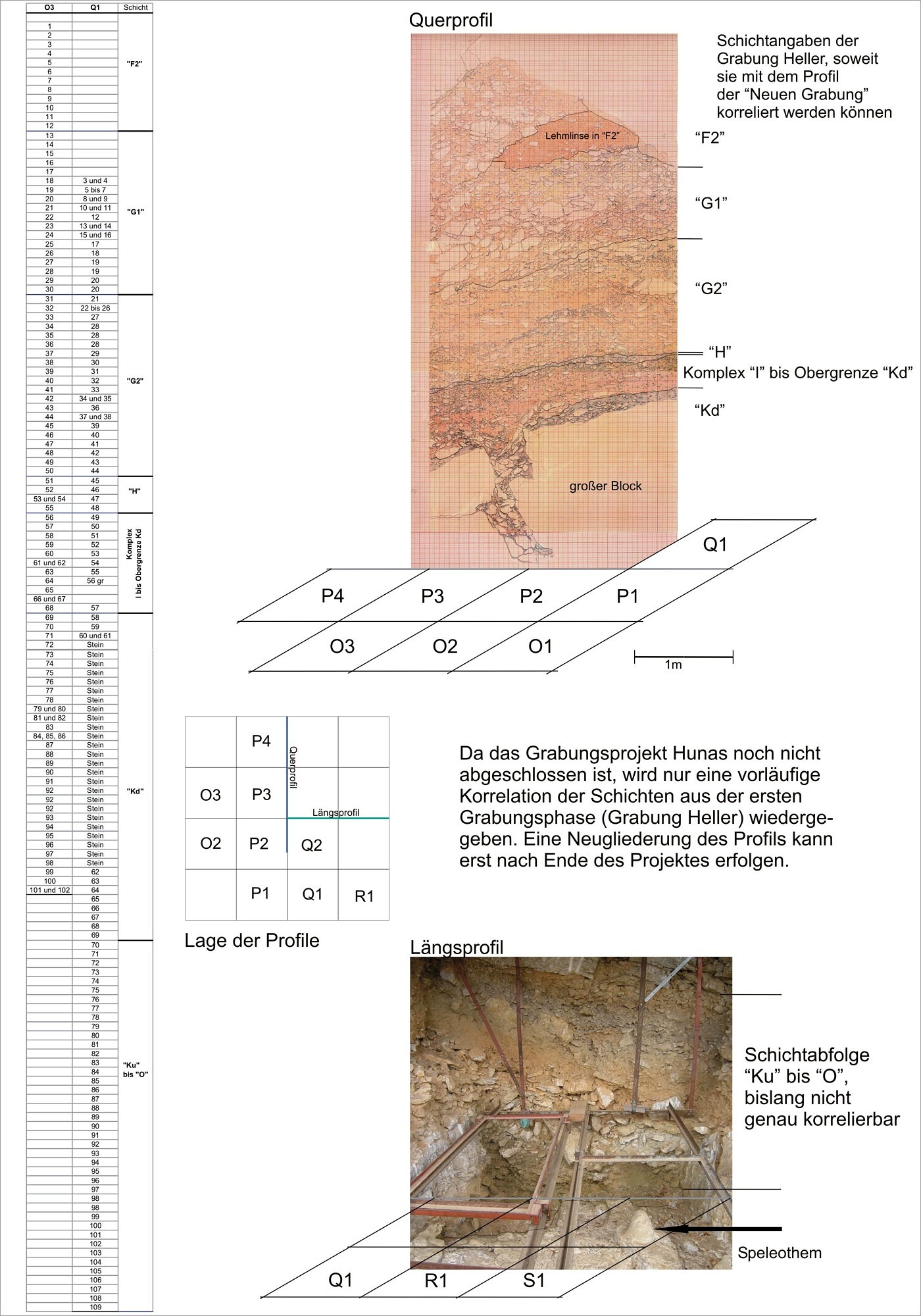
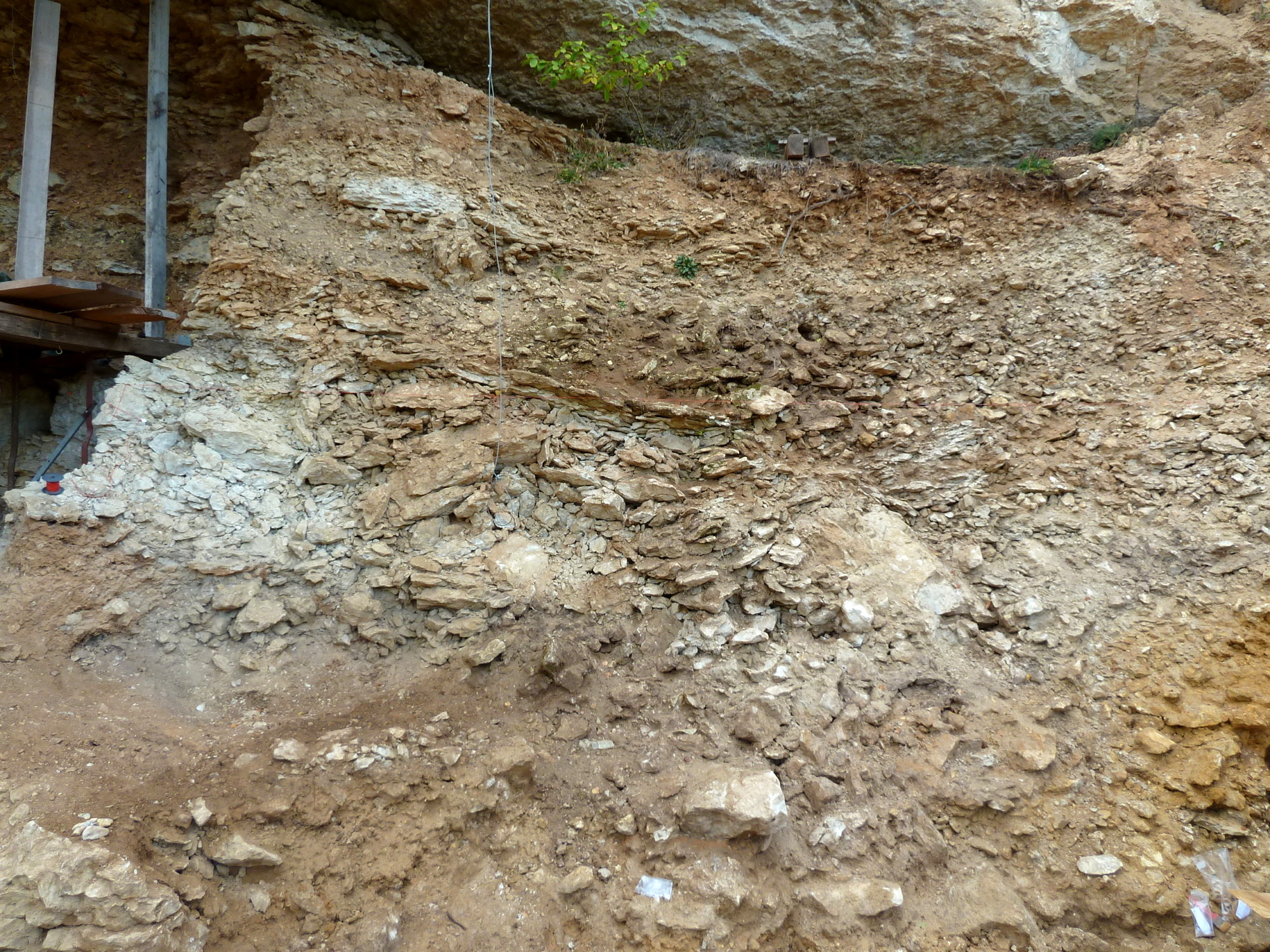
About 12 m of the sediment fill have been investigated. The sequence shows a succession of differently composed sediments. The bulk of the sediment consists of dolomite sand as well as dolomite rubble of different sizes. The colour of the sediment varies between brown, grey and yellowish tones.
Hominidae
The most remarkable find in the cave ruins is a Neanderthal molar. In Bavaria, there are only two other sites where teeth and skeletal remains have been found: the Klausennischen and the Sesselfelsgrotte.
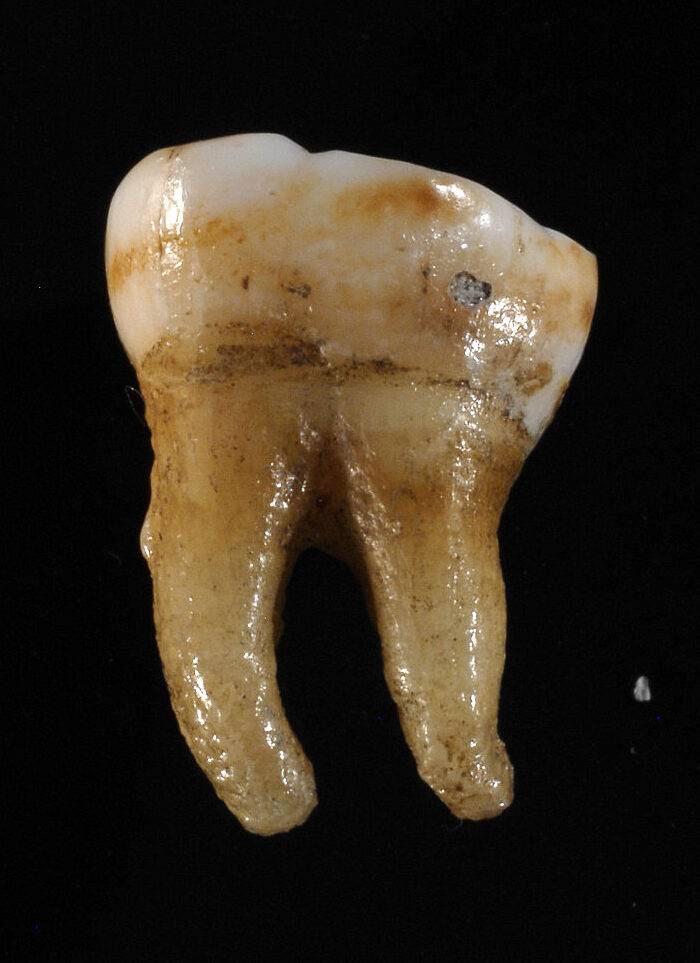
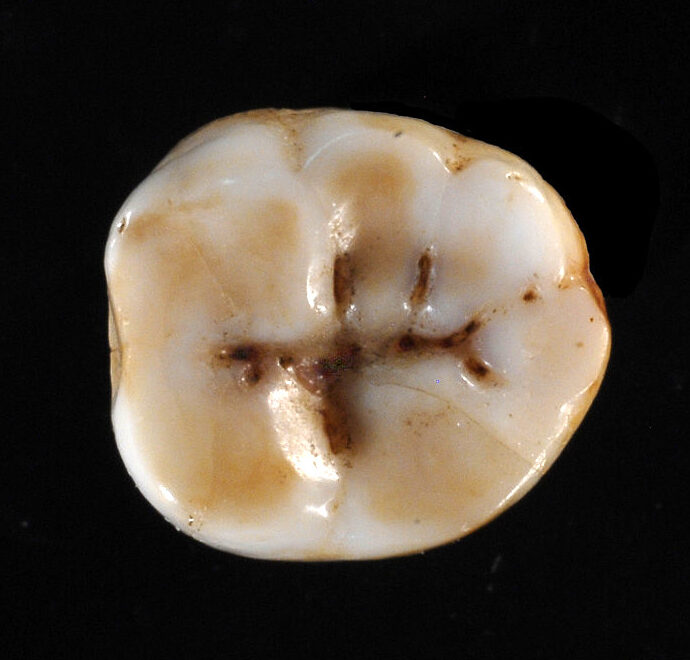
A notable feature of the Hunas excavation is the well-preserved, isolated human molar, which was discovered in 1986 during work on the cross-section. The tooth comes from the base of Layer F2, which is part of a long stratigraphic sequence containing both faunal and archaeological finds (Mousterian). The tooth has been identified as a right, possibly third lower molar. Characteristic parameters such as crown and root morphology, enamel patterns, enamel thickness, tooth size and indices, as well as X-ray data, suggest that the tooth from Hunas belongs to a Neanderthal. This conclusion is further supported by data from the paleontological and archaeological finds in Layer F2.
Ursidae
by: Dr. Brigitte Hilpert
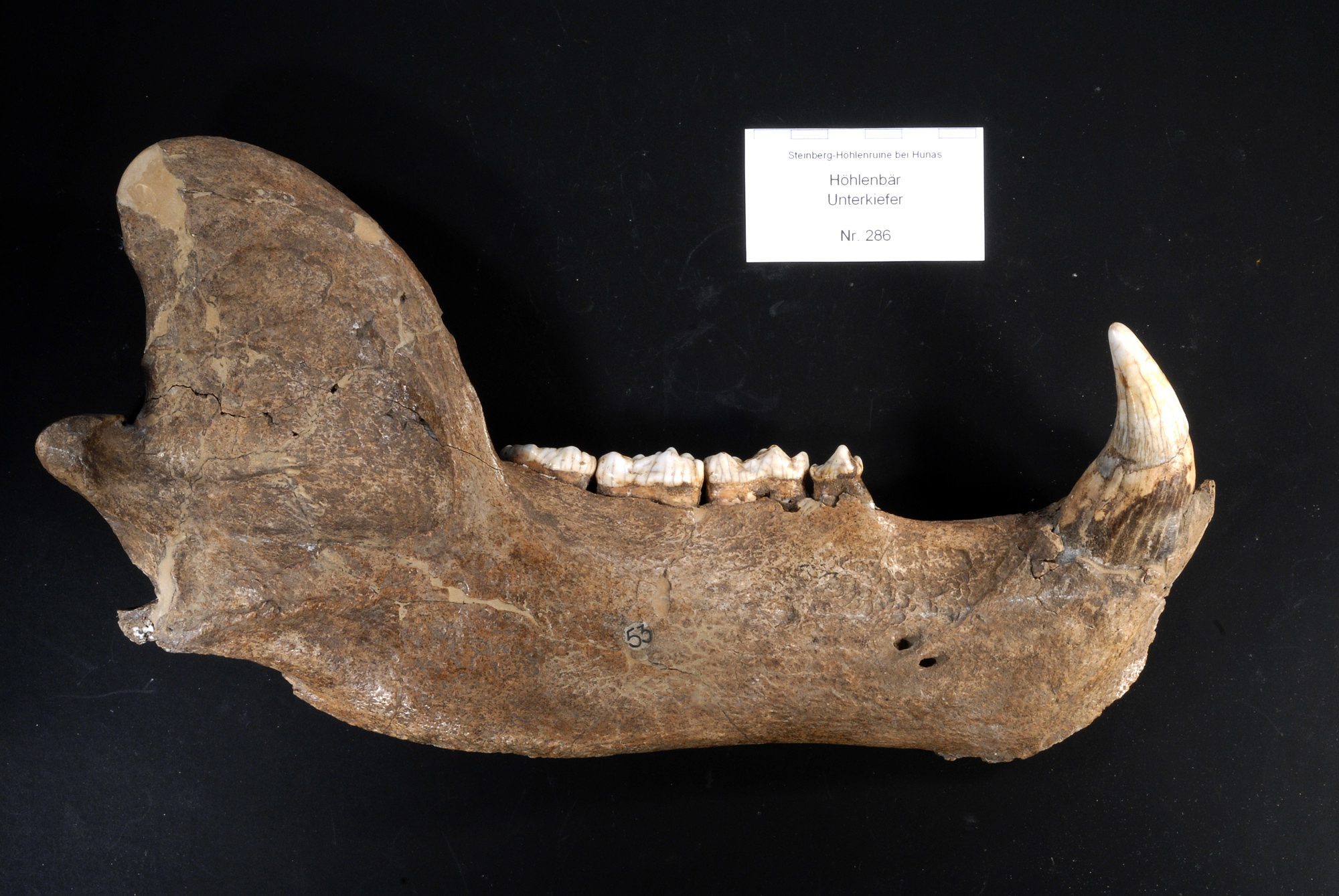
The results of the biological and taphonomic examinations of the skeletal elements of the bears from Hunas show that the den was mainly used as a hibernation and litter den. Most of the cubs died during their first hibernation. The few pathological findings indicate that some bears may have fallen victim to predators. The cave was used more by bears during the period of stratum D-F than during the period of strata G1-M (or O), at least the quantities found in D-F are much larger than in G1-M.
The metric analyses showed that the bear was a normal, average-sized cave bear. The structure of the occlusal surface of the teeth is more simply built than in most bears from comparably old Austrian sites, but resembles bears from Upper Pleistocene sites of the Franconian Alps. The morphological features of the rest of the skeleton largely correspond to those of Ursus spelaeus.
Besides the finds of Ursus spelaeus, some remains of Ursus arctos could be identified.
Fish, amphibians, reptiles
by: Dr. Gottfried Böhme, Museum für Naturkunde – Leibniz-Institut für Evolutions- und Biodiversitätsforschung an der Humboldt-Universität zu Berlin
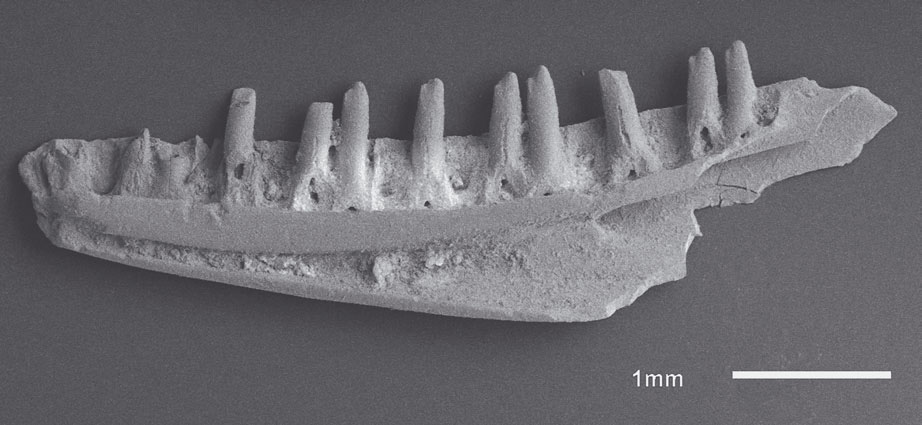
The ecological interpretation on the basis of amphibian and reptilian skeletal remains from recent excavations in the Pleistocene deposits of Hunas allows a more precise account of climatic developments during their sedimentation than was possible so far with the material excavated at the locality by Heller. The basic tendency of the climatic development (fluctuations from moderate to cool climate), as pointed out by Groiss in 1983, is confirmed. The results presented here clearly show an early to high glacial sequence, rather than a Late glacial sequence. Interglacial climate conditions are still demonstrable at the base of the sequence, directly above the sinter crust.
Based on the detailed procedures of sampling and due to the thickness of the sections, it was possible for the first time on the basis of the preserved skeletal remains to follow the development of the fish- and herpetofauna over an extended period of an early glacial period. To some extent surprising results were obtained by comparison with our previous knowledge about the requirements and distribution of recent forms. This applies in particular to the duration of the occurrence of Anguis fragilis and Coronella austriaca during the early glacial. The herpetofauna became depleted during the early glacial under the influence of climatic conditions, a process which can gradually be traced on the example of the sequence at Hunas. Thus, better interpretations of climatic history possible with amphibian and reptile remains are also applicable for other find complexes.
The development of the herpetofauna in the central European upland zone now shows a more differentiated picture for the transition from early to high glacial climatic conditions, which can be characterised as follows: The succession begins with an interglacial phase characterized by the presence of Elaphe longissima. Early glacial faunas follow with phase 1 including Triturus vulgaris, Bufo bufo, Rana arvalis, Rana temporaria, Anguis fragilis, Lacerta vivipara, Coronella austriaca and Vipera berus, and phase 2 including Rana temporaria, Anguis fragilis, Lacerta vivipara and Vipera berus. The high glaciation fauna contains exclusively Rana temporaria. No substantial change could be determined over the same period concerning the fish fauna, which is documented only to a relatively small extent for the sequence at Hunas. The species present are characteristic for the salmonid region of fluvial environments (Salmo trutta, Thymallus thymallus, Phoxinus phoxinus, Lota lota, Cottus gobio). Thus it is confirmed that the fish fauna from these river systems is only marginally affected by climatic changes.
Pollen
Cooperation with Dr. Maria Knipping, Universität Hohenheim, Fg. Allgemeine Botanik
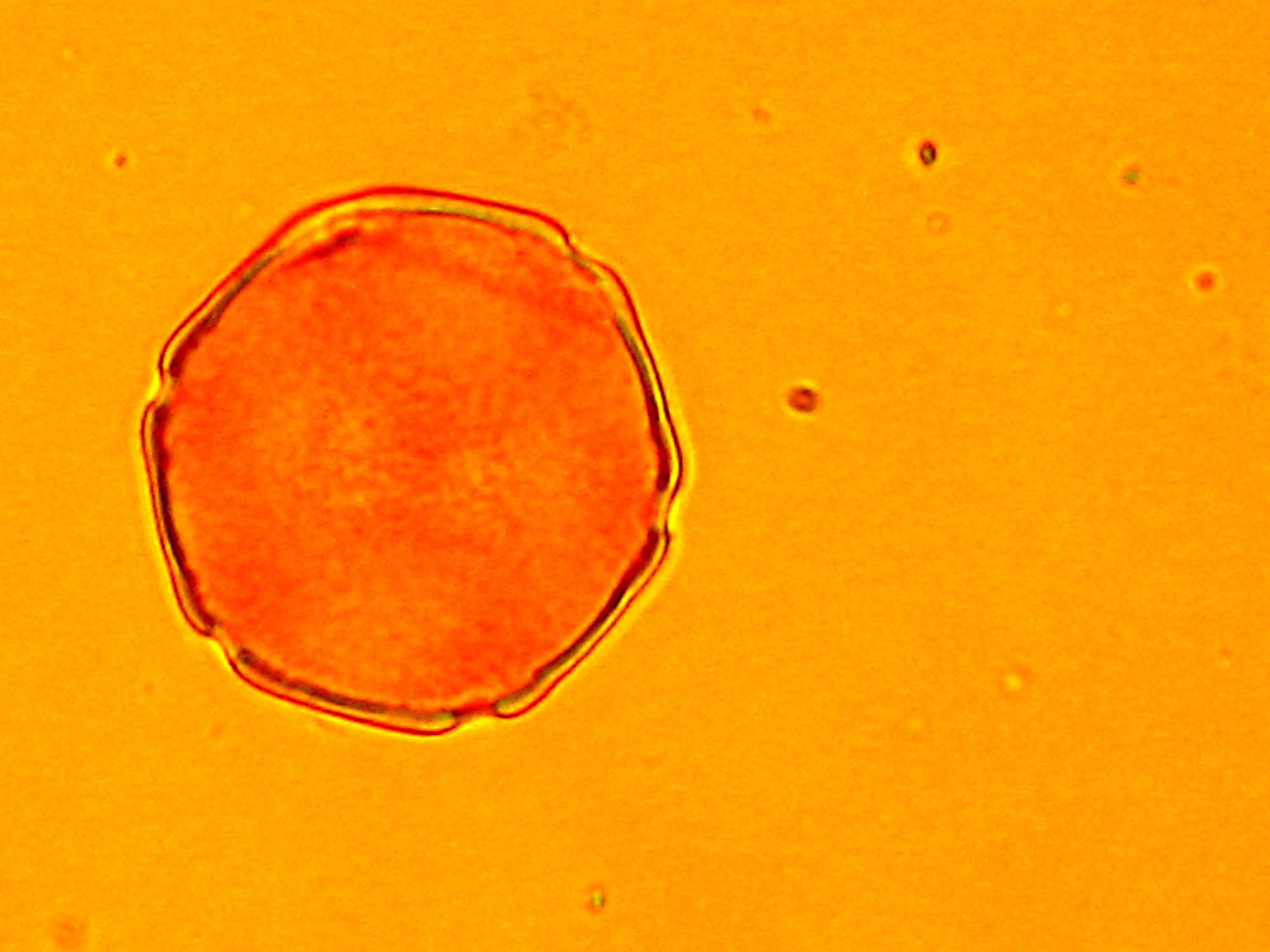
In addition to earlier botanical studies at Hunas (Heller 1983, Peschke unpublished), anthracological, macrorest analytical, and pollen analytical studies were conducted. From the middle of Layer L, above a sinter layer, a collection of charcoal was identified as Taxus. This must have been a larger piece of yew wood. Taxus indicates temperate, rather humid climatic conditions.
Five mineralized fruit remains from the N layer were identified as fragments of Lithospermum purpurocoeruleum/officinale. Both possible species of this stone plant require warm summers and are typical of open forests and forest edges.
Three sinter samples from the same sinter layer (Layer P) as the stalagmite dated to 2003 (HuSi2) were analyzed for pollen. Pollen preservation was often good, but moderately to heavily corroded pollen grains were also present. Small pollen clumps of Alnus, Taxus, and Cichoriaceae suggest a source of pollen that was not solely wind-borne. The varying abundance of certain pollen types (e.g., Apiaceae) in the samples also points to anthropogenic/zoogenic sources, which can significantly influence the composition of the pollen spectra. The total proportion of woody plant pollen is 65%, but varies greatly among the individual samples. Alnus dominates the woody plant spectrum, followed by Taxus and Betula. Thermophilic taxa (Corylus, Quercus, Tilia, Ulmus, Carpinus, Fagus, Hedera) are present in smaller proportions. Particular attention must be paid to the presence of Pterocarya in two samples.
The pollen spectra found and the local occurrence of Taxus and Lithospermum suggest thermophilic conditions during and after the formation of the sinter. According to the new U/Th dating of the HuSi2 stalagmite, the sinter must have formed during the Early Würm. Unusual compared to pollen sequences from this time period (Grüger 1979, Müller 1997, 2001, Beaulieu & Reille 1992) are the high proportions of thermophilic woody plants, particularly the occurrence of Taxus, Pterocarya, and Fagus, as well as the low proportions of Picea and Pinus. The different deposition mechanisms in caves compared to pollen sequences from bogs and lakes could be responsible for this. However, this cannot explain the occurrence of Pterocarya; according to current knowledge, this genus is no longer present in the Early Würm and Eem. From a purely vegetation-historical perspective, a correlation with a warmer phase older than OIS 5 (Early Würm and Eem) (e.g., OIS 7 from Meikirch II, Preusser & Schlüchter 2004) seems more likely.
Herpetofauna
Cooperation with Prof. Dr. Johannes Müller, Museum für Naturkunde, Leibniz-Institut für Evolutions- und Biodiversitätsforschung an der Humboldt-Universität zu Berlin.
Ecological changes in specific taxa or communities over time, e.g., in Rana temporaria (common frog).
Small mammals
Cooperation with Chris Baumann, University Tübingen, and Dr. Lutz Maul, Senckenberg Forschungsinstitut, Forschungsstation für Quartär-Paläontologie Weimar.
Hunas is one of the most prolific Pleistocene sites in the Bavarian region, though its age remains a subject of controversy. Additional finds have provided new evidence for the ongoing debate regarding its stratigraphy and paleoecology. These finds originate from strata that most likely correlate with the Heller Strata from G2 to M. The various arguments (morphometric data, ecological changes, etc.) support a classification of the finds within the Eemian (Riss/Würm) interglacial period through the early Weichselian (Würm) glacial period. However, since the SDQ values of Arvicola used for dating originate only from the middle section of the analyzed profile, the chronological conclusions derived from them (classification into the Eem) can only apply to this section. However, this does not yet resolve the question of the age of the lowest layers at Hunas. To address this, further investigations must also analyze these deeper layers. The same applies to the timing of complete filling: here, analyses must still be conducted in other profile columns where the younger sections (above Complex G2) are sufficiently documented by faunal remains.
Based on the fossil remains available to date, these are clearly glacial-age faunas. Another problem lies in the lack of clear correlation between the various series and profile sections from the excavations beginning in 1983 and Heller’s strata as described in the 1983 monograph. This correlation is, however, essential for comparing the findings of different authors—something that, unfortunately, has not been done in the past. This study represents the first attempt to do so: the series from survey squares Q1, S2, and N2 were correlated with Heller’s strata, and the faunas were compared with one another. However, this was not possible for all survey squares, as some of the documented profiles were too far apart. Finally, it should be noted that some of the most informative species are not present in statistically sufficient numbers. This applies above all to dating based on the SDQ value of the genus Arvicola, which in principle provides reliable information. In the analyzed material, there are too few finds—six measurable M1s—which, moreover, originate exclusively from a single profile section. To obtain reliable data, however, statistically evaluable quantities (n > 20) should be examined from at least three different profile sections.
Herbivora
by: Dr. Brigitte Hilpert
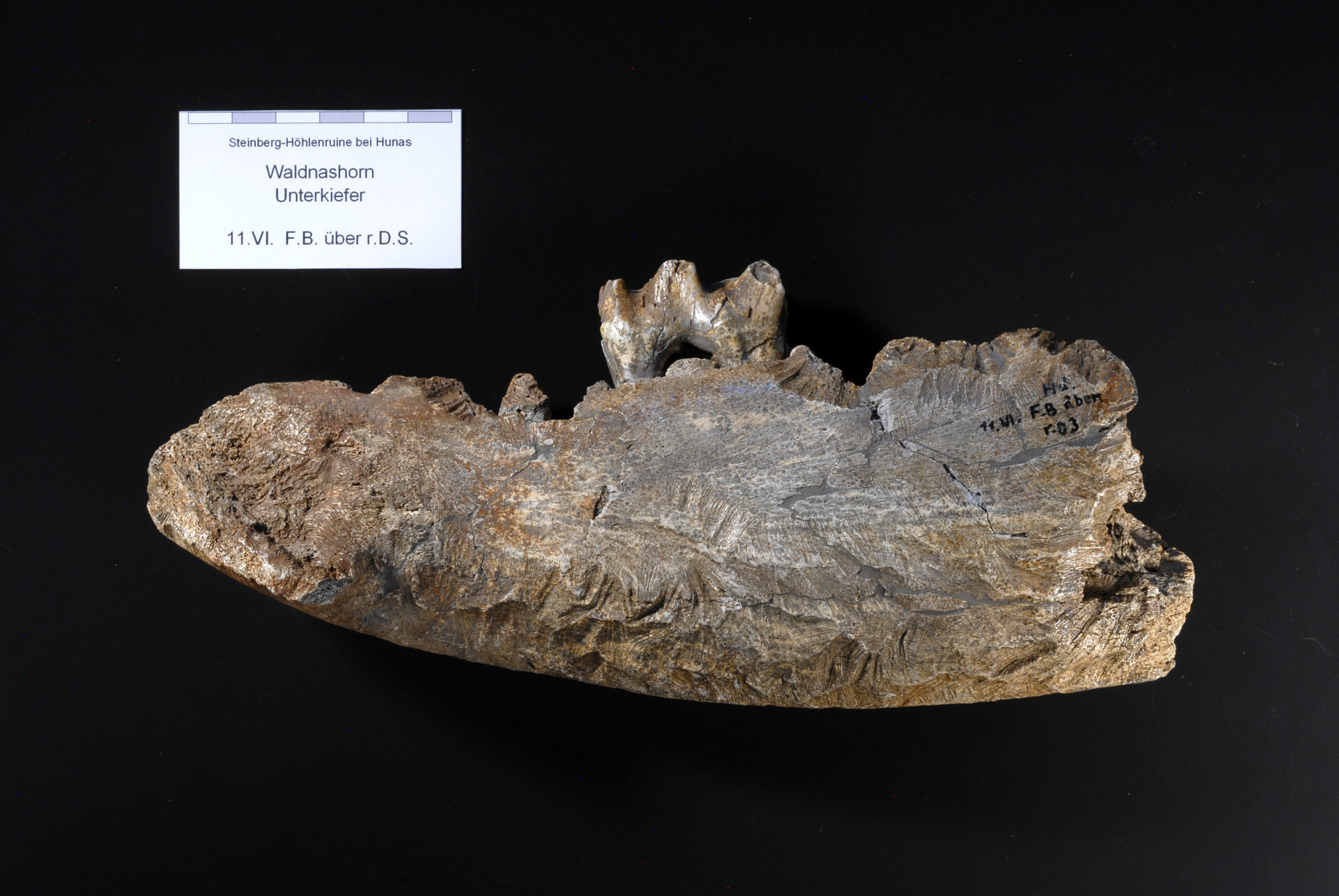
The finds from the families Cervidae, Bovidae, Suidae, Equidae and Rhinocerotidae offer the possibility to study interactions between predators and prey, as well as taphonomic processes in the cave and possible interactions between Neanderthals and hunting prey. These species can also be used for climatic reconstructions.
Carnivora (without Ursidae)
by: Dr. Dieta Ambros
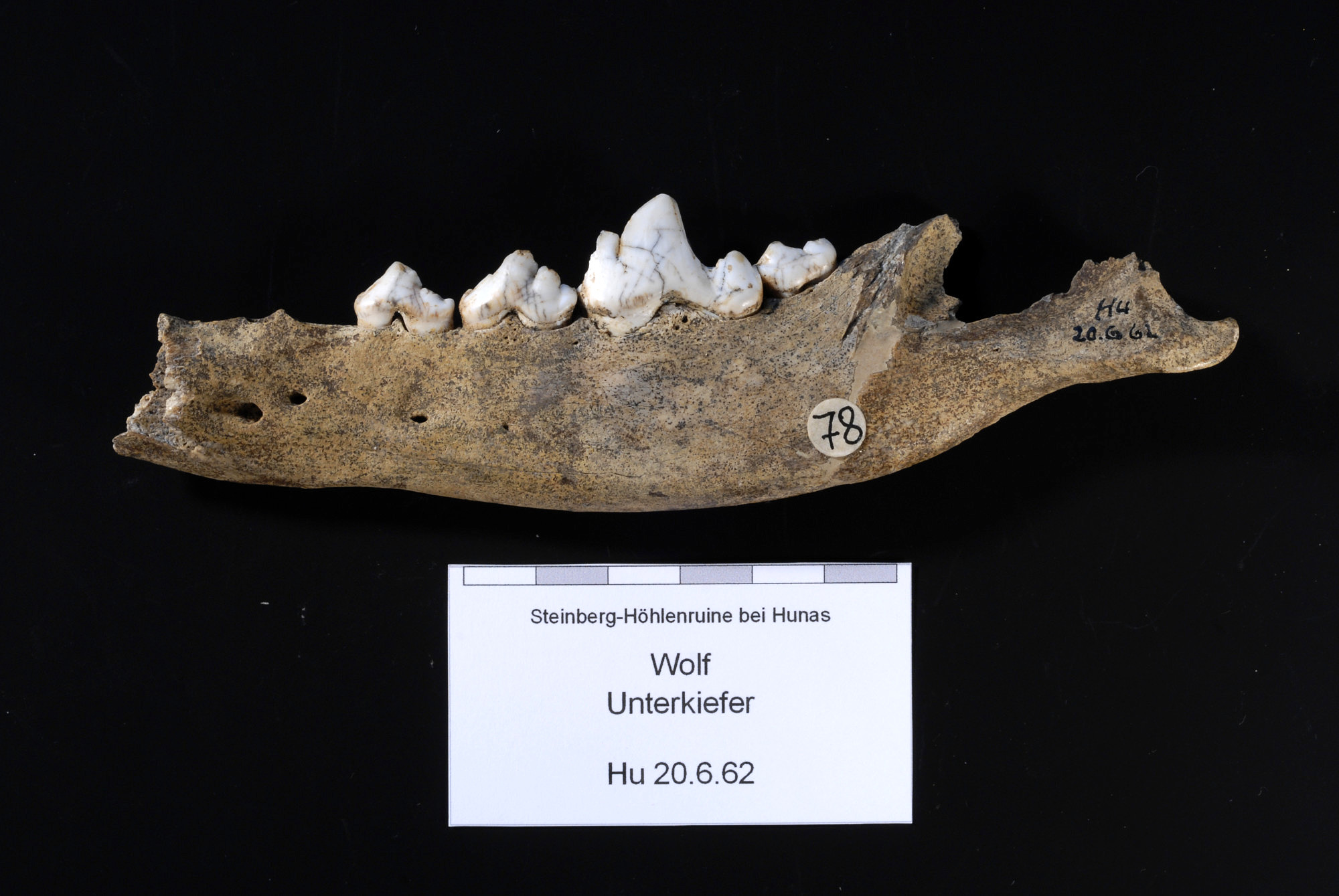
The finds from the families Canidae, Hyaenidae, Felidae and Mustelidae offer the possibility to investigate interactions between predators and prey. The focus is also on a more precise phylogenetic-temporal classification. The metrical deviations observed so far can probably be explained by the warmer conditions compared to most of the sites of comparison. For this purpose, a revision of Heller’s naming is planned, as he assumed a much earlier chronology.
Cooperation with Institute for Pre- and Protohistory, Department for Classical World an Asian Studies, Friedrich-Alexander-Universität Erlangen-Nürnberg (FAU) (Prof. Dr. Thorsten Uthmeier) and Dr. Aviad Agam ( LTFAPA Laboratory, Department of Science of Antiquities, Sapienza University of Rome, Italy)
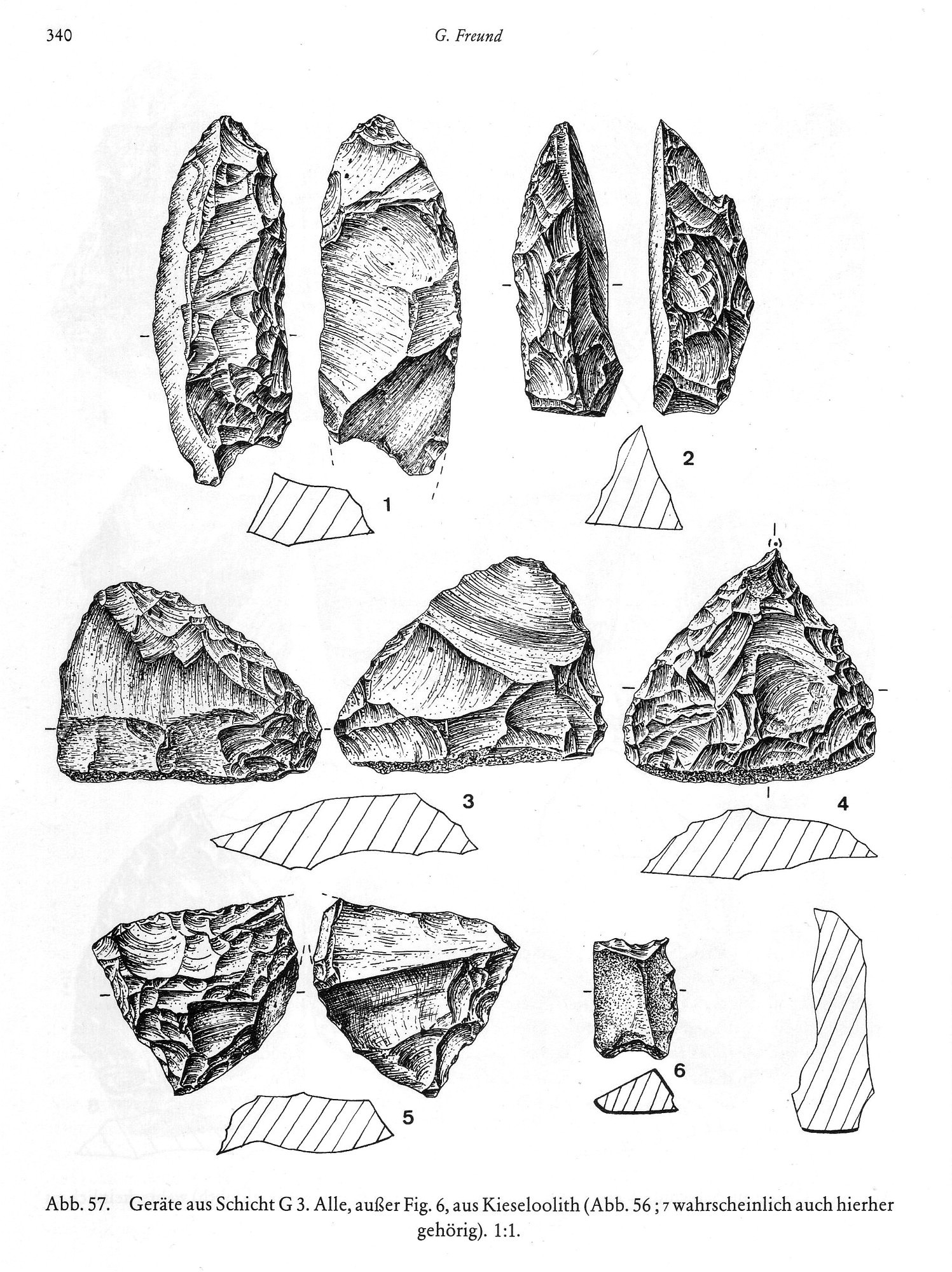
Stone tools are not only suitable as evidence of human presence or for stratigraphic purposes. They also allow further, interesting analyses. In cooperation with Dr. Aviad Agam, the question was pursued whether and in what way the Neanderthals used fire.
Cooperation with Dr. J. Fietzke, GEOMAR Helmholtz-Zentrum für Ozeanforschung Kiel and Dipl.-Geol. Matthias Lopez-Correa, GeoZentrum Nordbayern, Lehrstuhl für Paläoumwelt.
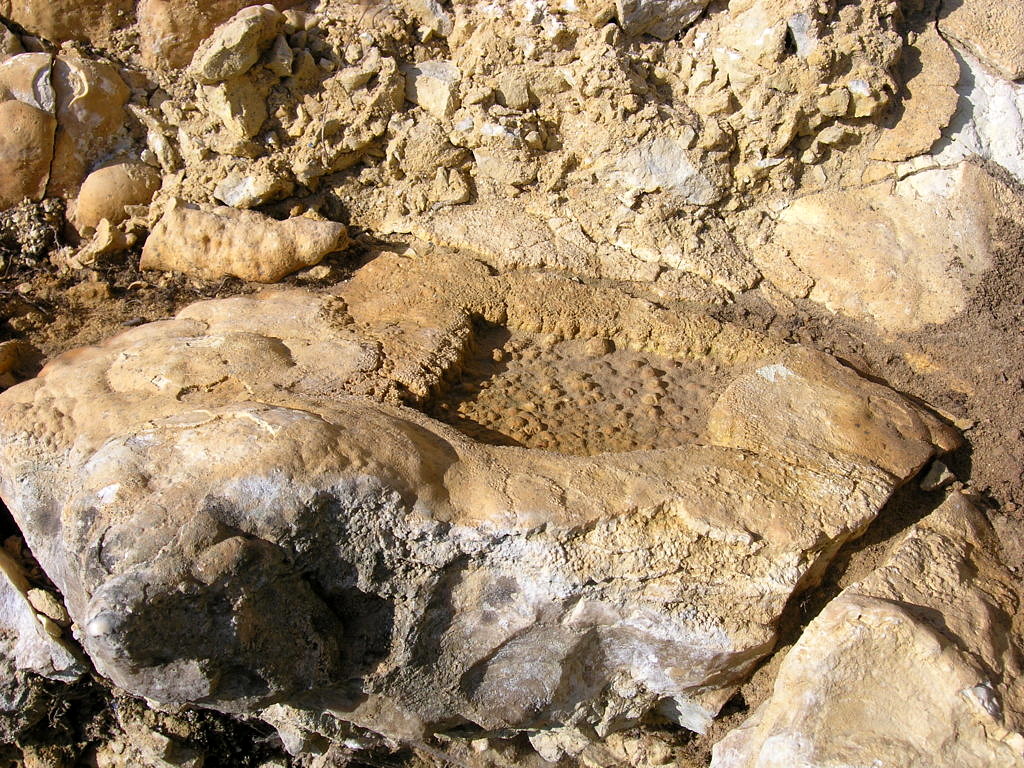
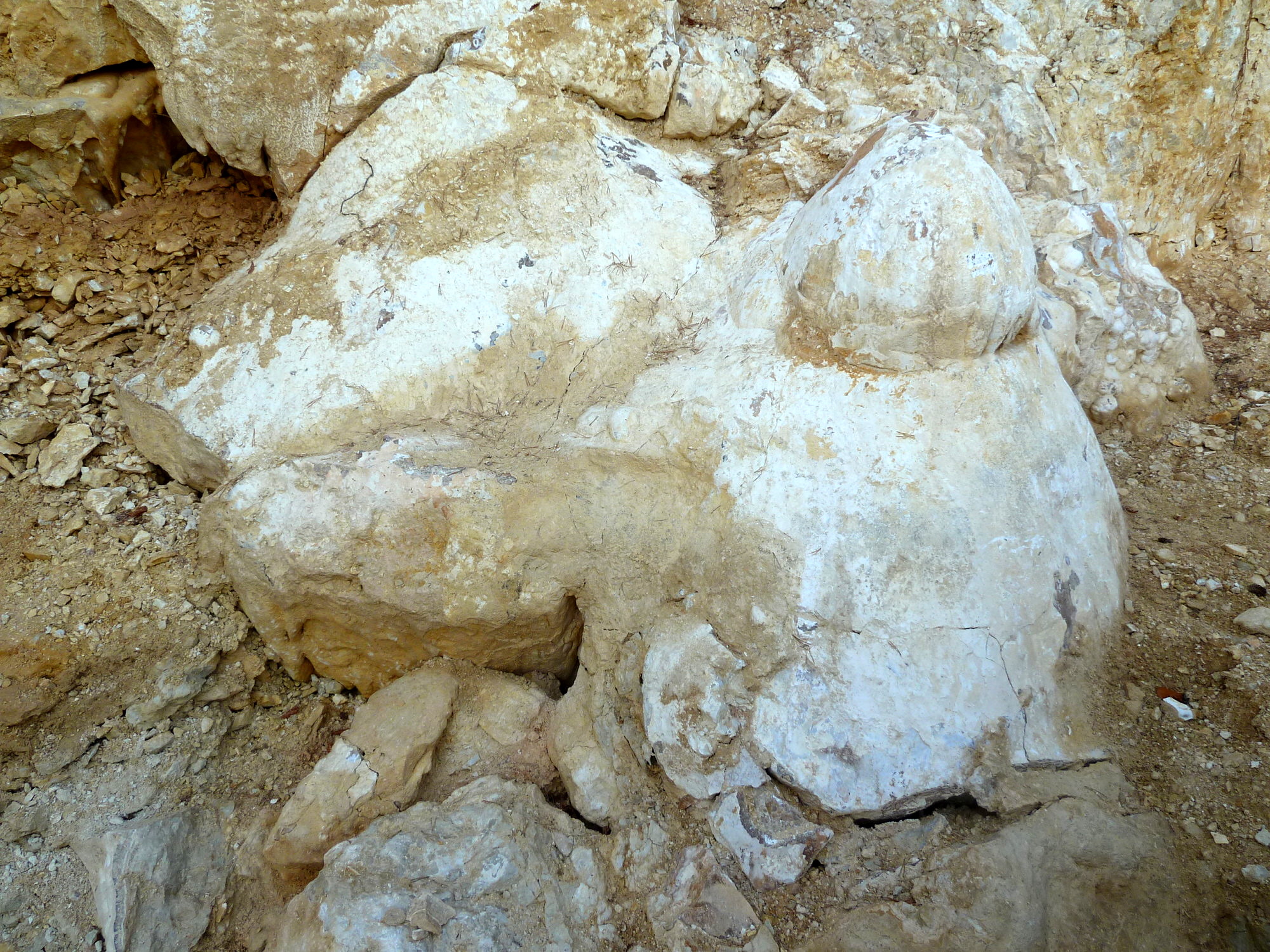
At the Hunas site, a diverse speleothem came to light under the cave sediments. Among other things, U/Th dating was carried out. Further analyses are in progress.
Ambros, D., Hilpert, B., Kaulich, B., Reisch, L. & Rosendahl, W. (2005): Steinberg-Höhlenruine bei Hunas (HFA A 236). – in: Ambros, D., Gropp, C., Hilpert, B., Kaulich, B.: Neue Forschungen zum Höhlenbären in Europa, Abh. Naturhist. Gesell. Nürnberg, 45/2005, 325-342, 9 Abb., 1 Tab., Nürnberg.
Alt, K. W., Kaulich, B. (†), Reisch, L., Vogel, H., Rosendahl, W. (2006): The Neanderthalian molar from Hunas, Germany. – HOMO – Journal of Comparative Human Biology, 57 (2006), 187-200.
Baumann, C. (2011): Kleinsäugerfunde aus drei Profilsäulen (N2, Q1, S2) der mittel- bis spätpleistozänen Höhlenruine Hunas (Mittelfranken). Ein Beitrag zur biostratigraphischen und paläoökologischen Auswertung der Fundstelle. – Unpublizierte Bachelorarbeit, 71 S., Friedrich- Schiller- Universität Jena, Philosophische Fakultät, Ur- und Frühgeschichte.
Böhme, G. (2011): Fisch-, Amphibien- und Reptilienreste aus der Höhlenruine Hunas bei Hartmannshof (Mittelfranken). – Quartär, 58, 7-23.
Freund, G. (1983): Die paläolithischen Kulturreste aus der Höhlenruine von Hunas in der Nördlichen Frankenalb. – In: Heller, F. (Hrsg.): Die Höhlenruine Hunas bei Hartmannshof (Landkreis Nürnberger Land) – Eine paläontologische und urgeschichtliche Fundstelle aus dem Spät-Riß. – Quartär-Bibliothek, 4, 323-349, 1 Tab., 5 Abb., Bonn.
Heller, F. (Hrsg.) (1983): Die Höhlenruine Hunas bei Hartmannshof (Landkreis Nürnberger Land) – Eine paläontologische und urgeschichtliche Fundstelle aus dem Spät-Riß. – Quartär-Bibliothek, 4, 407 S., Taf. I-XII, 62 Abb., 49 Tab., Bonn.
Hilpert B, Ambros A.: Jäger und Gejagte – Die Geschichte der Fundstelle Hunas. Ein Führer zur Steinberg-Höhlenruine bei Hunas.
Hilpert, B. (2006): Die Ursiden aus Hunas – Revision und Neubearbeitung der Bärenfunde aus der Steinberg-Höhlenruine bei Hunas (Gde. Pommelsbrunn, Mittelfranken, Bayern). Internet-Publikation: URN: urn:nbn:de:bvb:29-opus-4123 URL: www.opus.ub.uni-erlangen.de/opus/volltexte/2006/412/
Hilpert, B. & Ambros D. (2015), Jäger und Gejagte – Die Geschichte der Fundstelle Hunas. Ein Führer zur Steinberg-Höhlenruine bei Hunas (Büchenbach 2015).
Hilpert, B. & Ambros D. (2021), Spurenlesen an 200.000 Jahre alten Knochen. Einblicke in die Lebenswelt der Steinberg-Höhlenruine von Hunas. Bayerische Archäologie 2/2021, 2021, 18–21.
Knipping, M., Boeren, I., Stika, H.-P. (2006): Botanische Untersuchungen an Sedimenten der Höhlenruine Hunas. – Hugo Obermaier-Gesellschaft, 48. Tagung in Köln, 40-41.
Rosendahl W., Ambros D., Hilpert B., Hambach U., Alt K.W., Knipping M, Reisch L., Kaulich B. (†) (2011): Nenderthals und Monkeys in the Würmian of Central Europe: The Middle Paleolithic Site of Hunas, Southern Germany. – N.J. Conard and J. Richter (eds.), Neanderthal Lifeways, Subsistence and Technology: One Hundred Fifty Years of Neanderthal Study, Vertebrate Paleobiology and Paleoanthropology, DOI 10.1007/978-94-007-0415-2_3, © Springer Science+Business Media B.V. 2011.