
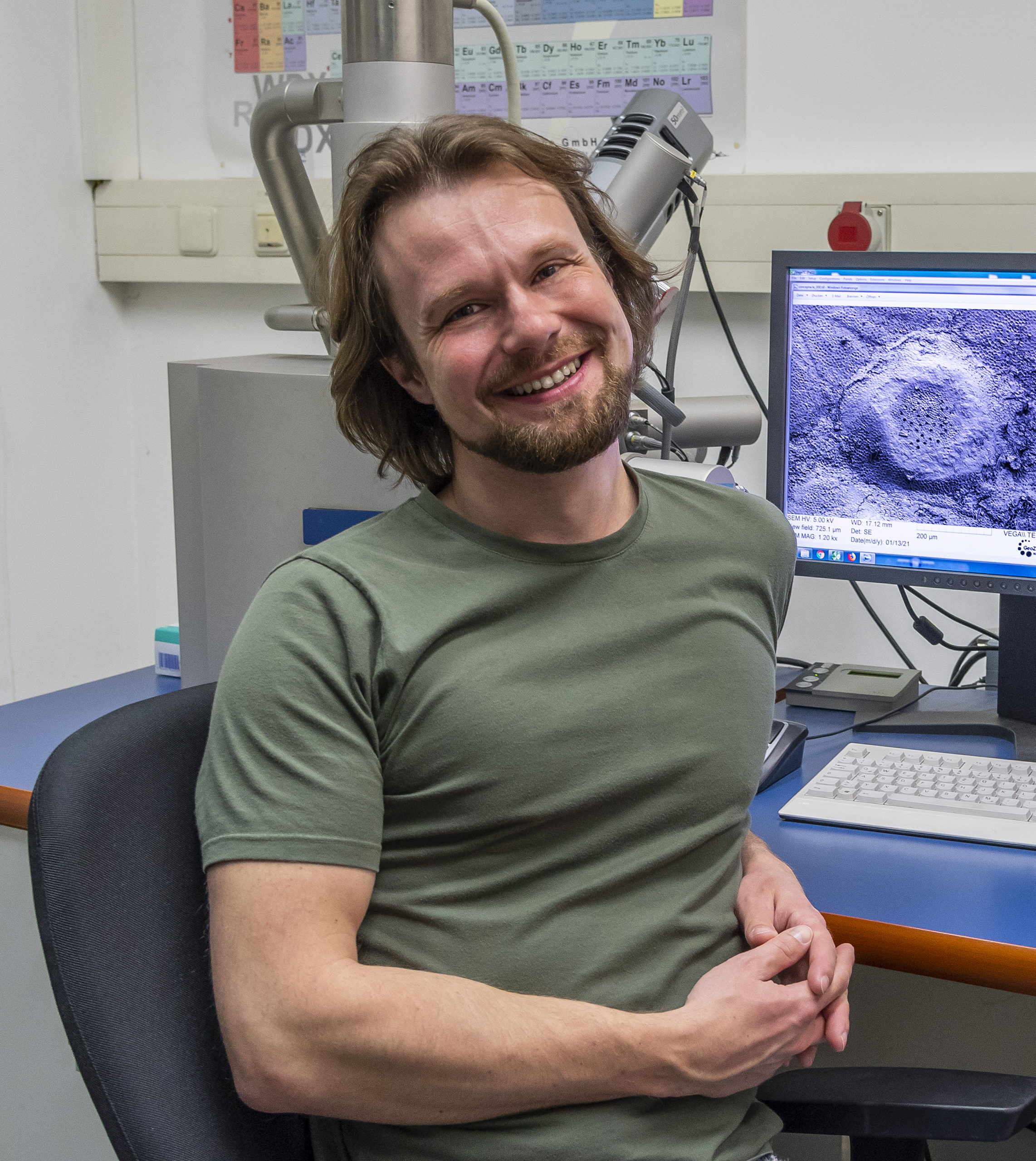
Dr. Sebastian Teichert
Chair of Paleoenvironmental Analysis
Research associates
Address
Contact
Research Focus
- Coralline red algae
- Arctic biodiversity
- Ecosystem-engineers
Das Potenzial von corallinen Algen als Indikator des Klimas in der Südlichen Hemisphäre und für die Evaluierung von globalen Klimamodellen: eine Fallstudie zu Neuseeland - Fortsetzungsprojekt
(Third Party Funds Single)Project leader:
Term: 1. October 2024 - 30. September 2026
Funding source: DFG-Einzelförderung / Sachbeihilfe (EIN-SBH)Coupled atmosphere/ocean general circulation models, or global climate models (GCMs) in short, are our most important tools for projecting climate into the future. In addition, they provide input for regional atmospheric models that translate global climate change to regional and local scales where humans face the impacts. Owing to this importance, GCMs must be evaluated against the observed past climate as thoroughly as possible, where one focus is the so-called historical period from 1850 to present. However, the evaluation task is difficult for the period of World War II and earlier due to a frequent lack of reliable observations. The outlined problem is exacerbated for the Southern Hemisphere, which has been notoriously understudied in comparison to the climate of the Northern Hemisphere. --- The present project proposes to utilize a rather recently discovered proxy archive (crustose coralline algae, CCA) for extending the observational record of the climatic environment of New Zealand back to ~1850, and exploit the new data set for the benefit of GCM evaluation, regional atmospheric modeling, and improved understanding of climate system functioning. CCA has a number of advantages compared to other proxy archives (e.g., easy retrieval, high temporal resolution, worldwide distribution). In the first part we will collect CCA offshore New Zealand and extract geochemical signals that allow us to reconstruct ocean temperatures back to the 19th century (the large-scale signal). Second, this new information will be employed in GCM evaluation to reveal their skill of representing large-scale climate of New Zealand. And third, regional numerical atmospheric modeling will be conducted to test whether the addition of the CCA-based criterion to the GCM evaluation ultimately adds value to regional climate modeling. A focus here will be on highaltitude climate and glacier variability in the Southern Alps (the impact signal). The regional modeling will also allow us to unravel the physical mechanisms that determine the potential of CCA as a climate proxy in New Zealand. --- The proposed project bundles the expertise of three partners across the fields of paleoclimate, Southern Hemisphere climatology and measurements, and climate modeling, which strongly supports the project goals due to the collaboration. The implications of the potential results, however, will go beyond the specific case study. Results will demonstrate how to rigorously combine the GCM and climate proxy worlds in a systematic framework, highlighting the role of CCA, and how the said combination can enhance regional climate modeling down to the local scale. These points are of generic importance for climate modeling and climate impact research.
Implementierung von Proxydaten aus corallinen Algen in die Evaluierung von globalen Klimamodellen: eine Fallstudie für die Südliche Hemisphäre und Neuseeland
(Third Party Funds Single)Project leader: ,
Term: 1. July 2024 - 30. June 2026
Funding source: DFG-Einzelförderung / Sachbeihilfe (EIN-SBH)Globale Klimamodelle (Abk. GCMs) sind unsere wichtigsten wissenschaftlichen Werkzeuge, um das Klima der Zukunft einzuschätzen. Zudem liefern sie Daten-Input für regionale Atmosphärenmodelle, die uns die Berechnungen erlauben, wie sich der globale Klimawandel in bestimmten Regionen und Orten äußern wird (der sog. Klima-Impakt). Aufgrund dieser Bedeutung müssen GCMs so gut wie möglich mit Beobachtungen des vergangenen Klimas evaluiert werden, wobei ein Fokus auf der sog. "historischen Periode" von 1850 bis zur Gegenwart liegt. Die Evaluierung ist jedoch für den Zeitraum vor 1950 schwierig wegen der deutlich reduzierten Beobachtungsqualität. Für die Südliche Hemisphäre ist das skizzierte Problem besonders groß, da sie im Vergleich zur Nördlichen Hemisphäre schwächer untersucht ist. --- Das hiesige Projekt setzt einen aufstrebenden Klima-Indikator ein, krustenbildende coralline Algen (KCA), um die Beobachtungszeitreihe des Klimas in Neuseeland bis vor 1950 zurück zu verlängern - mit dem Ziel der Verwendung dieses neuen Datensatzes für die Evaluierung von GCMs und der Verbesserung regionaler Klimamodellierung. KCA haben im Vergleich zu anderen Klima-Indikatoren mehrere Vorteile, z.B. ihre weltweite Verbreitung, zeitlich hoch aufgelöste Information und die relativ leichte Gewinnung. Der erste Projektteil sieht die Sammlung von KCA vor der Küste Neuseelands vor sowie die Analyse der gespeicherten geochemischen Signale, mit denen wir die Ozeantemperatur 100 oder mehr Jahre zurückverfolgen können (das großräumige Klimasignal). Zweitens wird die neue Information in ein Schema der GCM-Evaluierung einfließen, das die Fähigkeit der verschiedenen globalen Modelle zeigt, das großräumige Klima Neuseelands abzubilden. Der dritte Teil widmet sich schließlich numerischen Simulationen mit einem regionalen Atmosphärenmodell, um den Wert der Einbeziehung des KCA-basierten Kriteriums für die regionale Klimamodellierung festzustellen. Der Fokus hier liegt auf dem Hochgebirgsklima und den Gletschern in den Südlichen Alpen (das Impakt-Signal). Die regionale Modellierung wird zudem enthüllen, welche physikalischen Prozesse das Potenzial von KCA als Klima-Indikator beeinflussen. --- Das Projekt bündelt die Expertise von drei Schwerpunkten (Paläoklimatologie, Klima der Südlichen Hemisphäre und Klimamodellierung) im Rahmen einer Forschungspartnerschaft, die die Ziele des Projekts maßgeblich stützt. Die Auswirkungen der potenziellen Resultate werden aber deutlich über die Fallstudie hinausreichen. Sie werden zeigen, wie man die zwei verschiedenen Welten der Klimamodellierung und der Klima-Indikatoren in einem systematischen Schema kombiniert, inklusive der Rolle von KCA, zugunsten von Fortschritten in der regionalen Klimamodellierung und Feststellung von Klimafolgen auf regionaler und lokaler Ebene. Diese Aussichten besitzen einen generischen Wert für die aktuelle Klimaforschung.
Exploring the potential of coralline algae as climate proxy and for climate model evaluation: a Southern Hemisphere case study of New Zealand
(Third Party Funds Single)Project leader:
Term: 1. February 2021 - 30. September 2024
Funding source: DFG-Einzelförderung / Sachbeihilfe (EIN-SBH)Coupled atmosphere/ocean general circulation models, or global climate models (GCMs) in short, are our most important tools for projecting climate into the future. In addition, they provide input for regional atmospheric models that translate global climate change to regional and local scales where humans face the impacts. Owing to this importance, GCMs must be evaluated against the observed past climate as thoroughly as possible, where one focus is the so-called historical period from 1850 to present. However, the evaluation task is difficult for the period of World War II and earlier due to a frequent lack of reliable observations. The outlined problem is exacerbated for the Southern Hemisphere, which has been notoriously understudied in comparison to the climate of the Northern Hemisphere. --- The present project proposes to utilize a rather recently discovered proxy archive (crustose coralline algae, CCA) for extending the observational record of the climatic environment of New Zealand back to ~1850, and exploit the new data set for the benefit of GCM evaluation, regional atmospheric modeling, and improved understanding of climate system functioning. CCA has a number of advantages compared to other proxy archives (e.g., easy retrieval, high temporal resolution, worldwide distribution). In the first part we will collect CCA offshore New Zealand and extract geochemical signals that allow us to reconstruct ocean temperatures back to the 19th century (the large-scale signal). Second, this new information will be employed in GCM evaluation to reveal their skill of representing large-scale climate of New Zealand. And third, regional numerical atmospheric modeling will be conducted to test whether the addition of the CCA-based criterion to the GCM evaluation ultimately adds value to regional climate modeling. A focus here will be on high-altitude climate and glacier variability in the Southern Alps (the impact signal). The regional modeling will also allow us to unravel the physical mechanisms that determine the potential of CCA as a climate proxy in New Zealand. --- The proposed project bundles the expertise of three partners across the fields of paleoclimate, Southern Hemisphere climatology and measurements, and climate modeling, which strongly supports the project goals due to the collaboration. The implications of the potential results, however, will go beyond the specific case study. Results will demonstrate how to rigorously combine the GCM and climate proxy worlds in a systematic framework, highlighting the role of CCA, and how the said combination can enhance regional climate modeling down to the local scale. These points are of generic importance for climate modeling and climate impact research.
2025
Journal Articles
- , , , :
Quantifying floridean starch storage patterns in Arctic rhodoliths: blue carbon implications
In: Polar Research 44 (2025), Article No.: 10992
ISSN: 0800-0395
DOI: 10.33265/polar.v44.10992 - , , :
Depth-related controls on the quantitative composition of rhodolith matrices in the high Arctic
In: Aquatic Conservation-Marine and Freshwater Ecosystems 35 (2025), Article No.: e70045
ISSN: 1052-7613
DOI: 10.1002/aqc.70045
Conference Contributions
- , , , :
Virtual sectioning: a micro-CT and point counting workflow for non-destructive organism quantification
Geo4Göttingen 2025 (Göttingen, 14. September 2025 - 18. September 2025) - , , :
Implications of declining rhodolith growth in a warming Arctic: a century-scale perspective
Geo4Göttingen 2025 (Göttingen, 14. September 2025 - 18. September 2025)
DOI: 10.48380/zg4z-3m80
2024
Journal Articles
- , , :
In situ decrease in rhodolith growth associated with Arctic climate change
In: Global Change Biology 30 (2024), Article No.: e17300
ISSN: 1354-1013
DOI: 10.1111/gcb.17300 - :
Attached and free-living crustose coralline algae and their functional traits in the geological record and today
In: Facies 70 (2024)
ISSN: 0172-9179
DOI: 10.1007/s10347-024-00682-1 - , , , , :
Bayesian analysis of biodiversity patterns via beam trawl versus video transect—a comparative case study of Svalbard rhodolith beds
In: Biodiversity and Conservation (2024)
ISSN: 0960-3115
DOI: 10.1007/s10531-024-02788-y
URL: https://link.springer.com/article/10.1007/s10531-024-02788-y
Conference Contributions
- , , :
In situ decrease in rhodolith growth is associated with Arctic climate change
13th International Symposium on Fossil Algae (Le Castella, 2. September 2024 - 6. September 2024) - , , :
Depth-related controls on the quantitative taxonomic composition of rhodoliths
13th International Symposium on Fossil Algae (Le Castella, 2. September 2024 - 6. September 2024)
2023
Journal Articles
- , , , , , , , , , :
Structural and geochemical assessment of the coralline alga Tethysphytum antarcticum from Terra Nova Bay, Ross Sea, Antarctica
In: Minerals 13 (2023)
ISSN: 2075-163X
DOI: 10.3390/min13020215
Conference Contributions
- , , , :
Traits to live or traits to die? Tracing the development of functional diversity in trees during Cenozoic climate change
Macroecology and Biogeography meeting (Bayreuth, 4. May 2023 - 5. May 2023) - , , , , , :
The unexpected species richness of Arctic rhodolith beds
56. European Marine Biology Symposium (Reykjavik, 4. September 2023 - 8. September 2023)
2022
Journal Articles
- , , , , :
Editorial: Crustose coralline red algae frameworks and rhodoliths: Past and present
In: Frontiers in Earth Science 10 (2022)
ISSN: 2296-6463
DOI: 10.3389/feart.2022.1090091 - , , , , , :
Plastikmüllbelastung im Nordpolarmeer - Analyse der Mikroplastikkontamination arktischer Bohrmuscheln
In: GIT Labor-Fachzeitschrift 66 (2022), p. 32-34
ISSN: 0016-3538
URL: https://bit.ly/GIT-Teichert
Edited Volumes
- , , , , :
Crustose coralline red algae frameworks and rhodoliths: Past and present
2022
(Frontiers Research Topics, Vol.10)
DOI: 10.3389/978-2-83251-024-7
Conference Contributions
- , , , , , , :
Sclerochronological insights into the environmental response of Corbula gibba from the Adriatic Sea
EGU General Assembly 2022 (Wien, 23. May 2022 - 27. May 2022)
DOI: 10.5194/egusphere-egu22-9165 - , , :
The potential of coralline algae as SST proxy and for climate model evaluation: A New Zealand case study
EGU General Assembly 2022 (Wien, 23. May 2022 - 27. May 2022)
DOI: 10.5194/egusphere-egu22-6353
URL: https://meetingorganizer.copernicus.org/EGU22/EGU22-6353.html
2021
Journal Articles
- , , , , :
Growth interruptions in Arctic rhodoliths correspond to water depth and rhodolith morphology
In: Minerals 11 (2021), p. 1-13
ISSN: 2075-163X
DOI: 10.3390/min11050538 - , , :
Brackish water algal reefs – facies analysis as a tool to identify palaeoenvironmental variations in Miocene deposits (Mainz-Weisenau, Germany)
In: Geological Journal 56 (2021), p. 2760-2771
ISSN: 1099-1034
DOI: 10.1002/gj.4067 - , , :
Correction to: Do Skeletal Mg/Ca Ratios of Arctic Rhodoliths Reflect Atmospheric CO2 Concentrations? (Polar Biology, (2020), 43, 12, (2059-2069), 10.1007/s00300-020-02767-3)
In: Polar Biology (2021)
ISSN: 0722-4060
DOI: 10.1007/s00300-021-02906-4 - , , , , , , :
Microplastic contamination of the drilling bivalve Hiatella arctica in Arctic rhodolith beds
In: Scientific Reports 11 (2021), p. 1-12
ISSN: 2045-2322
DOI: 10.1038/s41598-021-93668-w
Book Contributions
- , , , , :
Distribution of Microplastics in the Marine Environment
In: Handbook of Microplastics in the Environment, Cham: Springer, 2021, p. 1 - 35
ISBN: 9783030390419
DOI: 10.1007/978-3-030-10618-8_43-1
Conference Contributions
- , , :
Das Potenzial coralliner Rotalgen als SST-Proxy und für die Evaluierung globaler Klimamodelle: eine Fallstudie in Neuseeland
39. Jahrestagung des AK Klima (Passau, 5. November 2021 - 7. November 2021)
In: Arbeitskreis Klima (ed.): Tagungsband zur 39. Sitzung des Arbeitskreises Klima 2021
URL: https://akklima.geographie.ruhr-uni-bochum.de/fileadmin/Tagungsprogramme/AK_Klima-2021-Passau-Tagungsband.pdf
2020
Journal Articles
- , , :
Do skeletal Mg/Ca ratios of Arctic rhodoliths reflect atmospheric CO2 concentrations?
In: Polar Biology 43 (2020), p. 2059-2069
ISSN: 0722-4060
DOI: 10.1007/s00300-020-02767-3 - , , :
A possible link between coral reef success, crustose coralline algae and the evolution of herbivory
In: Scientific Reports 10 (2020), Article No.: 17748
ISSN: 2045-2322
DOI: 10.1038/s41598-020-73900-9 - , , , , , , , :
Structural and elemental analysis of the freshwater, low-Mg calcite coralline alga Pneophyllum cetinaensis
In: Plants 9 (2020), Article No.: 1089
ISSN: 2223-7747
DOI: 10.3390/plants9091089
Conference Contributions
- , , , , , :
Deeper insights: The potential of X-ray micro-computed tomography (μCT) in microplastic studies
MICRO 2020 - Fate and Impacts of Microplastics: Knowledge and Responsibilities (Lanzarote, 23. November 2020 - 27. December 2020) - , , , , , , :
Arctic rhodolith beds – a biodiverse ecosystem endangered by microplastics?
Status Conference Research Vessels 2020 (Oldenburg)
2019
Journal Articles
- , , :
Coralline red algae from the Silurian of Gotland indicate that the order Corallinales (Corallinophycidae, Rhodophyta) is much older than previously thought
In: Palaeontology 62 (2019), p. 599-613
ISSN: 0031-0239
DOI: 10.1111/pala.12418 - , , , , , :
Ultrastructure of the epidermal gland system of Tetranchyroderma suecicum Boaden, 1960 (Gastrotricha: Macrodasyida) indicates a defensive function of its exudate
In: Zoomorphology 138 (2019), p. 443-462
ISSN: 0720-213X
DOI: 10.1007/s00435-019-00462-4
Conference Contributions
- , , , , , , :
Microplastic pollution as a possible threat for an arctic reef system and its association of ecosystem engineers
54th European Marine Biology Symposium (Dublin, 25. August 2019 - 29. August 2019) - , , :
Facilitation of coral reef growth by coralline red algae – patterns during the last 150 million years
macro 2019 – Bridging local patterns and global challenges (Würzburg, 11. March 2019 - 14. March 2019) - , , :
Will arctic reefs disappear with ongoing global change?
macro 2019 – Bridging local patterns and global challenges (Würzburg, 11. March 2019 - 14. March 2019)
2018
Conference Contributions
- , , , , , :
The reefs of the Arctic - photoautotrophic ecosystem engineers endangered by microplastic and climate change?
The Arctic Biodiversity Congress (Rovaniemi, 9. October 2018 - 12. October 2018) - , , , , :
What is boring? - Arctic reef structures as a habitat for boring organisms
The Arctic Biodiversity Congress (Rovaniemi, 9. October 2018 - 12. October 2018)
2017
Conference Contributions
- , :
Erfolgreich Forschen durch Kooperation - Verknüpfung hochschuleigener Informationsinfrastrukturen zu einem zentralen Service für Forschende
106. Deutscher Bibliothekartag (Frankfurt/Main, 30. May 2017 - 2. June 2017)
Open Access: http://nbn-resolving.de/urn/resolver.pl?urn:nbn:de:0290-opus4-29487
URL: http://nbn-resolving.de/urn/resolver.pl?urn:nbn:de:0290-opus4-29487
Miscellaneous
- , , , , , , , , , , , , , , , :
Habitat characteristics and carbonate cycling of macrophyte-supported polar carbonate factories (Svalbard)) - Cruise No. MSM55 – June 11 – June 29, 2016 – Reykjavik (Iceland) – Longyearbyen (Norway)
MSM55 (2017)
DOI: 10.2312/cr_msm55
(anderer)
2015
Journal Articles
- , :
Early Jurassic anoxia triggered the evolution of the oldest holoplanktonic gastropod Coelodiscus minutus by means of heterochrony
In: Acta Palaeontologica Polonica 60 (2015), p. 269-276
ISSN: 0567-7920
DOI: 10.4202/app.00145.2014
Conference Contributions
- , , , , , :
A new Early Jurassic gastropod from Ellesmere Island, Canadian Arctic – one of the oldest known holoplanktonic gastropods
Jahrestagung der Paläontologischen Gesellschaft (Schiffweiler-Reden, 14. September 2015 - 16. September 2015)
2014
Journal Articles
- :
Hollow rhodoliths increase Svalbard's shelf biodiversity
In: Scientific Reports 4 (2014), p. 6972 (5 p.)
ISSN: 2045-2322
DOI: 10.1038/srep06972 - , :
Polar coralline algal CaCO3-production rates correspond to intensity and duration of the solar radiation
In: Biogeosciences 11 (2014), p. 833-842
ISSN: 1726-4170
DOI: 10.5194/bg-11-833-2014 - , , , , , , , :
Arctic rhodolith beds and their environmental controls (Spitsbergen, Norway)
In: Facies 60 (2014), p. 15-37
ISSN: 0172-9179
DOI: 10.1007/s10347-013-0372-2
2012
Journal Articles
- , , , , , , , , :
Rhodolith beds (Corallinales, Rhodophyta) and their physical and biological environment at 80°31'N in Nordkappbukta (Nordaustlandet, Svalbard Archipelago, Norway)
In: Phycologia 51 (2012), p. 371-390
ISSN: 0031-8884
DOI: 10.2216/11-76.1
Conference Contributions
- , , , , , :
Response of an Arctic calcifying macro alga to increasing CO2 and temperature Levels: A habitat at risk?
EPOCA Final meeting (Nizza, 2. April 2012 - 5. April 2012)
2010
Conference Contributions
- , :
Polar coralline red algae as potential environmental recorder.
2nd International Sclerochronology Conference (Mainz, 24. July 2010 - 28. July 2010)
2008
Conference Contributions
- , :
Die Palökologie des Gastropoden Coelodiscus minutus aus dem Posidonienschiefer
Jahrestagung der Paläontologischen Gesellschaft 2008 (Erlangen, 8. September 2008 - 10. September 2008)
- Education and key qualifications
18/03/2013 Dr. rer. nat. in Geoscience
Friedrich-Alexander-Universität Erlangen-Nürnberg (FAU), Germany
Forschungsinstitut Senckenberg am Meer Wilhelmshaven, Germany
Name of supervisor: Prof. Dr. André Freiwald
2009 Graduation as Diplom-Geologe Univ.
Friedrich-Alexander-Universität Erlangen-Nürnberg (FAU), Germany
Name of supervisor: Prof. Dr. Alexander Nützel
- Current position
2022 – Assistant Professor
Chair of Palaeobiology, Dept. of Geography and Earth Sciences, FAU, Germany
- Previous positions
2021 – 2022 Managing Director
Research Center for Mathematics of Data, Dept. of Data Science, FAU, Germany
2018 – 2021 Research Associate
Professorship for Palaeontology, Dept. of Geography and Earth Sciences, FAU, Germany
2017 – 2021 Science Communications Expert
Dept. of Communications and Press, FAU, Germany
2016 – 2018 Research Consultant
Dept. of Research Strategy, FAU, Germany
2013 – 2015 Research Associate
Chair of Palaeobiology, Dept. of Geography and Earth Sciences, FAU, Germany
2012 – 2013 Freelance Scientist
Institute of Biology and Environmental Sciences, University of Oldenburg, Germany
2011 – 2012 Doctoral Candidate
Dept. of Marine Research, Forschungsinstitut Senckenberg, Germany
2009 – 2010 Doctoral Candidate
Chair of Palaeontology, Dept. of Geography and Earth Sciences, FAU, Germany
- Institutional Responsibilities
2023 – Elected Member of the Faculty Council
Faculty of Sciences, FAU, Germany
2023 – Elected Member of the Steering Committee
GeoZentrum Nordbayern, Dept. of Geography and Earth Sciences, FAU, Germany
- , , , , , : Reinhard Rieger-Award in Zoomorphology (Institute of Zoology at the University of Innsbruck) – 2020
Bachelor
- Paläobiologie I - Allgemeine Paläontologie
- Geländeübung zur Paläoumwelt I
- Geowissenschaftliche Arbeitsmethoden - Geländeübungen I
- Geowissenschaftliche Arbeitsmethoden II - Geländeübung II
- Geowissenschaftliche Geländeübungen I für Biologen
Master
- Oceanography
- Proxies in Palaeoenvironmental Reconstructions
- Computers in Geosciences
Weitere
- International Course on Carbonate Microfacies (“Flügel-Course”)
- "Crustose Coralline Algae - Unsung Ecosystem Engineers of Global Significance, at BMBF Ageless Workshop, April 2nd, 2025
- "Leben unter dem Eis - Die Riffe der Arktis", at CPS-Retreat in Waischenfeld, October 13th, 2023
- "Popcorn Beach", Rhodoliths at "Frag doch mal die Maus", 1st October 2022
- "Leben unter dem Eis: Die Riffe Spitzbergens", invited talk at "Collegium Alexandrinum", Zentrum für Medizinische Physik und Technik, Erlangen, 9th June 2022
- "Rotalgen bilden den Kleber der Korallenriffe", article by Anna Bolten, Bild der Wissenschaft, 23rd October 2020
- „Riffe in der Arktis? Wenn Algen die Rolle von Korallen einnehmen“, invited talk at ARDalpha Campus TALKS, 26th March 2019
- „Die Riffe der Arktis – Faszinierende Ökosysteme nördlich des Polarkreises“, invited talk at Naturhistorische Gesellschaft, Katharinensaal, Nürnberg, 22nd November 2018
- „Das ist eine Handvoll Sand aus Australien. Schau dir an, was alles darin steckt: Geheime Spuren im Sand“, article by Annika Peißker, Nürnberger Nachrichten and Erlanger Nachrichten, 21st July 2018
- "Die Riffe der Arktis – Faszinierende Ökosysteme nördlich des Polarkreises", invited talk at Naturhistorische Gesellschaft, Katharinensaal, Nürnberg, 22nd November 2018, 19:30
- "Tauchfahrt ins Archiv der Arktis", article by Viola Kiel and Solvin Zankl, GEO magazine, October 2017
- "Science Sets Sail", cruise leader Leg 1 (Kiel - Møn - Malmø - Bornholm - Riga), 15th - 25th July 2017
- "Auf der Suche nach Leben unter dem Eis", article by Christina Merkel, "Hochschule & Wissen", Nürnberger Zeitung, 31st May 2017
- "Die Riffe der Arktis: Wie entsteht Leben in der Ödnis?", invited talk at "Wissenschaft im Schloss", Senatssaal Kollegienhaus, Erlangen, 29th May 2017
- "Rotalgen sind die Baumeister der Arktis", article by Matthias Orgeldinger, "Natur & Wissen", Nürnberger Zeitung, 16th February 2015
- "Rhodolithe, außergewöhnliche Kalkalgen aus der Arktis", invited talk at Naturhistorische Gesellschaft, Katharinensaal, Nürnberg, 27th February 2014
- The potential of coralline algae as an indicator of climate in the Southern Hemisphere and for the evaluation of global climate models: a case study from New Zealand - 27.2.–26.3.2023 – Dunedin – Auckland (New Zealand)
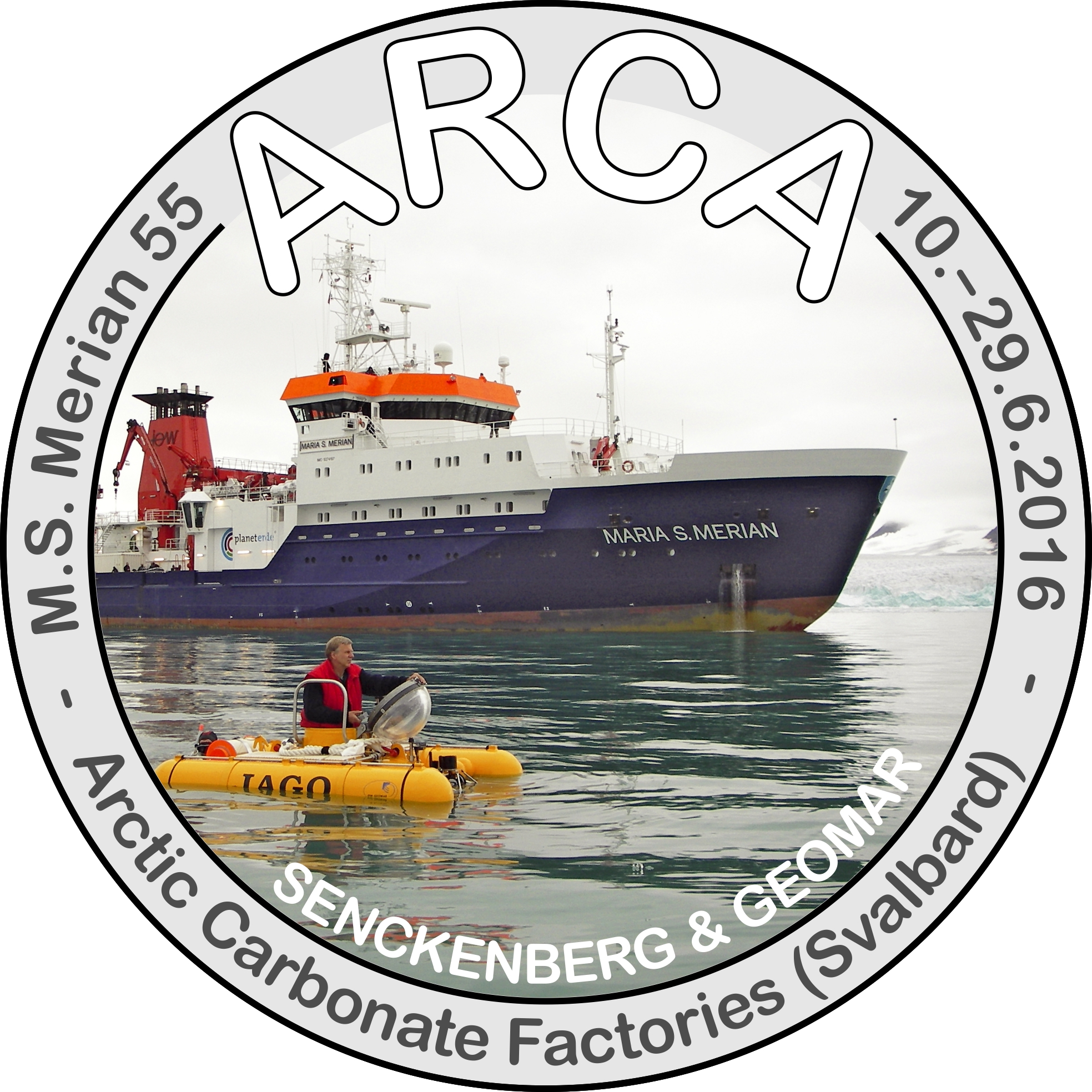
- Habitat characteristics and carbonate cycling of macrophyte-supported polar carbonate factories (Svalbard) - Cruise No. MSM55 – June 11 – June 29, 2016 – Reykjavik (Iceland) – Longyearbyen (Norway)
- Aquatic Botany
- Biogeosciences
- Bulletin of Marine Science
- Estuarine, Coastal and Shelf Science
- Facies
- Frontiers in Marine Science
- Geochemistry, Geophysics, Geosystems
- Geochimica et Cosmochimica Acta
- Journal of Phycology
- Marine Biodiversity
- Marine Ecology Progress Series
- Palaeogeography, Palaeoclimatology, Palaeoecology
- Paleoceanography and Paleoclimatology
- Polar Biology
- Progress in Earth and Planetary Science
- Scientific Reports