New Zealand, 2025 – RV Sonne – Cruise SO311
New Zealand, 2025 – RV Sonne – Cruise SO311
26.03.2025 – 1.05.2025
Tour leaders: Prof. Dr. Wolfgang Bach (University of Bremen) – PD Dr. Manuel Keith (FAU)
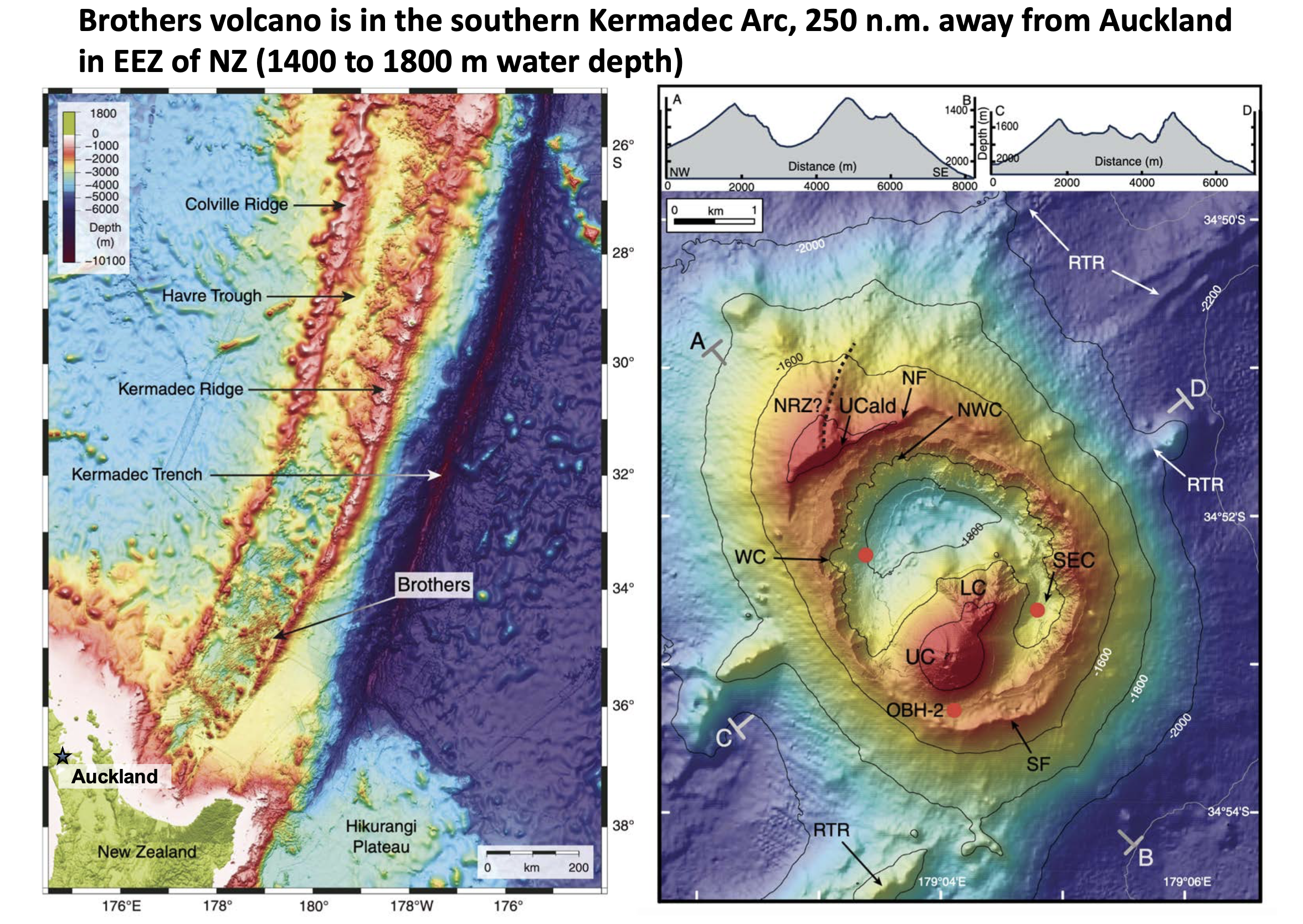
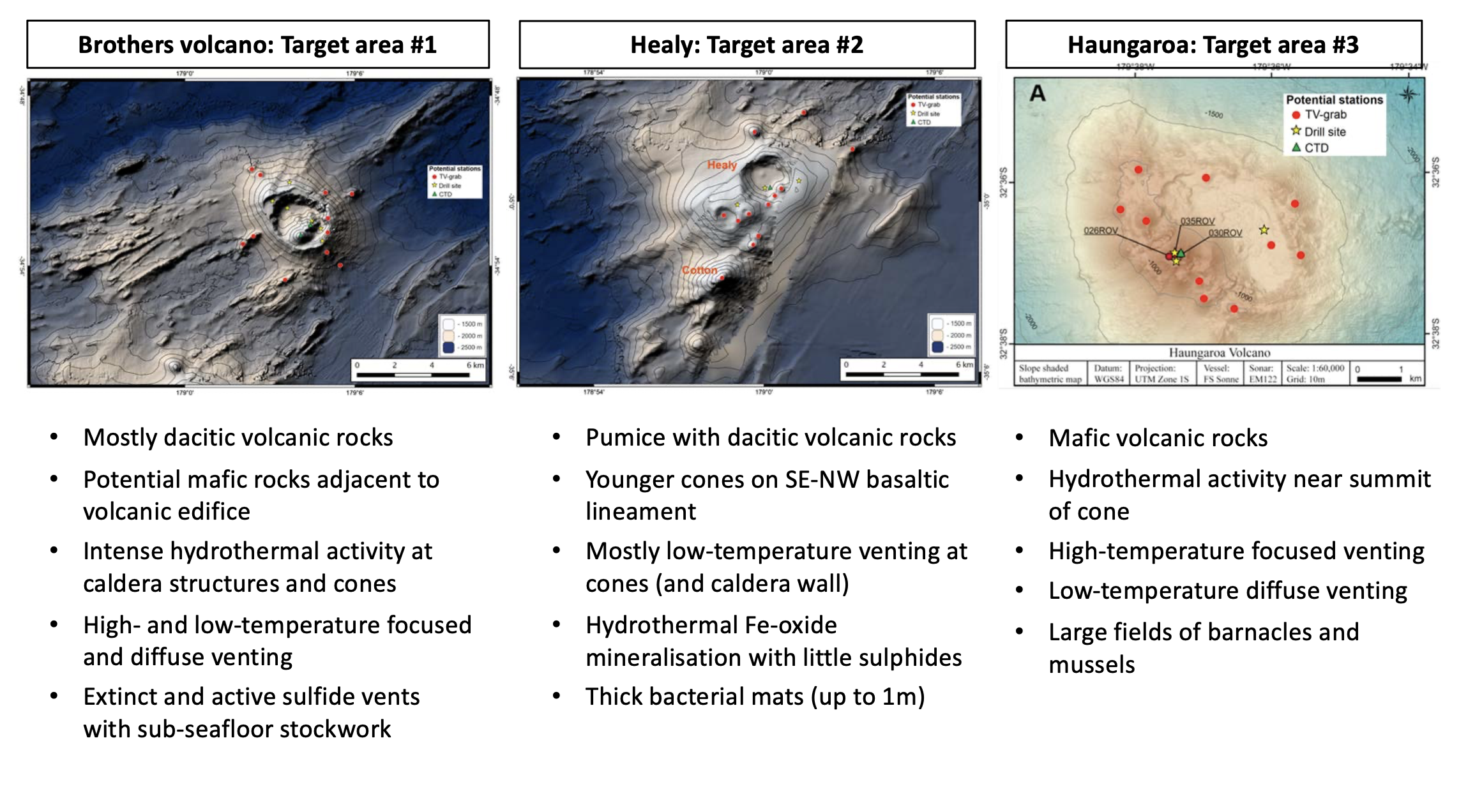
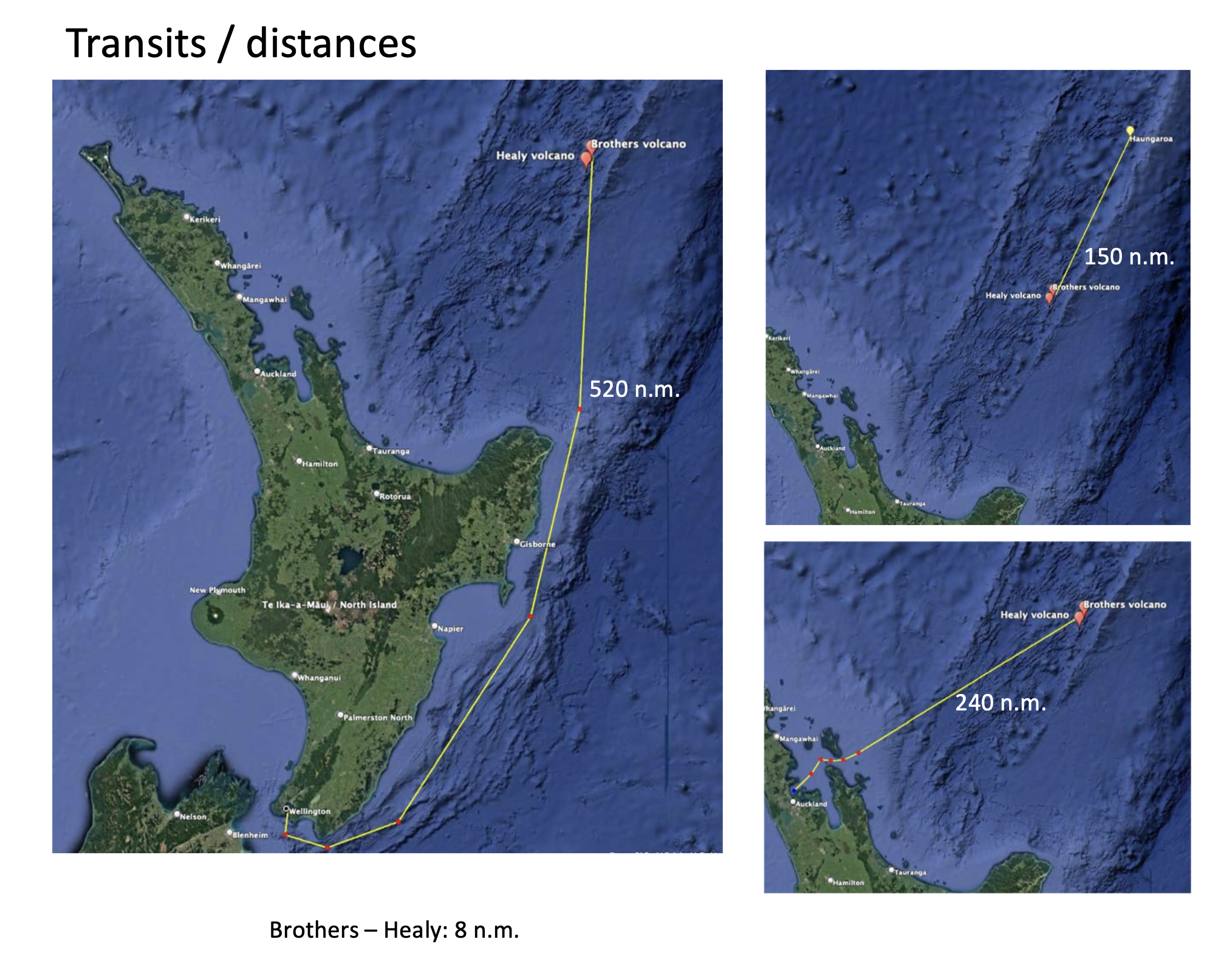
The expedition, led by the Universities of Bremen and FAU, is researching volcanic structures in the Kermadec Island Arc, 250 nautical miles northeast of Auckland. There will be 35 scientists on board the Sonne, including 7 from Erlangen. In addition to equipment for geophysical and bathymetric investigations, extensive equipment is available for sampling the water column as well as solid and loose rocks.
The main objectives of the study are:
- Geohazards: Linking volcanic activity and caldera-forming processes with the eruption history
- Petrology: Understanding magma evolution and the associated behavior of metals in connection with magmatic and hydrothermal processes
- Mineralization: Investigation of hydrothermal precipitation processes and their relationship to underlying magmatic activity
- Microbiology: Investigation of the effects of magmatic-hydrothermal activity on microbiological processes in the water column
Logbook
Please click on the bar to open.
- April 21–22: Back at Brothers Seamount
The weather had calmed down again, so another MeBo mission to Brothers was planned. First, we conducted some explorations and took samples with the TV grab, which was kept operational thanks to the tireless efforts of our technician Bernd Schleifer and crew members Lothar Münch, Matthias Grossmann, and Thorsten Schott. We would like to express our sincere thanks to them! The CTD was used to take further water samples from hydrothermal plumes of the Brothers volcano.
MeBo was then deployed near an inactive hydrothermal field to drill into stratiform mineralization. - April 23–25: Exciting discoveries at Ngatoroirangi
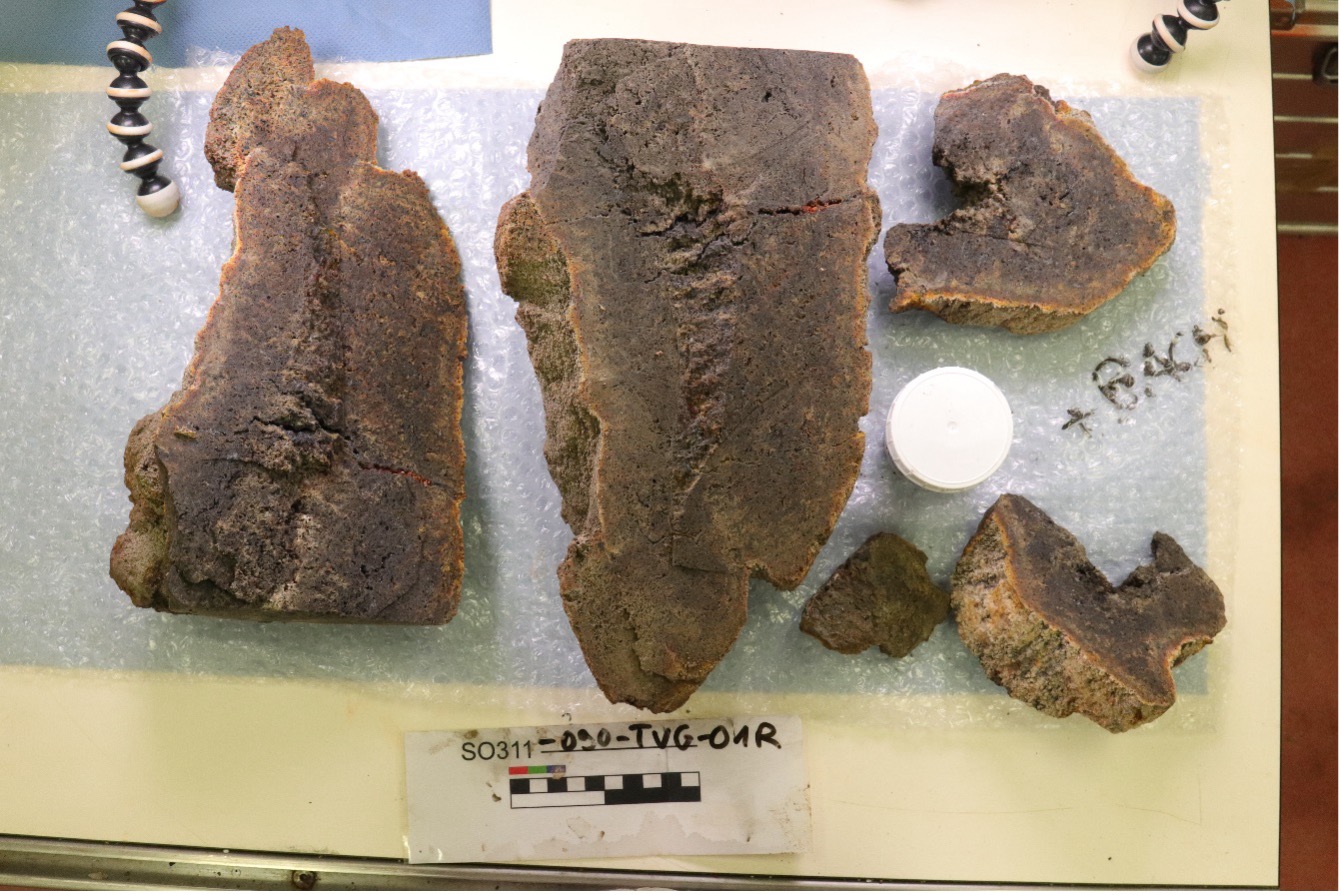
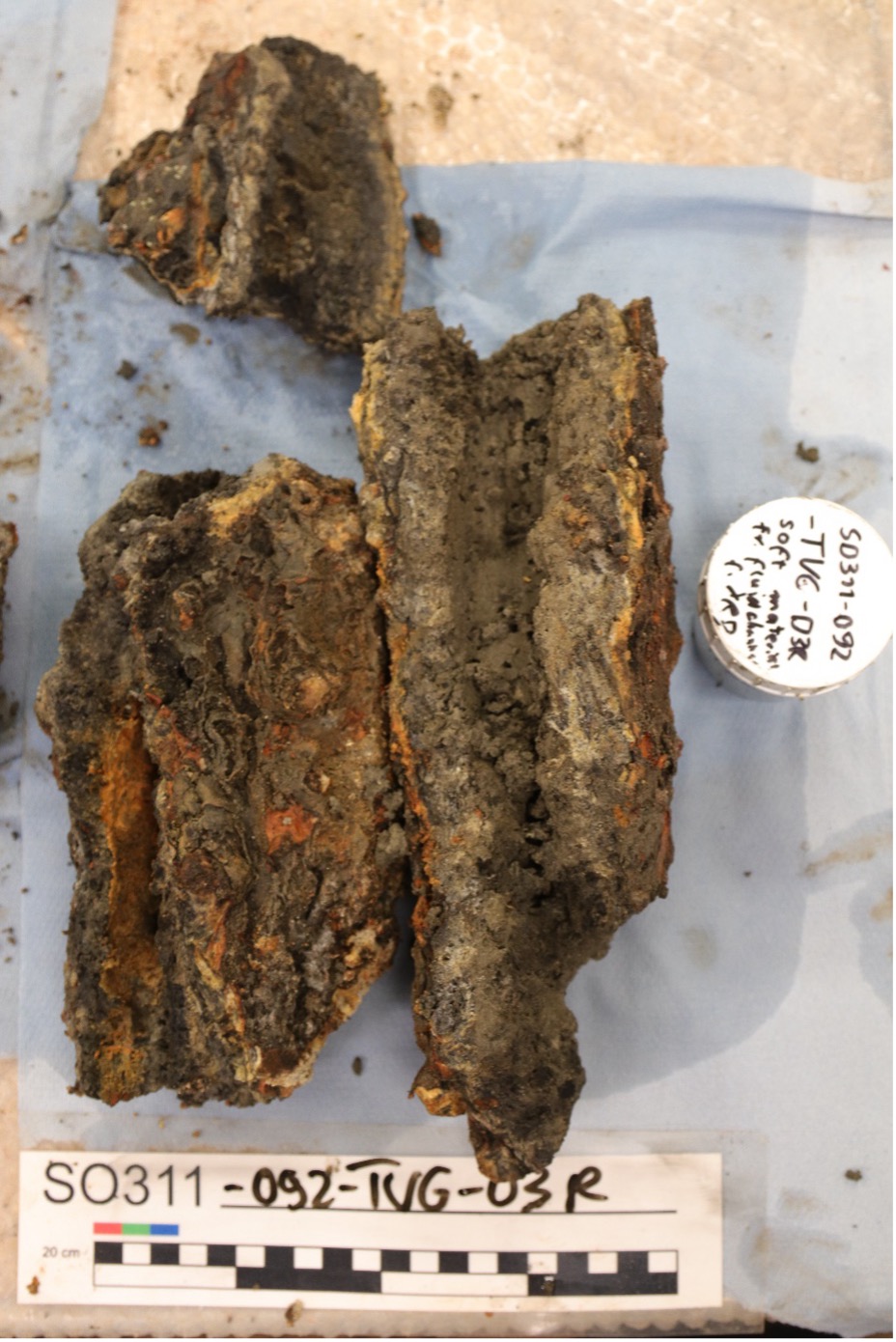
Analysis of the hydroacoustic data from Ngatoroirangi has revealed clear signs of hydrothermal activity, enabling the location of a new hydrothermal field to be determined. All grab operations there were a complete success; first, a piece of a hydrothermal vent was recovered. Other signals turned out to be diffuse sources in sediments, from which the overlying iron oxide crusts could be sampled.
- April 26–27: Back at Brothers: the final drilling
More favorable weather conditions allowed us to deploy MeBo one more time, for the last time. This time, we were back near the southeastern caldera wall, where we had already successfully deployed MeBo once before. Technical adjustments to the drilling process were made in order to sample deeper areas of the mineralization. - April 28–29: Final sampling before the end of the voyage
After the last drilling operation was completed, the TV grab was deployed once again. Here, we successfully sampled stratigraphic mineralization beneath a hydrothermal field on the northwestern caldera wall of Brothers Volcano. Finally, we sampled pumice from Kibblewhite and basaltic lavas from a ridge northeast of Brothers, which are of particular interest for volcanology. After a final CTD, the scientific program was essentially complete, with the exception of another echo sounder run at Rumble III, which we conducted during the transit back to Auckland. - April 30: Transit to Auckland – Tidying up
During the transit to Auckland, the last samples were carefully packed and loaded into the container for shipment to Germany. The laboratories were thoroughly cleaned to prepare them for the next working group on the following voyage.
- May 1: Arrival in Auckland
On the morning of May 1, we reached the port of Auckland, setting foot on solid ground for the first time in five weeks. Now it was time for the long flight back to Erlangen.
The expedition was a great success. We gained a lot of new insights and are already looking forward to working on the samples in our laboratories. Many thanks to everyone involved, especially the crew of the FS Sonne, the engineers and machinists who kept the ship and our equipment running, the deckhands who actively assisted us in using the equipment, the cooks, stewards, and doctor who took care of us, and the navigators who steered the ship.
Many thanks to Bernd, who controlled and maintained the grab with great dedication. We would also like to thank Markus Eifried from the German Weather Service, who helped us greatly with up-to-date information on weather developments for our work planning. Many thanks also to the scientific teams from all the institutions involved, who contributed significantly to the success of the voyage.
- April 7: Successful drilling
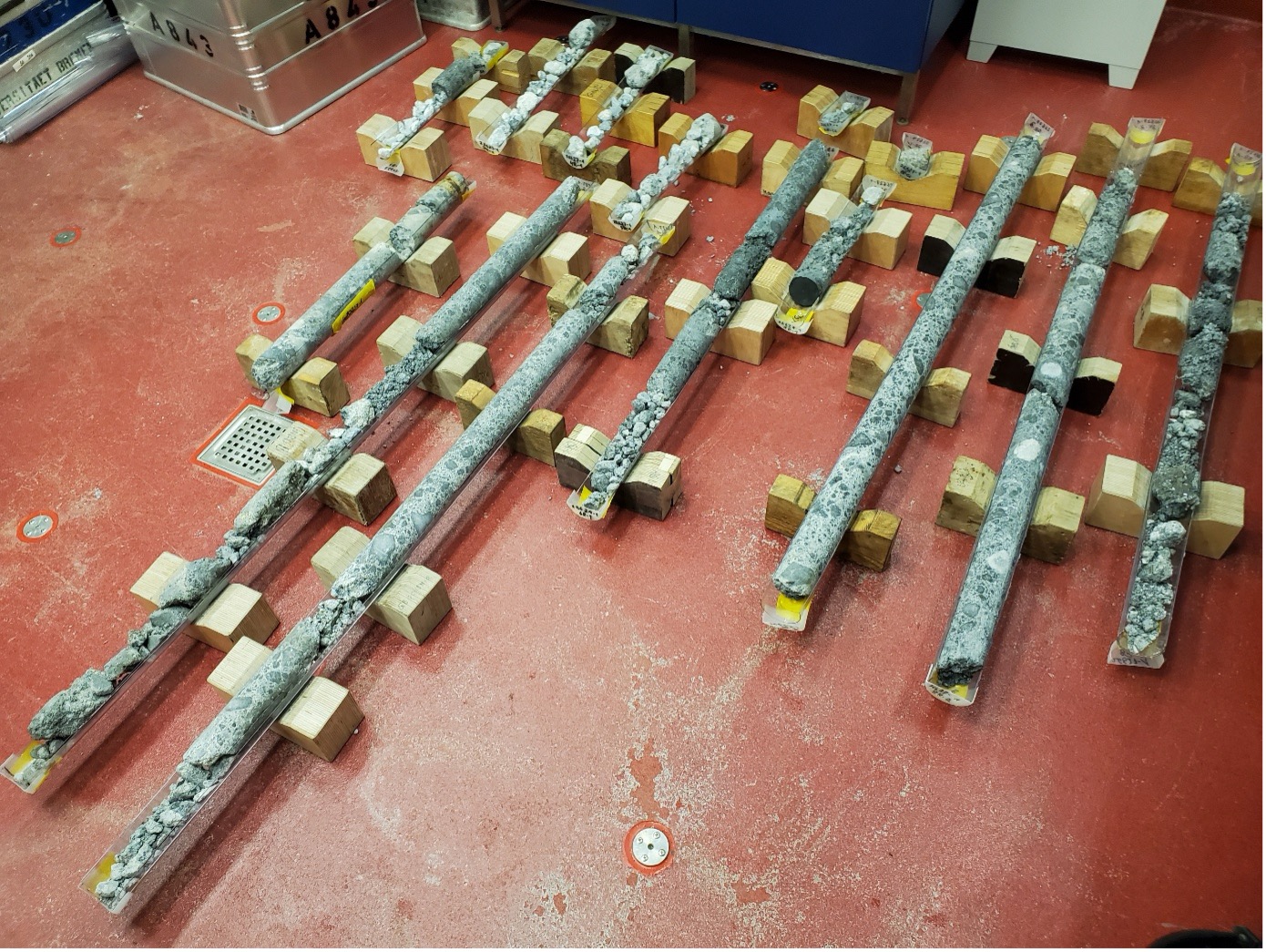
The MeBo200 drilling at the Upper Cone of the Brothers Caldera was a success: at a final depth of 28 meters, a total of just over 10 meters of drill core was recovered, much of it in one piece. To achieve this, the overlying loose material was first drilled through, after which a volcanic breccia altered and cemented by hydrothermal solutions could be sampled. Alteration has converted most of the minerals into clay minerals, with the interstitial spaces partially filled with elemental sulfur and finely distributed pyrite visible in places.
- April 4: Exploration of Seamount Kibblewhite / exciting samples from Brothers
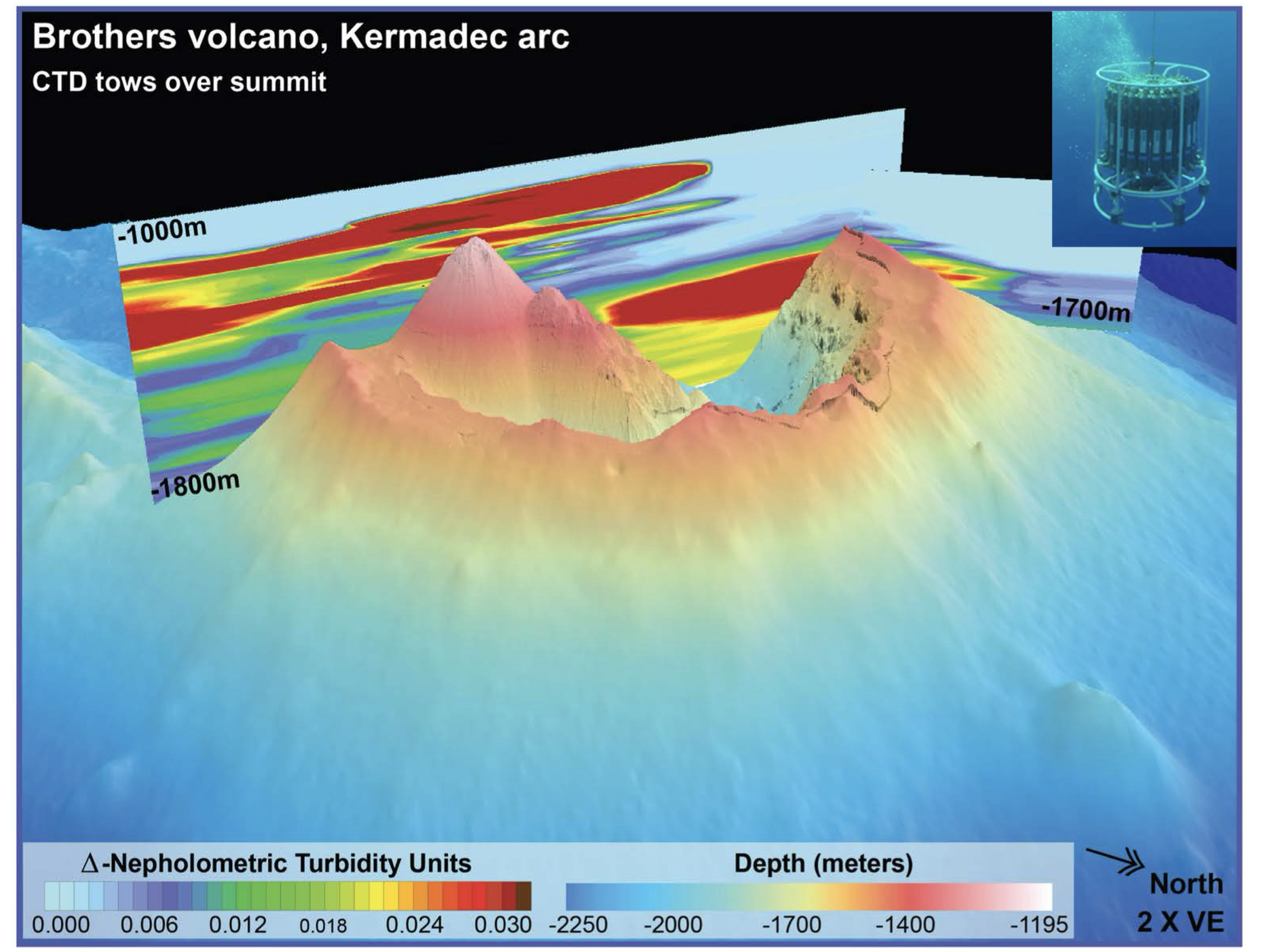
An echo sounder survey was conducted overnight to explore the nearby Seamount Kibblewhite. After mapping overnight, the goal was to use the CTD to find traces of hydrothermal activity in the water column, which would be indicated by turbidity of the water or noticeable changes in measured values. Rock samples were then taken at Kibblewhite using the TV grab. These were pyroclastic rocks in the form of pumice.
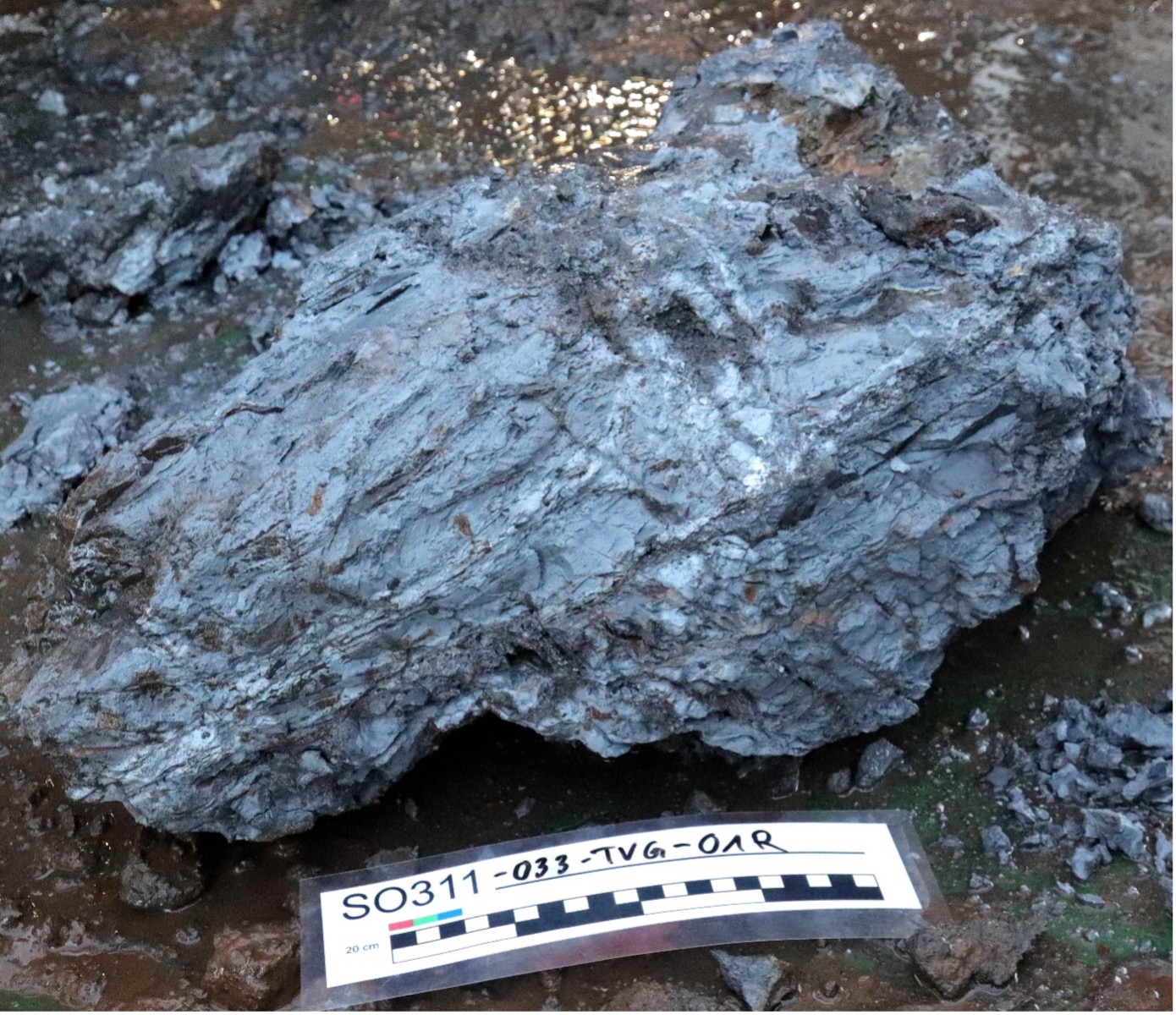
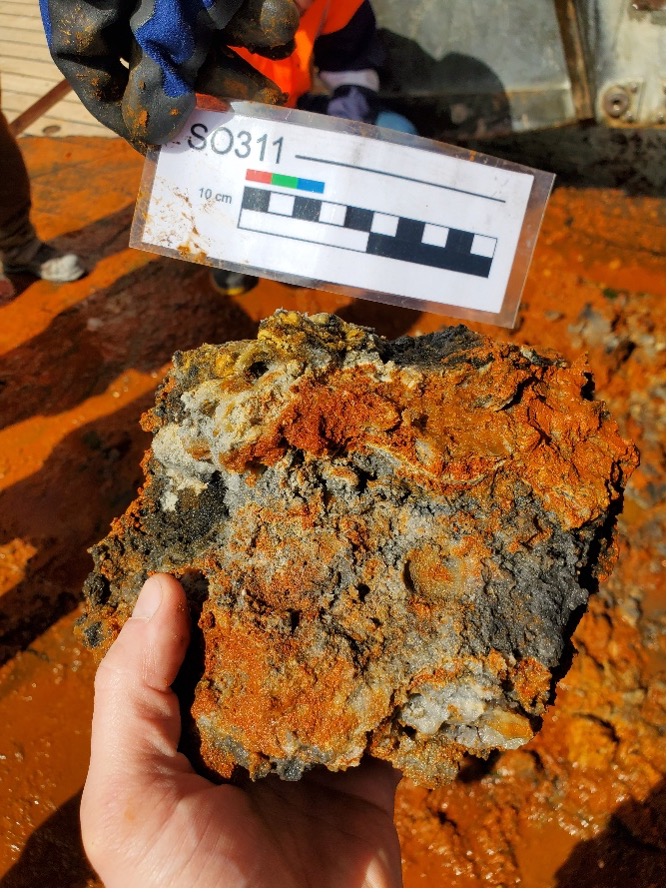
Back at Brothers, TVG operations were carried out in a hydrothermal upwelling zone on the northwestern caldera wall, and here there was a highlight: a long-awaited piece of hydrothermal stockwork mineralization! The host rock is clayey material traversed by a network of several generations of different veins containing sulfides such as sphalerite, pyrite, chalcopyrite, and sulfates in the form of barite. The different vein generations testify to a complex history of formation.
- April 9–10: An unexpectedly soft surprise & the next drilling
The next target was a hydrothermal field on the northwestern edge of the caldera, which was sampled with the TV grab. A piece of a 12-meter-high, tower-shaped hydrothermal structure was recovered. Contrary to our assumption that these were massive sulfides from an inactive black smoker, the samples consisted of soft, clay-like material saturated with water. Further investigations at home in the laboratory should provide information about the exact composition of these samples.
MeBo200 was then deployed on a plain near the hydrothermal field to sample the underlying fluid ascent zone. However, this borehole yielded fresh volcanic rock.
- April 11–12: Exploration of the Rapuhia and Giljanes seamounts
As the somewhat rougher weather prevented the use of the MeBo, the Rapuhia and Giljanes submarine volcanoes, located approximately 40 km to the west, were explored. First, a bathymetric map was created using the echo sounder, then a Tow-Yo profile was run with the CTD to identify possible traces of hydrothermal activity in the water column. - April 13: Use of the dredge
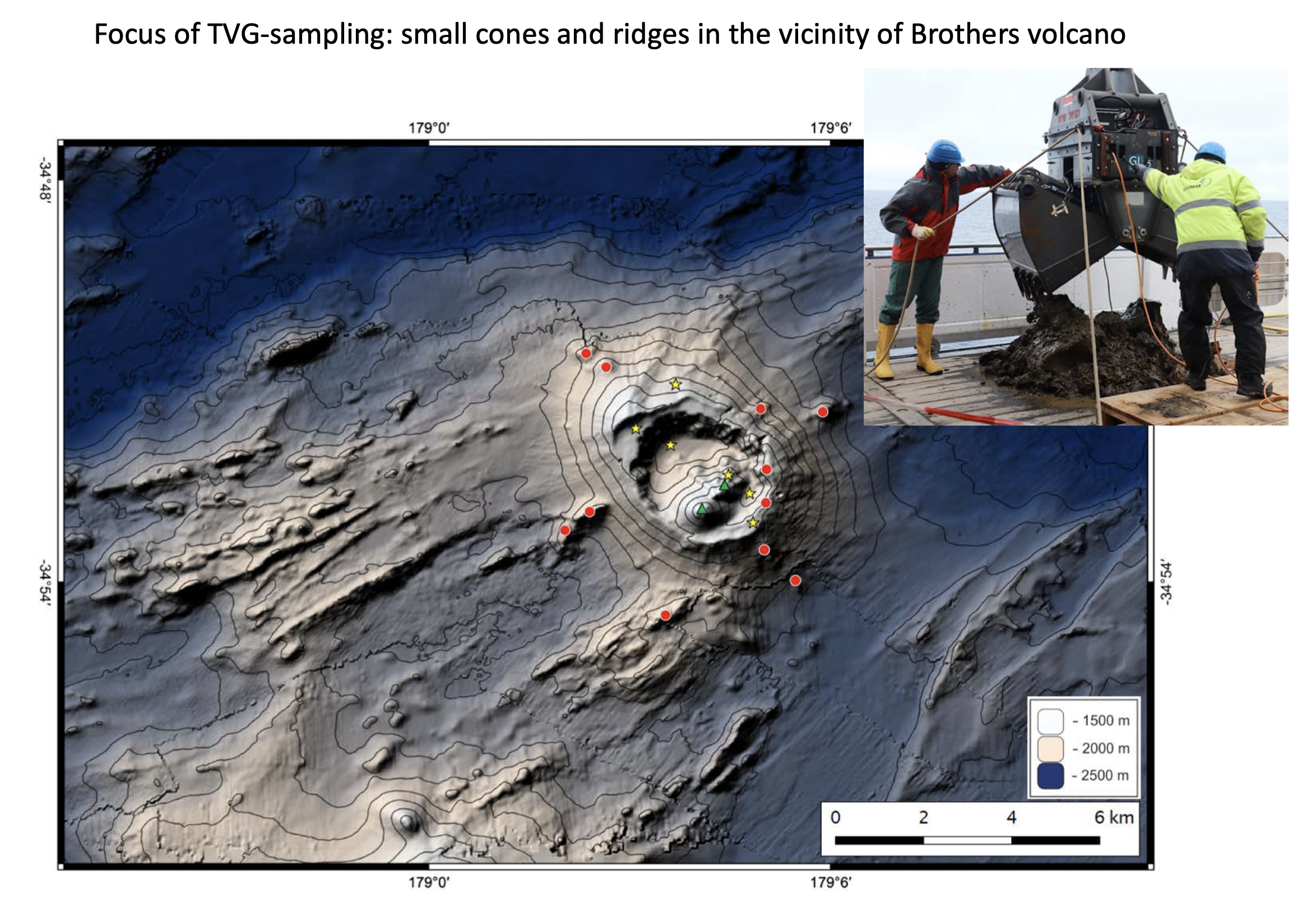
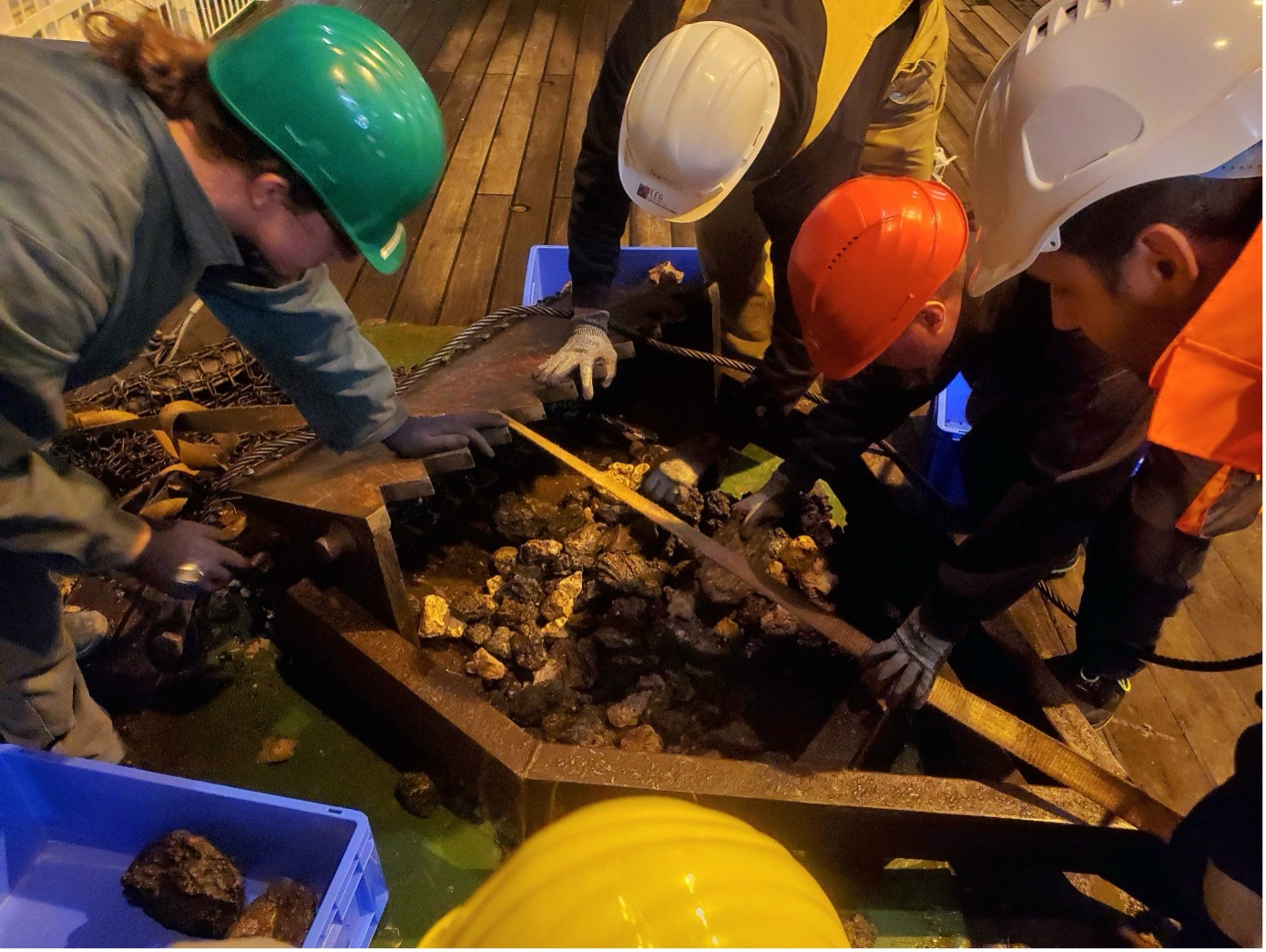
The TV grab needs servicing – luckily we have Bernd on board, who keeps the grab running smoothly – which is why a dredge is now being used instead. This relatively simple device consists of a heavy metal frame and a wide-meshed chain net. To take samples, it is dragged across the seabed, trapping rock samples in the net.
Throughout Sunday, the dredge was used on various volcanic ridges between Brothers and Healy. This yielded a variety of rock samples, from different types of pumice to lava and subvolcanic and plutonic rock fragments.
- March 30: Diligent sampling
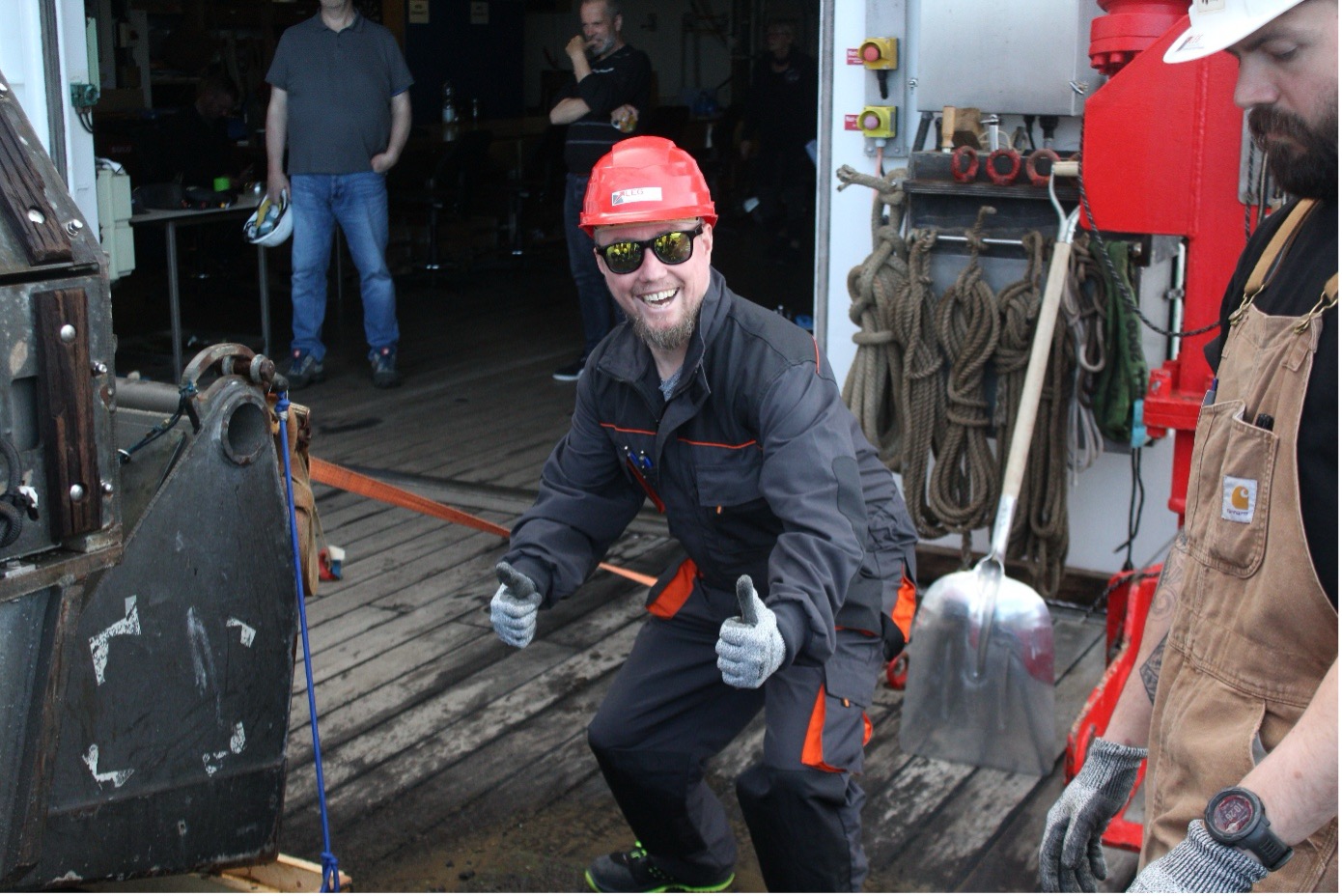
On Saturday morning, the water conditions were measured again using the CTD. The CTD device consists of several sensors for measuring water temperature, density, conductivity, and turbidity, as well as several containers that can be filled with water samples from the depths.
- March 31: First (shorter) MeBo drilling
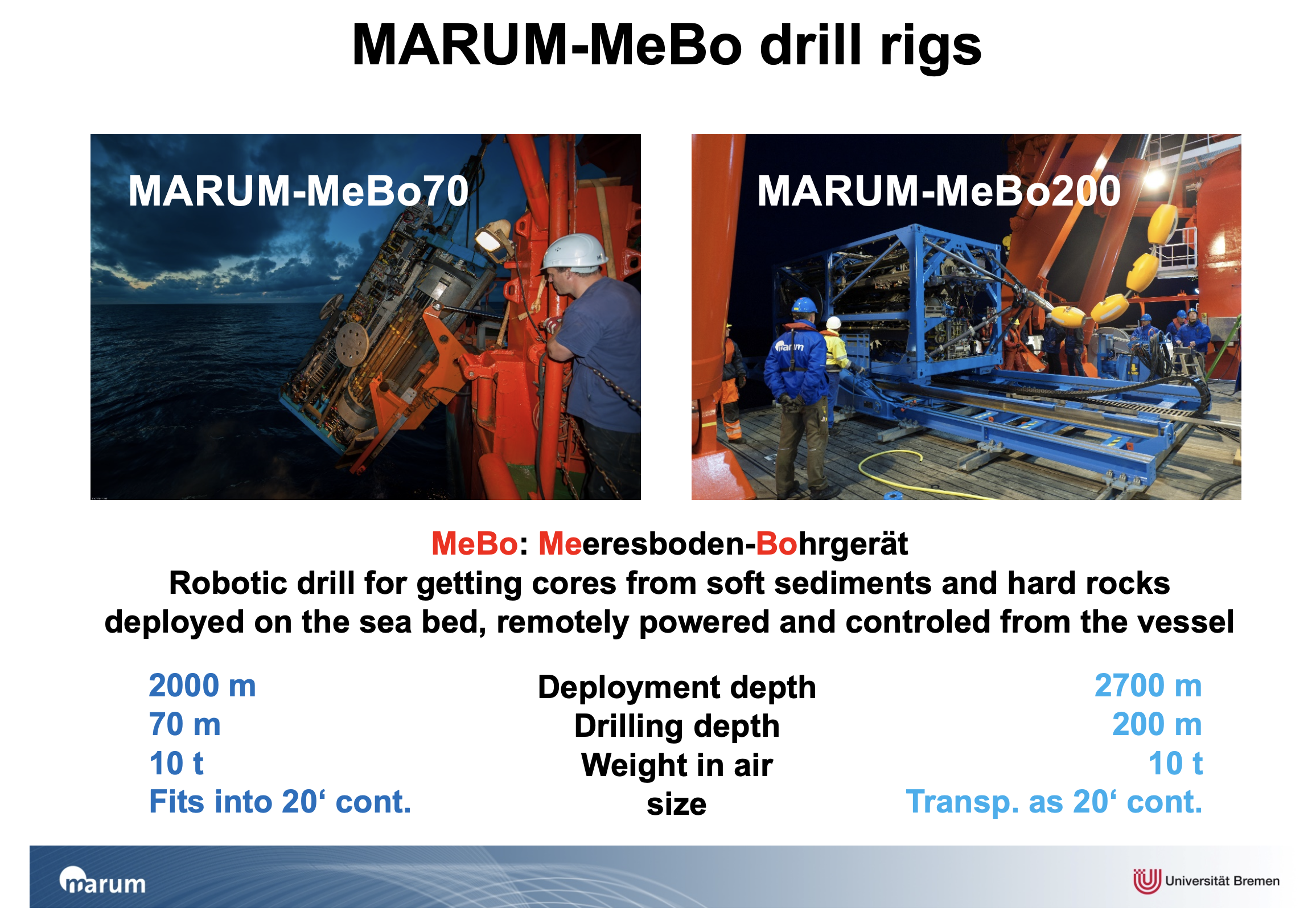
In addition to the usual CTD and TV grab sampling, it was now time for the first deployment of the Bremen seabed drilling rig MeBo200. This was positioned on a flat area that had been previously explored using the TV grab camera before the drilling process could begin. Unfortunately, after a while, minor technical problems arose, which meant that MeBo had to be retrieved. At least the first successfully drilled core sample had been obtained, even though most of the subsoil consists of poorly consolidated sediments that are difficult to core, resulting in high core loss.
An echo sounder survey will be conducted overnight to map the bathymetry, i.e., the topography of the seabed, more accurately. - April 1–2: Drill, MeBo, drill!
After another TV grab trip on a ridge structure between the Healy and Brothers seamounts, there are more rock samples, this time richer in phenocrysts. A leak in one of the TV grab’s batteries was quickly repaired.
MeBo200 is now to remain on the seafloor in the southwestern caldera of the Brothers seamount for several days to drill as long and complete a core as possible. MeBo remains on the seafloor throughout the next day, diligently drilling several meters into the depths.
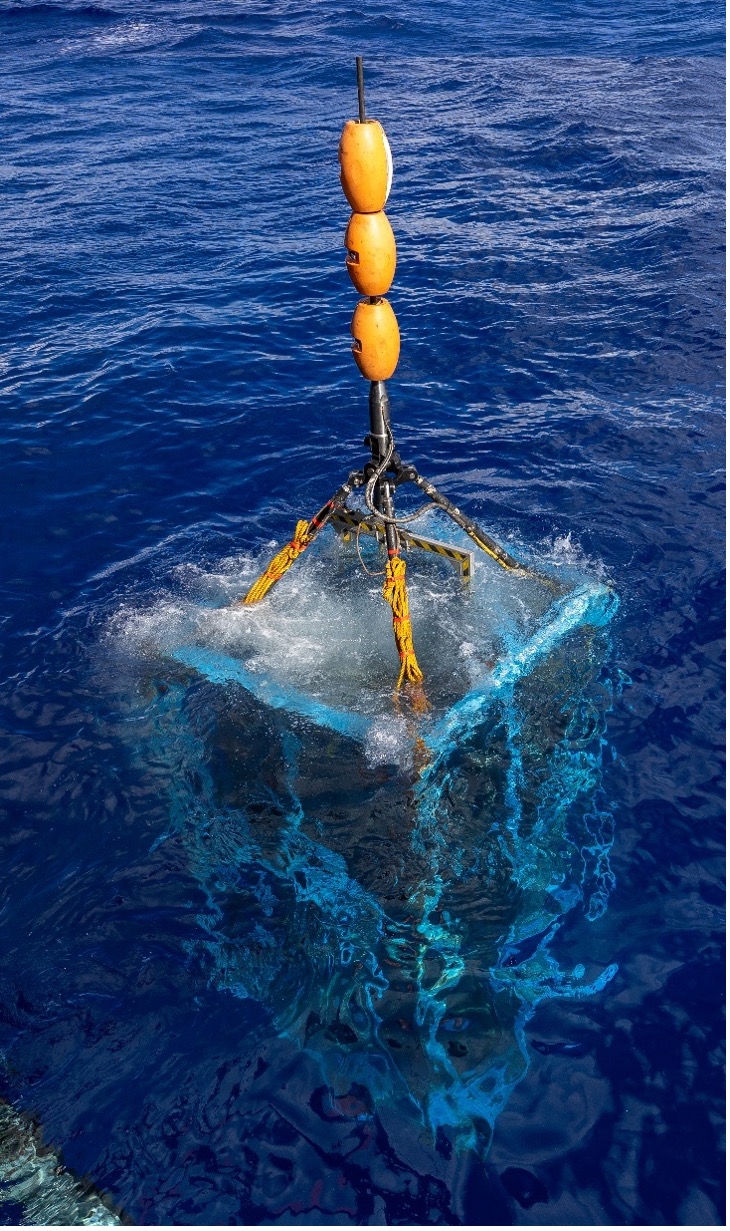
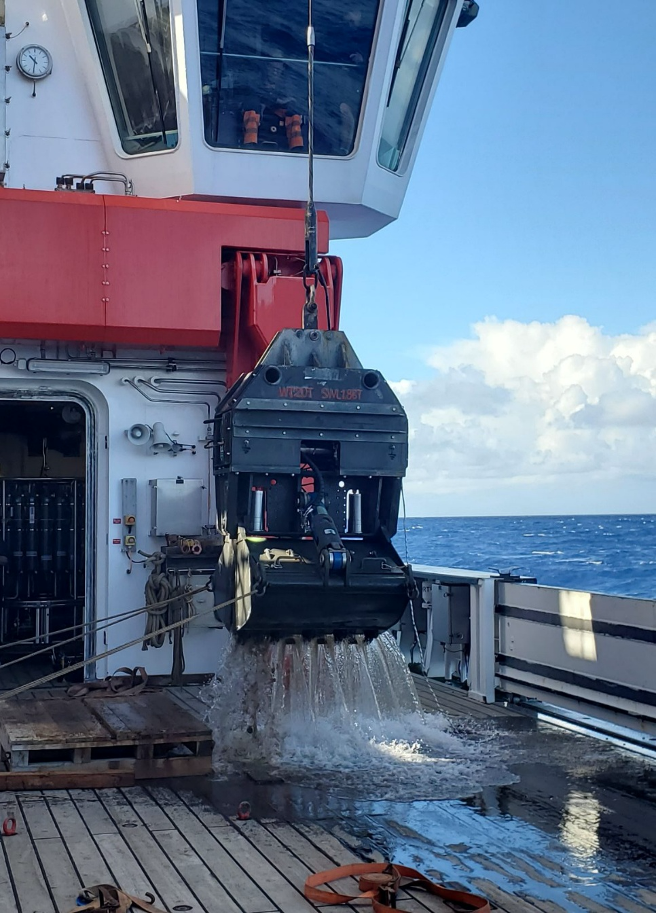
We have again been busy collecting samples from the seabed with the TV grab. The TV grab is designed like an excavator shovel on a wire rope, which can take targeted samples from the seabed using a camera. This time, we mainly collected typical dacites from the Brothers Seamount, fine-grained dark volcanic rocks with only a few crystals visible to the naked eye.
- April 3: End of the first drilling
The next day, the drilling process has to be stopped. It’s getting tough to pull out the drill string, and the loose sediment that makes up the top layer of the subsoil is falling into the borehole and blocking the drill pipe, making it harder to pull out.
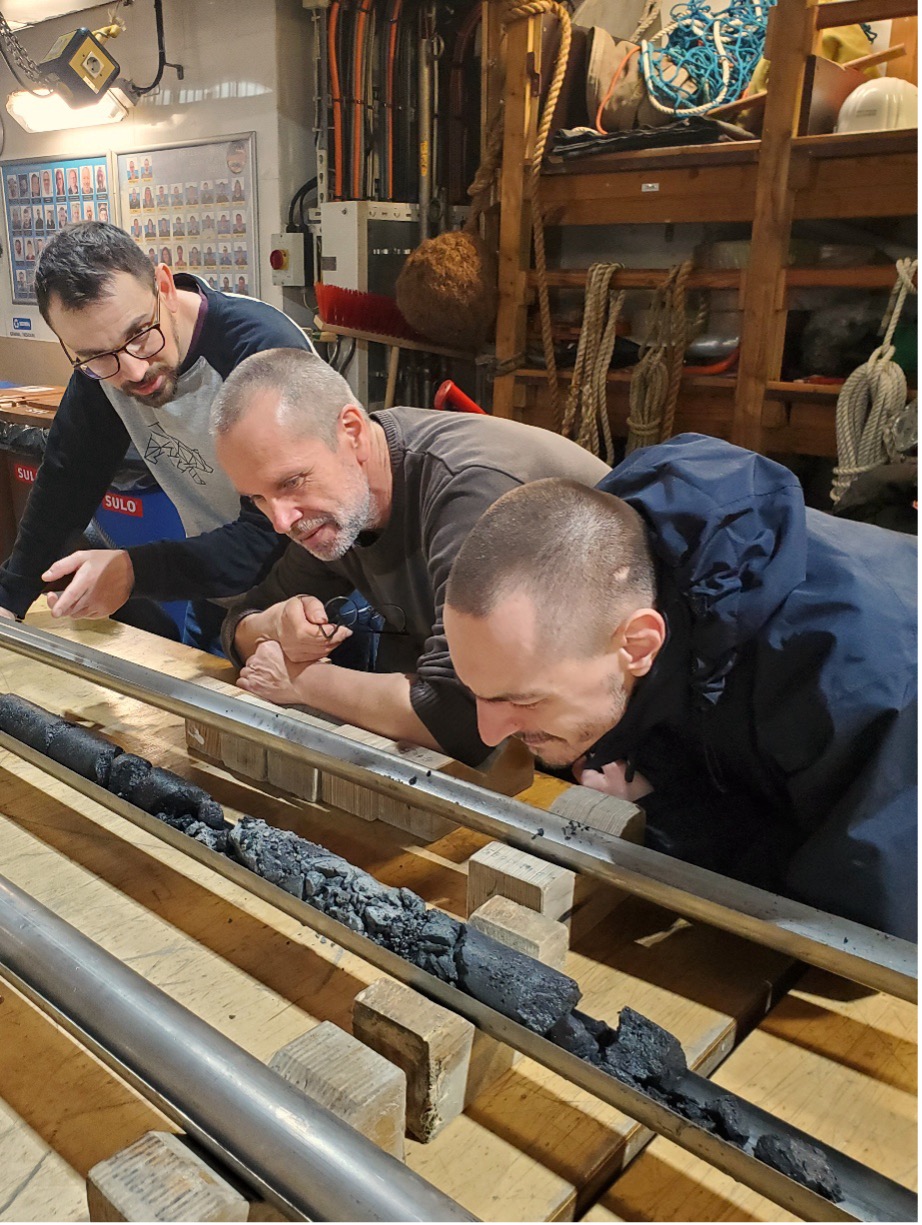
Examining the coreliner tubes containing the drilled cores is like opening presents: only once on board the ship and the tubes are opened can it be seen whether a core has been recovered at all. Core loss varies significantly depending on the type of subsoil drilled. Nevertheless, some sections of solid, contiguous drill cores were recovered, some even with visible hydrothermal alteration zones.
- April 4: Grabbing at Healy
Now it is Seamount Cotton’s turn to be sampled with the TV grab. We manage to recover a large lava sample relatively quickly.
As a substitute, several CTD tow-yos were run over the next few days. Tow-yo comes from “tow” for pulling the CTD behind the ship and “yo” for repeatedly lowering and raising the device, like the movement of a yo-yo. This allows a longitudinal profile to be recorded through the water column in order to determine, for example, the extent of different water layers or hydrothermal plumes. - April 5: Slightly rougher seas
An extension of a low-pressure system has reached our working area, and even though the worst part of the storm has passed us by, the sea has become noticeably rougher. This has caused some difficulties for a few people, as the ship has been rocking noticeably more and waves have occasionally washed over the aft deck. However, this was only a temporary phenomenon, and by evening the sea had calmed down again. - April 6: MeBo back in action
MeBo200 is back in action and has now been deployed on the upper cone of Brother Seamount, whose surface is fortunately flat enough. There is also not as much loose material on the surface as initially feared; the rock is quite solid, which gives hope for a good drill core.
- March 3–23: A long outward journey
On Friday afternoon, we finally set off: everything is packed, and the Erlangen group consisting of Manuel, Jan, Alica, Nils, Bernd, Fabian, and Hans begins a long flight (approx. 30 hours) to Wellington in New Zealand with short stopovers in Singapore and Auckland.
Most of the scientific equipment, which was sent ahead by container, is already on board the research vessel Sonne. - March 24: Jet lag and sightseeing in Wellington
After the first night, most people have already adjusted to the 12-hour time difference; with analog watches, you don’t even have to change anything. - March 25: The last time on solid ground
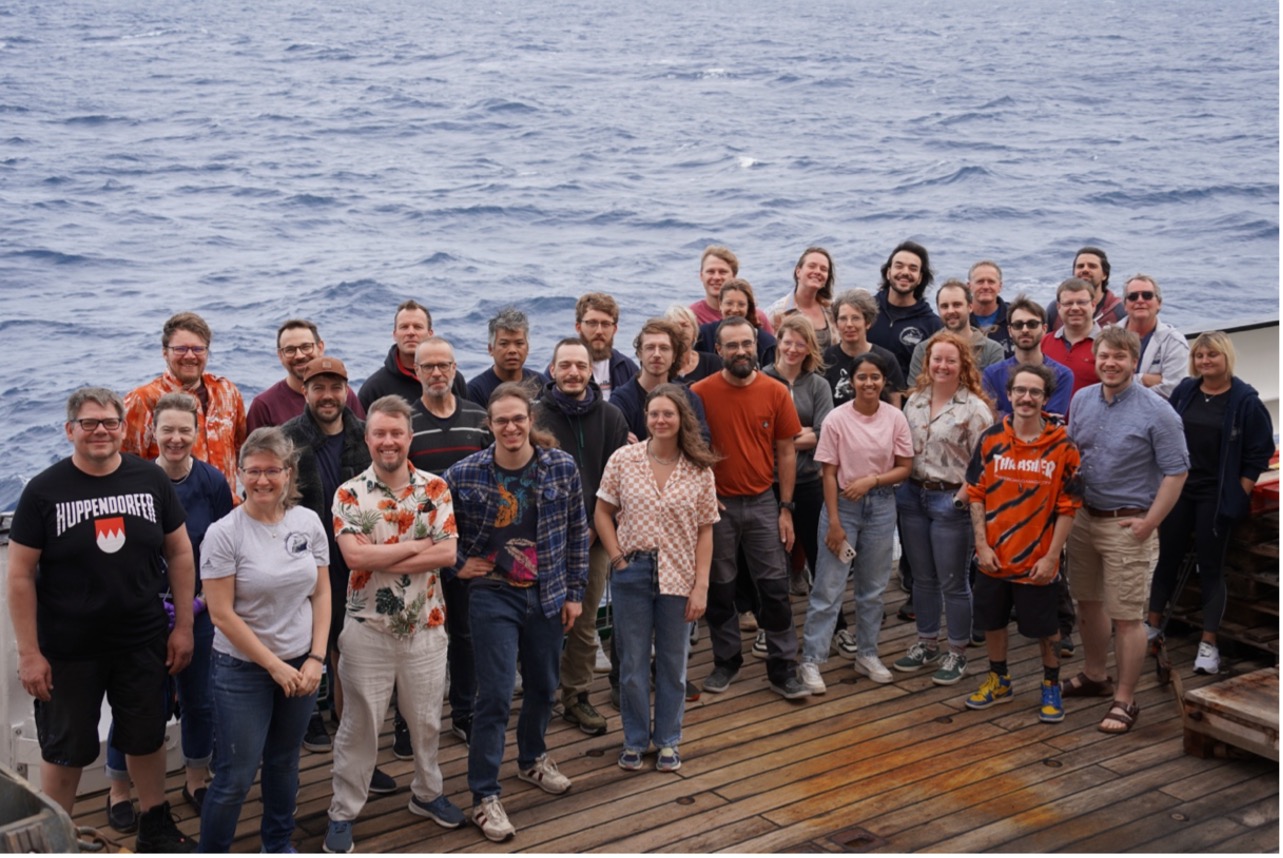
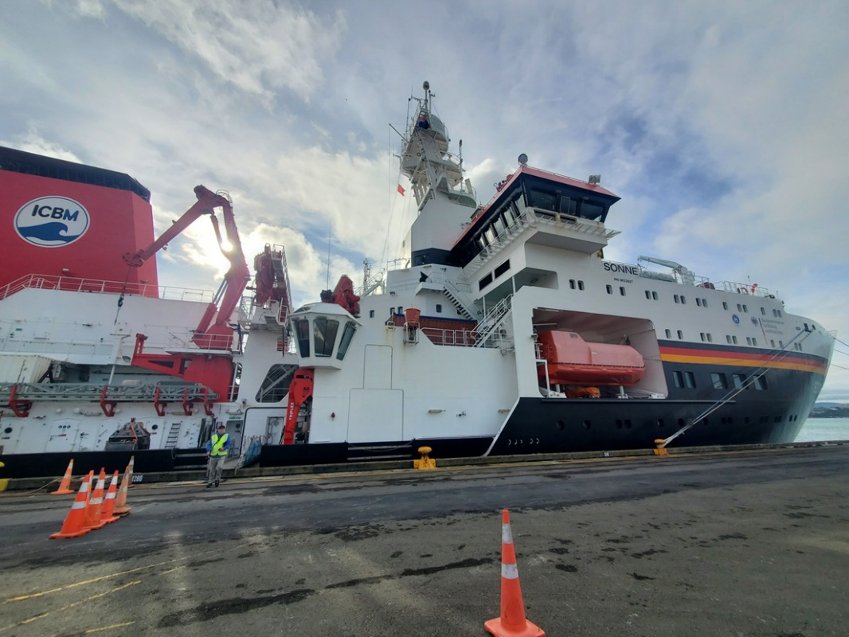
Early in the morning, everyone from Erlangen and Bremen left the hotel for the research vessel Sonne. At 116 m long and 20 m wide, the Sonne is one of the largest research vessels in the world. It will set sail on this voyage with 30 crew members and 34 scientific participants.
We were now able to move into our cabins, and in the evening we had our last opportunity to go ashore before setting sail the next day.
- March 26: Departure!
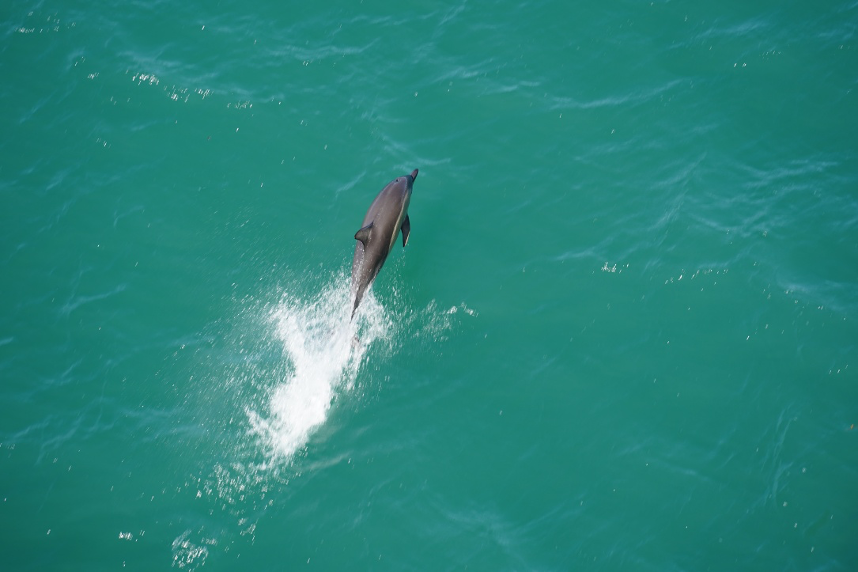
Right after lunch, it was time to set sail, and the journey began under beautiful sunny skies. A few curious dolphins accompanied us out of the harbor. After a safety briefing, we held our first scientific meeting, which will now take place daily. These meetings will feature short presentations by all working groups and discussions of work progress and weather developments. - March 27: Northward along the coast
After the first night at sea, most people have now gotten used to being on board, and fortunately there have been no serious cases of seasickness. On Thursday, we spent the whole day sailing northward along the coast of New Zealand. During this time, we began moving into and setting up our laboratories and planning our workflow.
- March 28: Equipment tests
The work area was reached on Friday, and the sun was shining for the first time. First, a TV grab test was carried out, which can take camera-guided samples from the seabed. The Mebo200 team also gave everyone else a tour of their facility.
In the evening, water samples were taken using a CTD probe (conductivity, temperature, density) and the echo sounder was calibrated, which required the exact speed of sound in the water.
Overnight, the multibeam echo sounder was used to record a precise bathymetric map of the Healy volcano, which served as the basis for later sampling. - March 29: First rocks from the deep sea
Now it’s getting serious: will the TV grab succeed in bringing samples on board and exploring the seabed for the Mebo200 (seabed drilling rig) mission? First, the grab was lowered via the side slide bar until it finally reached the bottom at a depth of approximately 1,600 meters. Several plateaus were explored over several hours in order to later deploy the Mebo200. In addition, the borehole from the IODP 2018 drilling was rediscovered. Finally, the grabber picked up its first piece of rock: a large piece of a black smoker, which was brought on board and then processed in the laboratory.
Details about the project