
Milos, 2023 – RV Meteor – Cruise M192-2
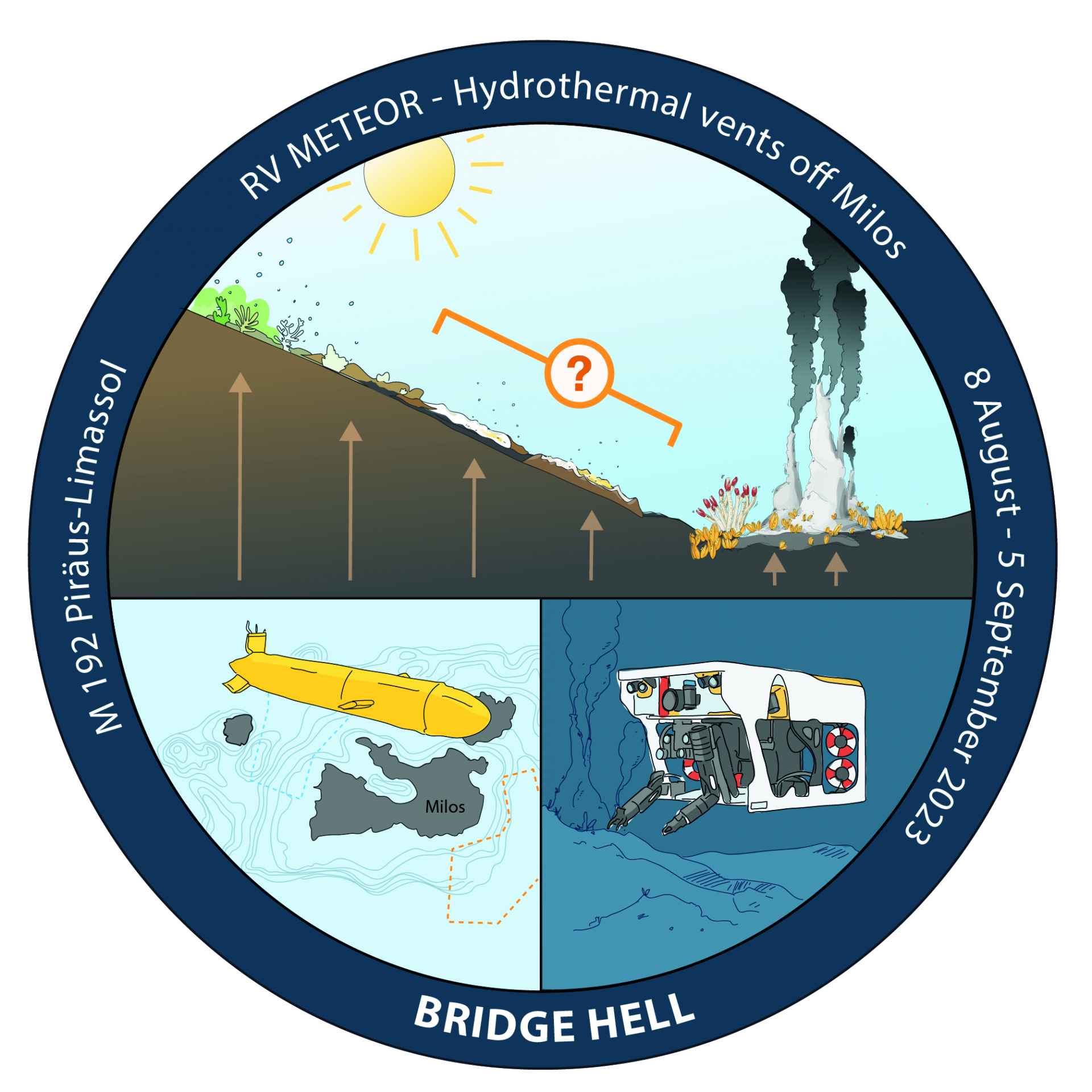
Milos, 2023 – RV Meteor – Cruise M192-2
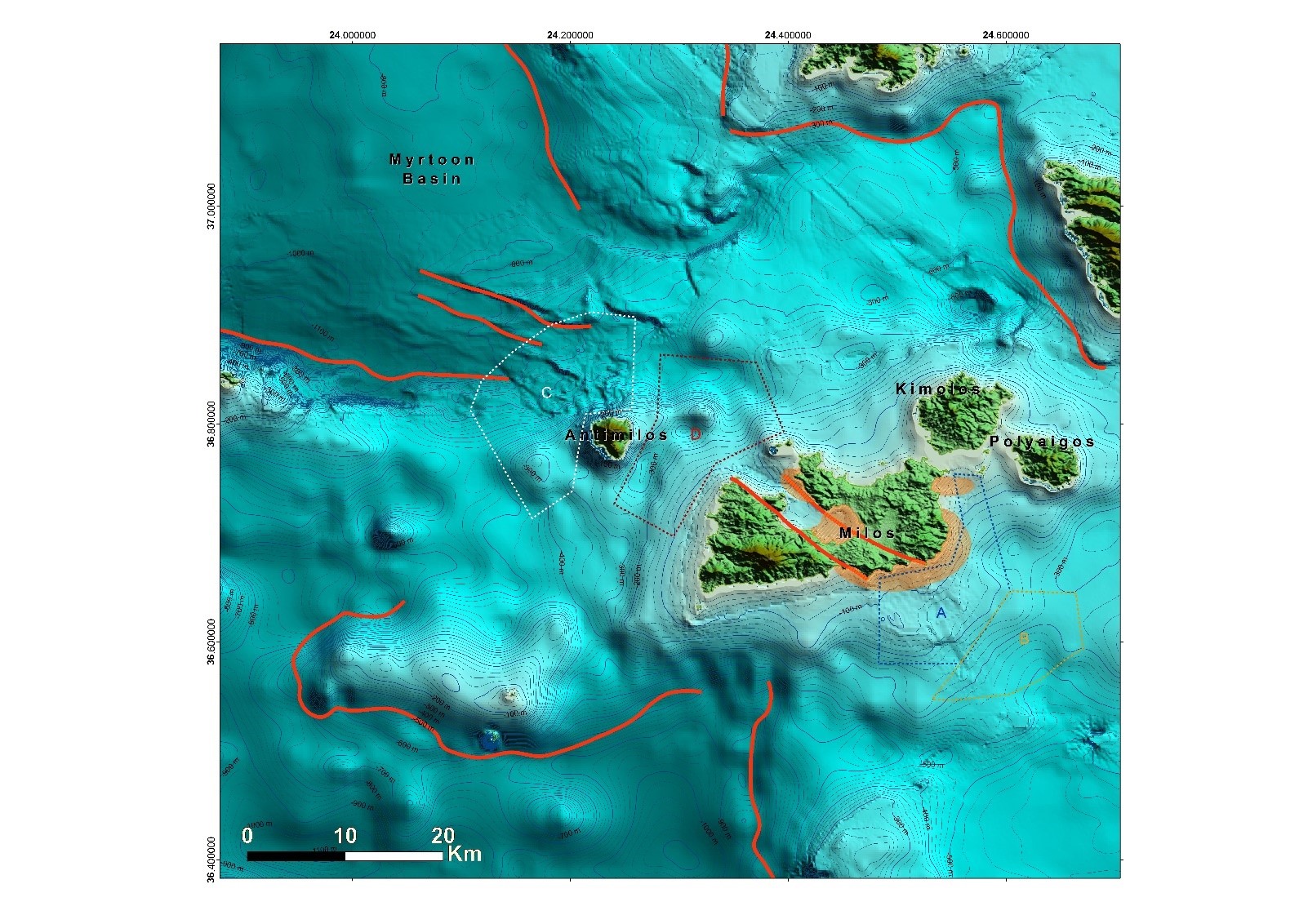
Under the direction of MARUM, Bremen, a research expedition will take place in the Milos area from August 18 to September 5, 2023, to map the hydrothermal deposits there and investigate their composition. The effects of these undersea “hot springs” on the specific biology in such habitats will be investigated, as will the geochemistry of rock and sediment samples in these areas.
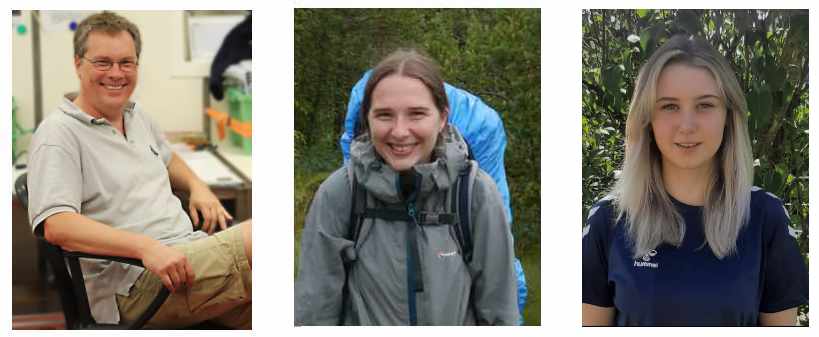
The Erlangen scientists participating in this expedition are Prof. Dr. Karsten Haase, doctoral student Wiebke Schäfer, and master’s student Nora Persch from the Chair of Endogenous Geodynamics.
Up to date: The logbook for everyday life on board!
Simply put, “hydrothermal” means something that has to do with hot water or hot liquids. Marine hydrothermal systems form, for example, where magmatic bodies are located underground, so they are often linked to volcanism. The volcanic rocks solidify on the surface, cool down, and shrinkage cracks form. Cold, dense seawater penetrates the rock through these cracks and is heated as it descends. This causes reactions with the surrounding rock and certain elements are leached out. Eventually, the water becomes so hot and less dense that it finds its way up through other fissures, forming a convective system. When the rising solution comes into contact with the seawater at the sea floor, substances that are economically valuable are precipitated due to different redox conditions and chemical composition. At the same time, structures (black and white smokers) are formed that are colonized by highly specialized organisms, sometimes in large numbers.
This research expedition is a spin-off project of the DFG Emmy Noether Group Hydrothermal Geomicrobiology (led by S.I. Bühring), which focused on investigating the hydrothermal shallow water system off Milos. The reduced hydrothermal fluids from the Earth’s interior and the oxidized seawater form a functional interface with diverse ecological niches for microorganisms, whose prevailing extreme conditions also require diverse adaptation mechanisms from their inhabitants. We will investigate the geology, geochemistry, and microbiology of hydrothermal systems along a transect from the shallow, coastal, photic to the deep, offshore, aphotic zone. This will be done along the Hellenic Arc, a subduction zone with known hydrothermal activity. The Aegean Sea offers ideal conditions for investigating submarine hydrothermal activity in the transition between shallow and deep water, as well as the influence of water depth on biological processes and diversity. We intend to document the changes in the chemistry of fluids and the associated microbial diversity and function with increasing depth and distance from land and to investigate the relative importance of chemosynthesis and the dependence of animals on symbiotic relationships with microorganisms at increasing depths.
Until now, shallow-water and deep-sea hydrothermal systems have been treated as independent, seemingly unconnected entities; This expedition is a first attempt to remove this arbitrary boundary and investigate hydrothermal systems as a continuum.
Continue reading here …
Geology and geochemistry of hydrothermal rocks:
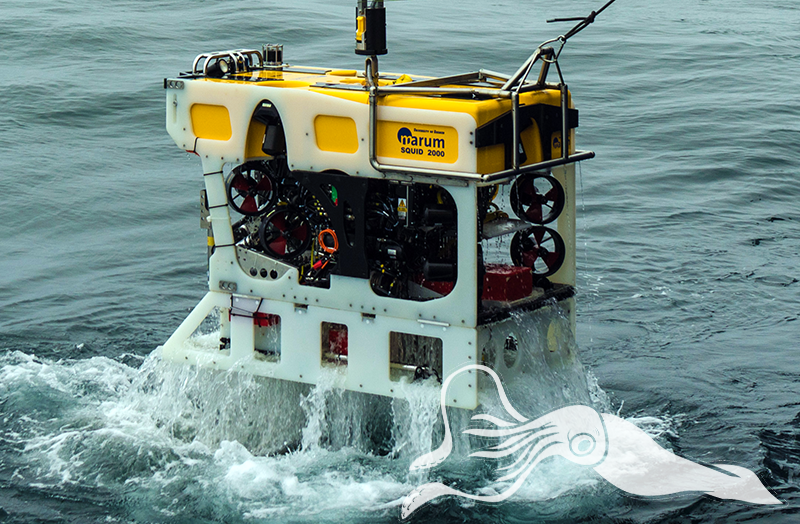
The main tool used by petrologists will be the remotely operated vehicle (ROV). Sampling volcanic rock and hydrothermal precipitates at the vents with the ROV will provide information about the age and composition of the lava and the vents. This will make it possible to determine the potential influence of magmatic volatiles and the leaching of the rocks by fluids. The study of hydrothermal precipitation helps to determine the long-term development of hydrothermal vents and changes in fluid chemistry over extended periods of time. chemistry over longer periods of time.
Logbook of the expedtion
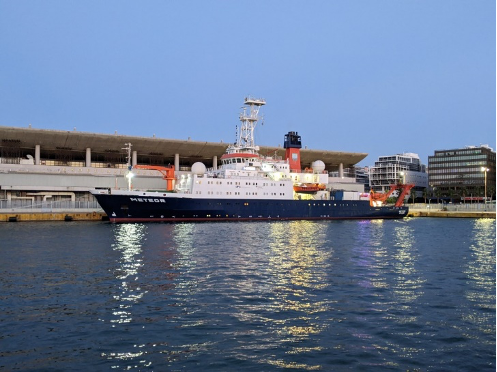
After a long period of planning, we are finally on our way. Karsten, Wiebke, and Nora successfully completed the journey from Nuremberg to Athens in just under six hours. Unfortunately, there were some losses: two suitcases are missing in Athens. After our group arrived at the hotel in the evening, they visited a Greek restaurant before the day came to an end. The next morning, we finally boarded the research vessel “Meteor” in the port of Piraeus. With a length of 97.5 m and a width of 16.5 m, it will now be our base for the next 18 days. The first meeting of all participants takes place, and the ship is loaded with the last necessary items, such as food, before it sets sail the next morning.
After surviving our first night on the ship, we set sail at 9:30 a.m. and headed for Milos. At noon, we conducted emergency drills for various scenarios, which everyone mastered well.
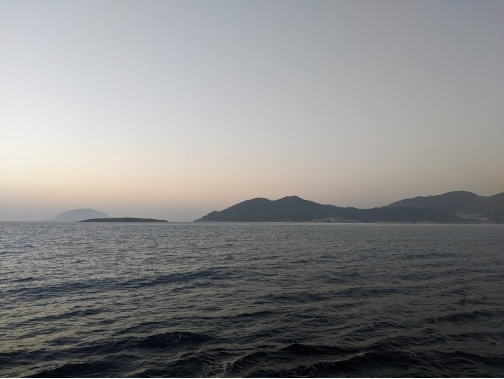
In the evening, the first samples were taken using the Van Veen grab and the multicorer. Work continued with these two devices the next morning at 8 a.m., and numerous samples were taken throughout the day. In the evening, everyone watched a movie together.
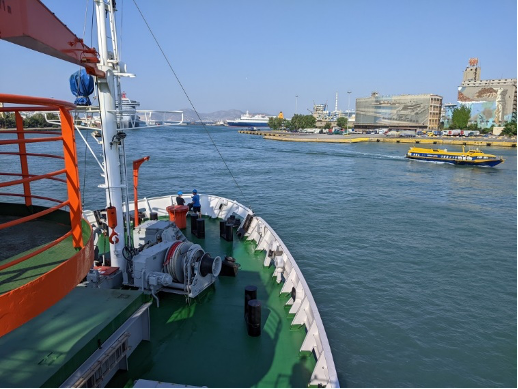
Everyone was very excited about the next day, as the ROV was about to be used for the first time – a remote-operated vehicle (ROV) that can take various samples from the seabed and is equipped with several cameras that allow you to follow what is happening. The ROV dive began at 10:30 a.m. and ended at around 3:30 p.m. Everyone involved waited eagerly for their samples so they could process them afterwards.
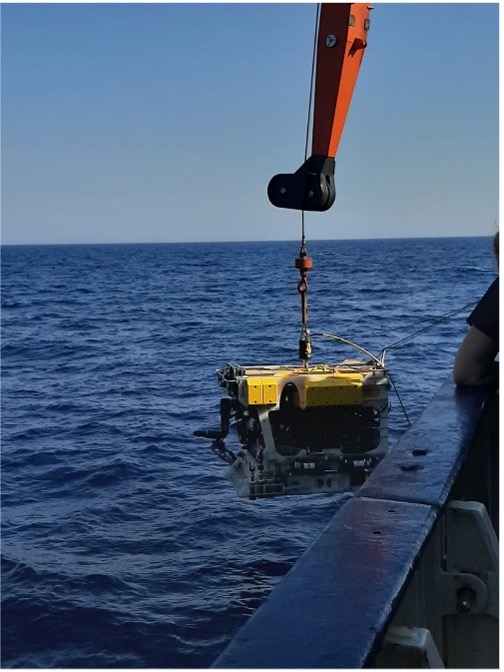
Today, we eagerly continued with the ROV, but unfortunately it was not as successful as the day before. Shortly after submerging, the operation had to be aborted due to a technical problem. A replacement program was called for. Several samples were taken with the Van Veen grab and the multicorer. A second attempt with the ROV was planned for the afternoon, but this operation also had to be aborted before submerging. Therefore, the Van Veen grab and the multicorer were used again.
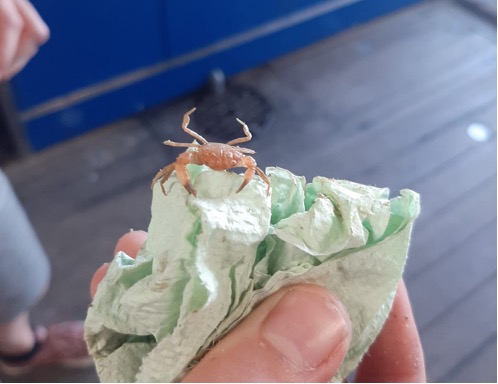
On the seventh day of the expedition, the program began with the ROV once again. However, as on the previous day, the dive had to be aborted before the robot reached the seabed. But just under two hours later, a second attempt with the ROV could be made. This time it was successful, and the robot spent several hours on the seabed, enabling many samples to be taken. Once the robot was back on the ship, the processing and analysis of the samples began. The first rocks were also included for us.
The ROV’s first dive attempt was successful, and samples were collected over several hours. Unfortunately, there were transmission problems with the cameras, which meant that the scientists in the conference room were only able to partially follow the action to help decide where to take samples. Despite these difficulties, some impressive sites on the seabed were found and sampled, including hydrothermal vents. After the ROV resurfaced, the processing began again: sawing, describing, and packing.
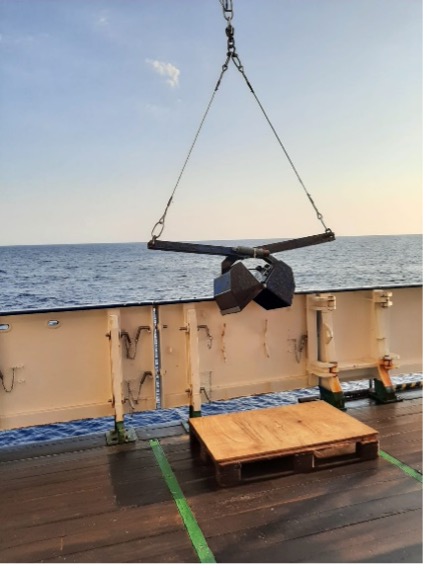
Another successful day for the ROV, with many hydrothermal sites discovered. In the evening, several samples were collected using the Van Veen grab.
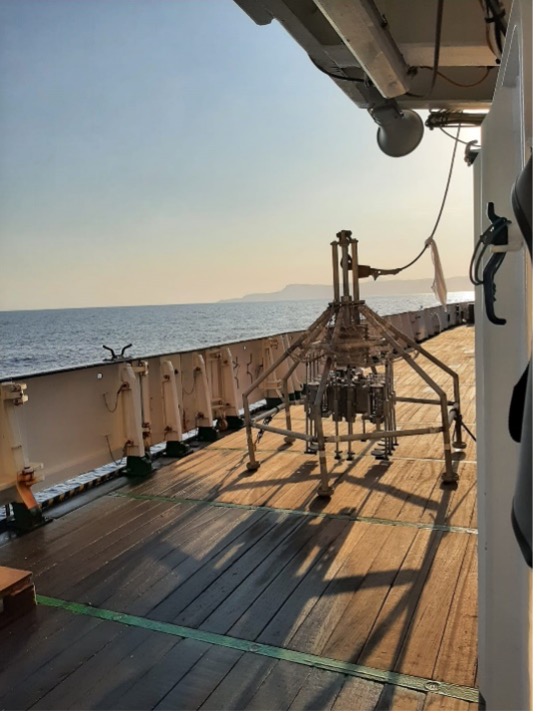
The day began right after breakfast with an ROV dive that lasted until the afternoon. After assessing the yield, further sampling was carried out in the evening. The Van Veen grab was used again, followed by the multicorer (MUC), which takes several cores from the ground, when the substrate was suitable.
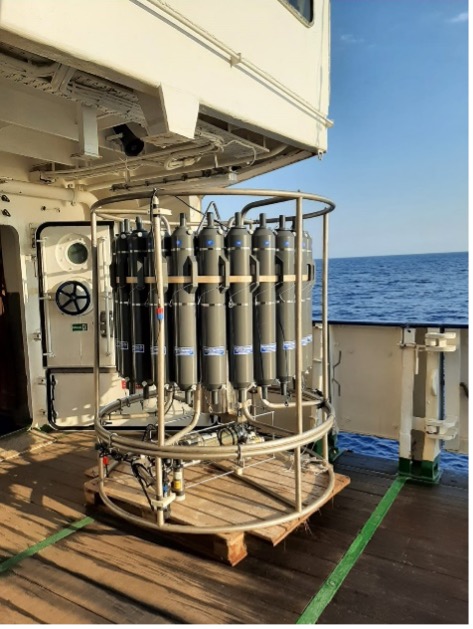
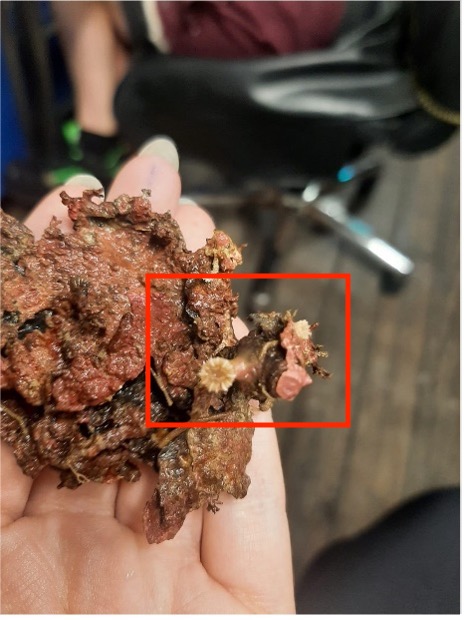
A big disappointment first thing in the morning: the ROV cannot dive today and will probably not be ready for use tomorrow either. But a new plan was quickly drawn up. Once again, it became clear how important it is to be flexible. The water column was sampled using the CTD (Conductivity, Temperature and Depth). The VVG brought many sediments, but also red algae and cold-water corals on board. And the MUC was also put to use.
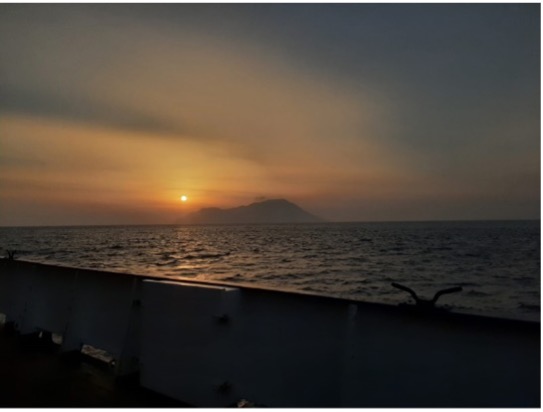
There is great excitement: the ROV has been repaired earlier than expected and will be ready to go at noon. Unfortunately, there was still no rehearsal for us that day. In the evening, we made ourselves comfortable on deck—at least as comfortable as possible, since we had a bit more swell for the first time on this trip and one or two waves even made it up onto the ship.
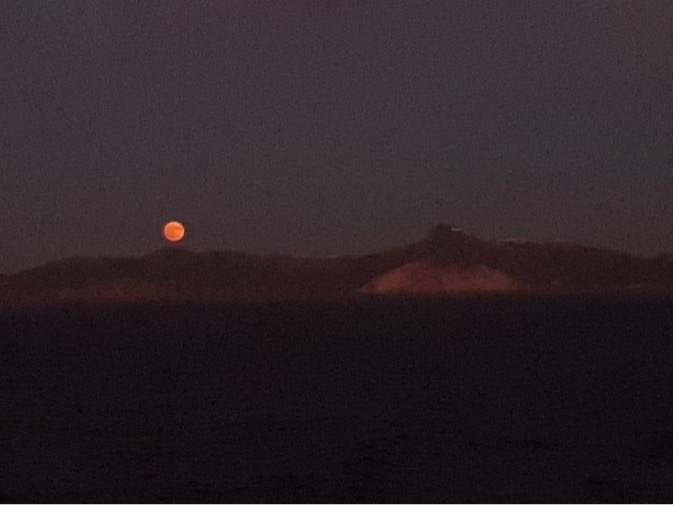
New daily routine: Before the ROV, the day now starts at 8 a.m. with a CTD, followed by a Van Veen grab and multicorer until the dive begins at 10 a.m. Spectacularly caused by the robot, we saw a small tornado of gas bubbles and sediment on the seabed. Full of anticipation, we waited until the ROV was back on the ship. Finally, samples for us, including a 30 cm chimney and even something volcanic. After a short break, we couldn’t miss the rise of the blue supermoon. We continued with Van Veen grabs, which provided us with two more large samples.
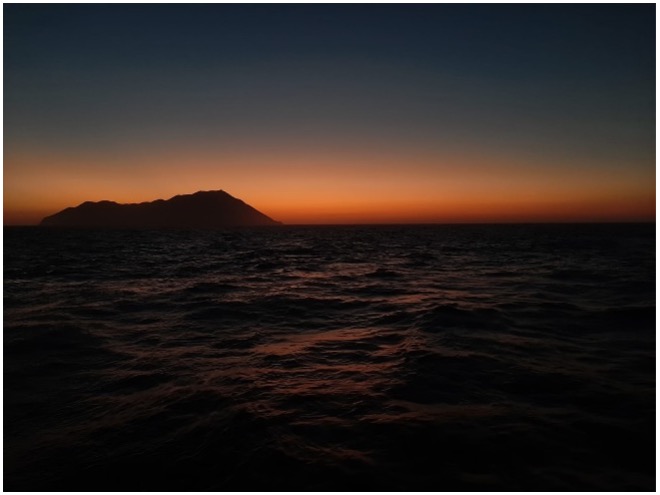
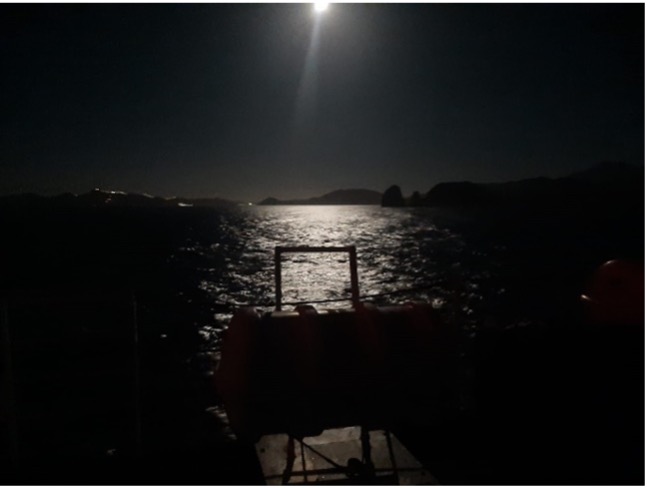
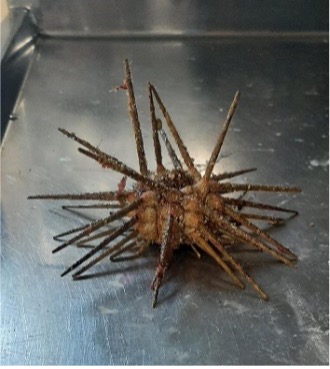
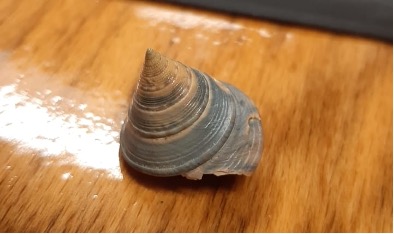
Bad news: the ROV will not be diving for the rest of the trip. We are considering how to fill the remaining days. Fortunately, we still have a few stations that we can sample with the Van Veen grab, and the afternoon and evening are already proving successful, yielding some volcanic rocks.
The next day: Even without the ROV, all kinds of samples are now being taken. The Go Flo, the CTD, the Van Veen grab, and the multicorer are being used repeatedly. And even though, unfortunately, there were no rock samples again, there were still one or two nice discoveries.
Last day of research just for us. We set off in search of volcanic rock with the Van Veen grab. There was a short interruption in the morning for an alarm drill, but then we got straight back to work. Shortly before 3 p.m., it’s time to call it a day. Unfortunately, we didn’t find anything more than mud and sediment today. But the day is far from over, because now it’s time to tidy up and clean. In the evening, we have a barbecue and a small closing ceremony.
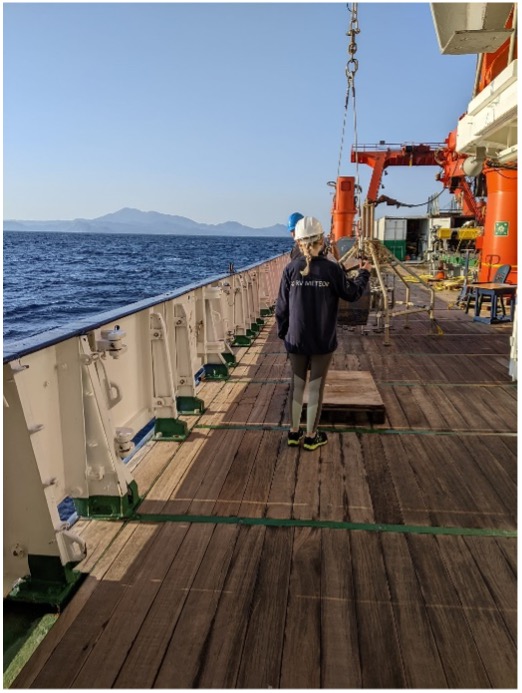 | 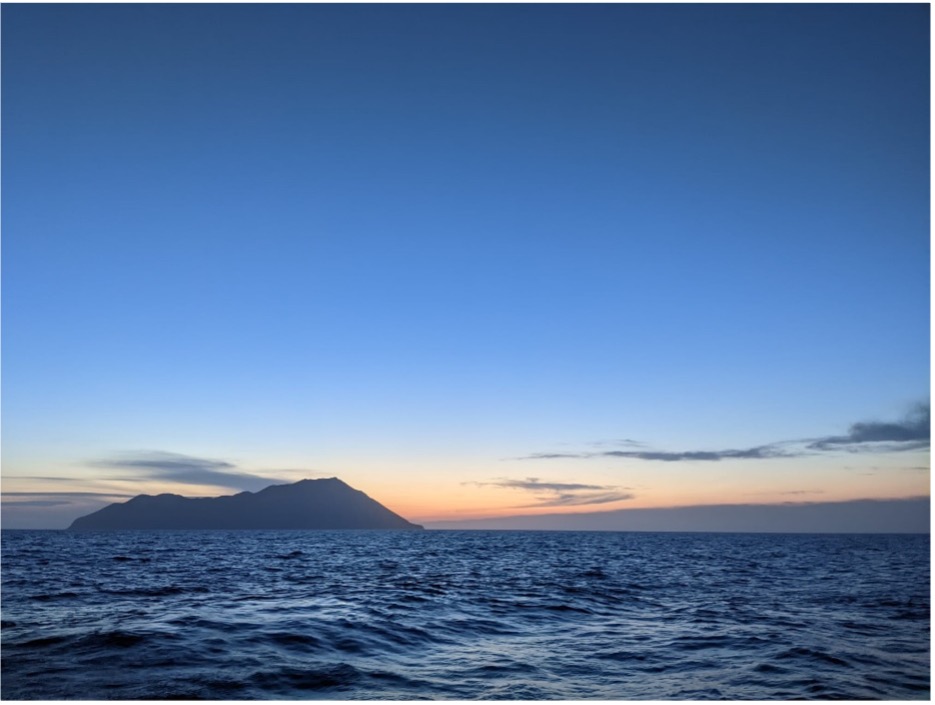 |
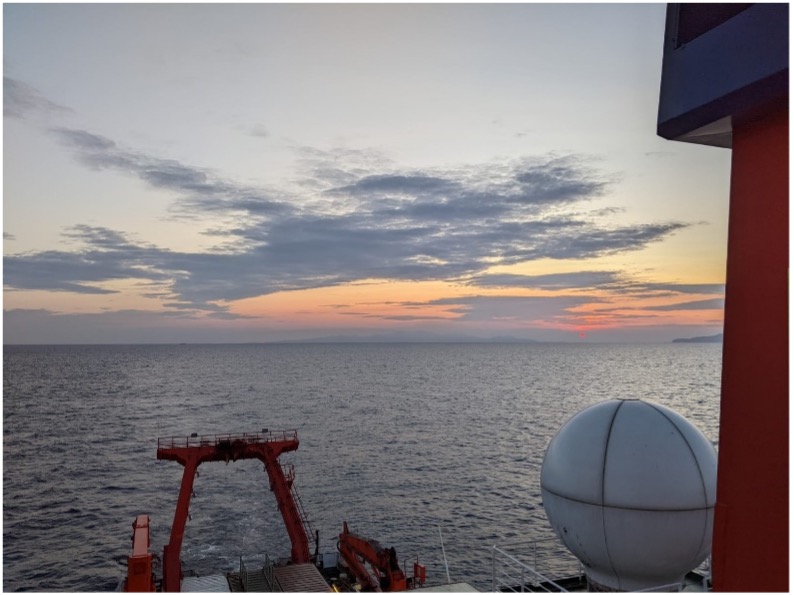 | 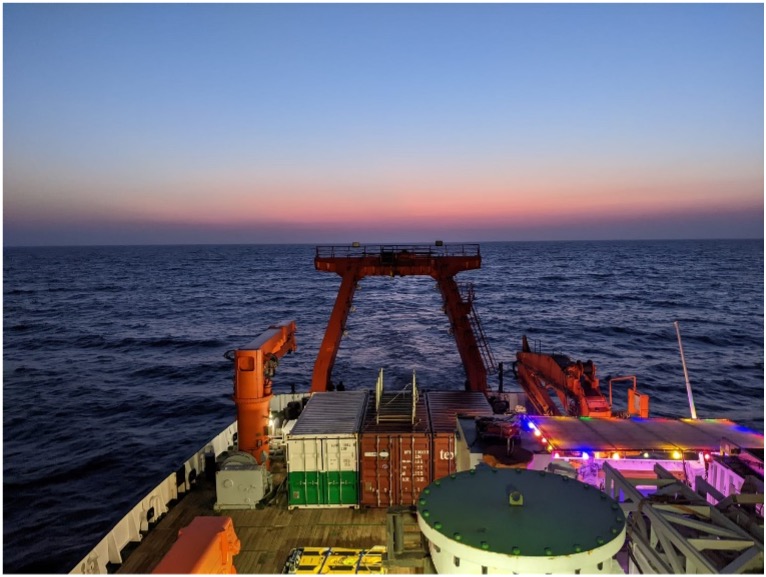 |
The transit to Cyprus has begun, and for the first time, there is nothing but water to be seen all around. Everything is being packed into boxes in the laboratories and then stowed safely in the containers.
Still in transit to Cyprus, the ship is thoroughly cleaned once again and the laboratories are then inspected by the chief mate.
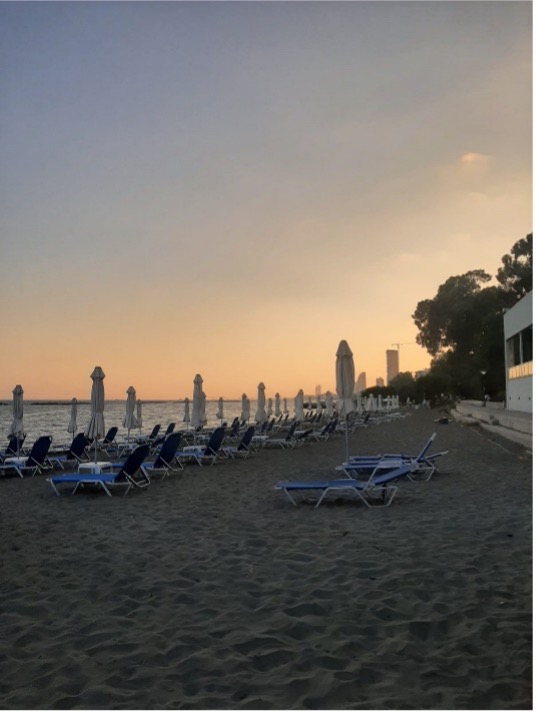
After two days in transit, land was in sight again and we arrived in Limassol. In the afternoon, we went to the beach and in the evening to a restaurant. We packed our bags and enjoyed our last evening on the ship before beginning our journey home the next morning.
 |  |  |