Biscay Connection, 2021 – RV Meteor – Cruise M176
Biscay Connection, 2021 – RV Meteor – Cruise M176
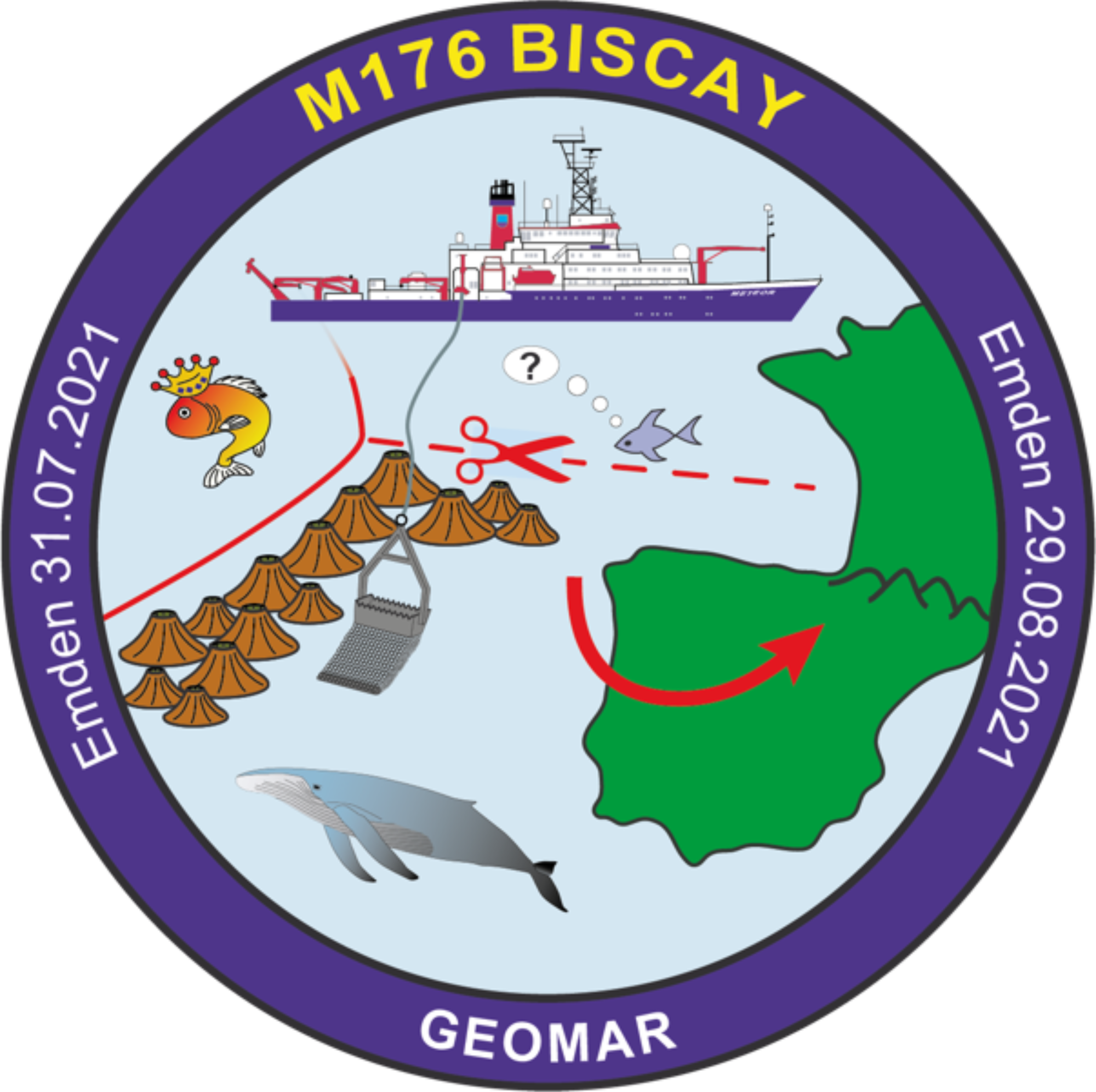
The FS METEOR expedition M176 is carried out by the GEOMAR Helmholtz Centre for Ocean Research Kiel in collaboration with the GeoZentrum Nordbayern at the Friedrich-Alexander University Erlangen–Nürnberg. The research areas include the western Bay of Biscay and the Azores–Biscay Rise, a 750 km long submarine mountain chain of unknown origin.
Understanding the opening of the Bay of Biscay and the associated movement of the Iberian Plate during the Late Cretaceous (approximately 124 to 75 million years ago) is fundamental for reconstructing the opening and evolution of the North Atlantic. A key area for this reconstruction is the intersection of the former Biscay spreading axis with the early Mid-Atlantic Ridge northwest of the present-day Iberian Peninsula. At this location, the former ridge intersection meets the Azores–Biscay Rise, a prominent structure in the northeastern Atlantic composed of numerous seamounts that are thought to be of volcanic origin. Proposed formation models range from a hotspot track (age-progressive volcanism on a plate moving over a stationary mantle plume) to tectonic origins.

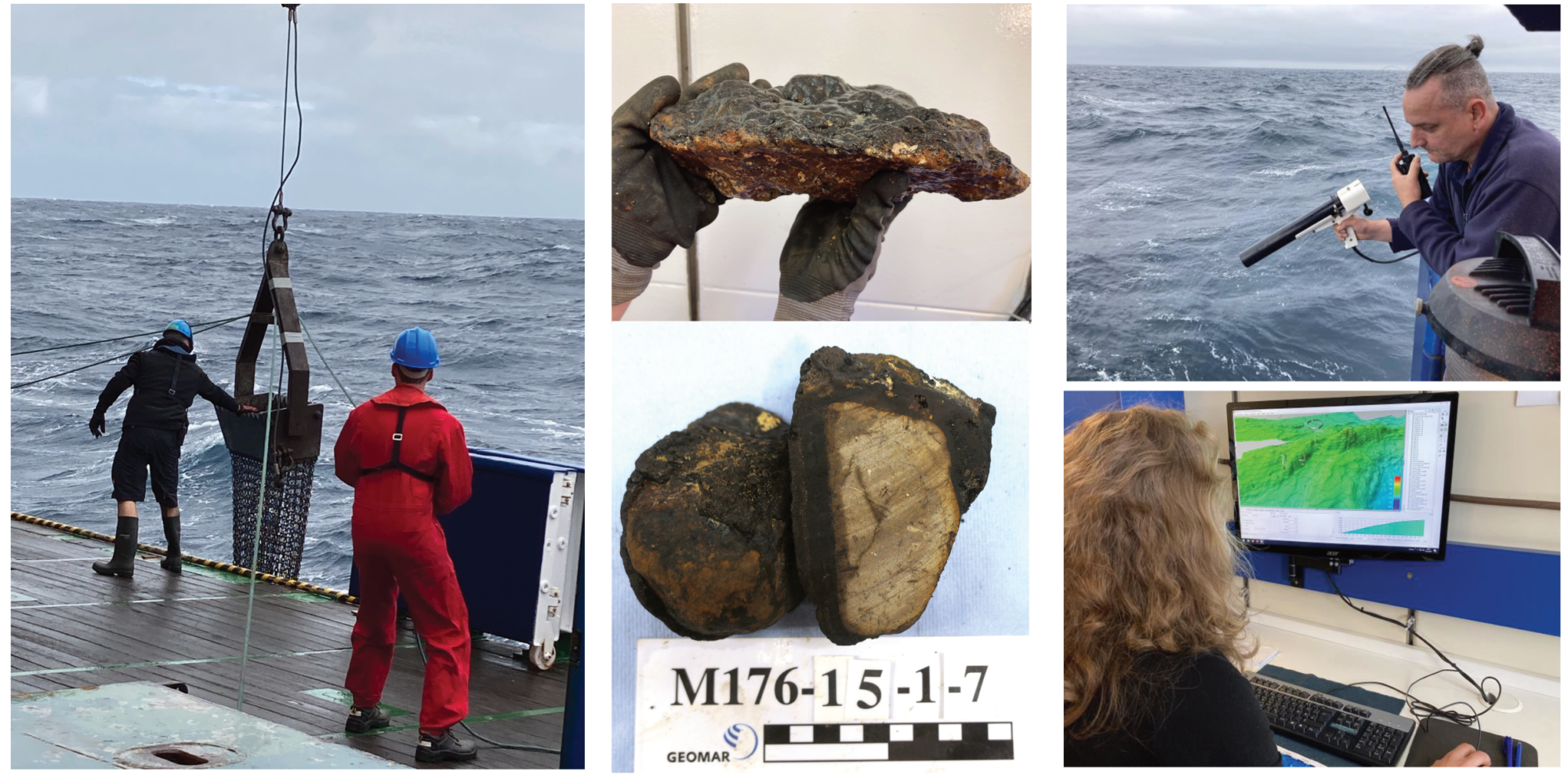
During the expedition, multibeam bathymetric mapping and hard-rock sampling (using chain-bag dredges) of these structures will be carried out. Subsequent geochronological and geochemical analyses of the recovered rock samples in the home laboratories will allow us to test different models for the opening of the Bay of Biscay and the origin of the Azores-Biscay Rise. Evidence for a possible age progression along the ridge (that is, seamount ages changing consistently with plate motion) would support a hotspot origin. Such an age progression could also be used to test the debated hypothesis that the Iberian Plate once drifted independently and to reconstruct its absolute motion prior to its amalgamation with Eurasia.