
Collection(s)
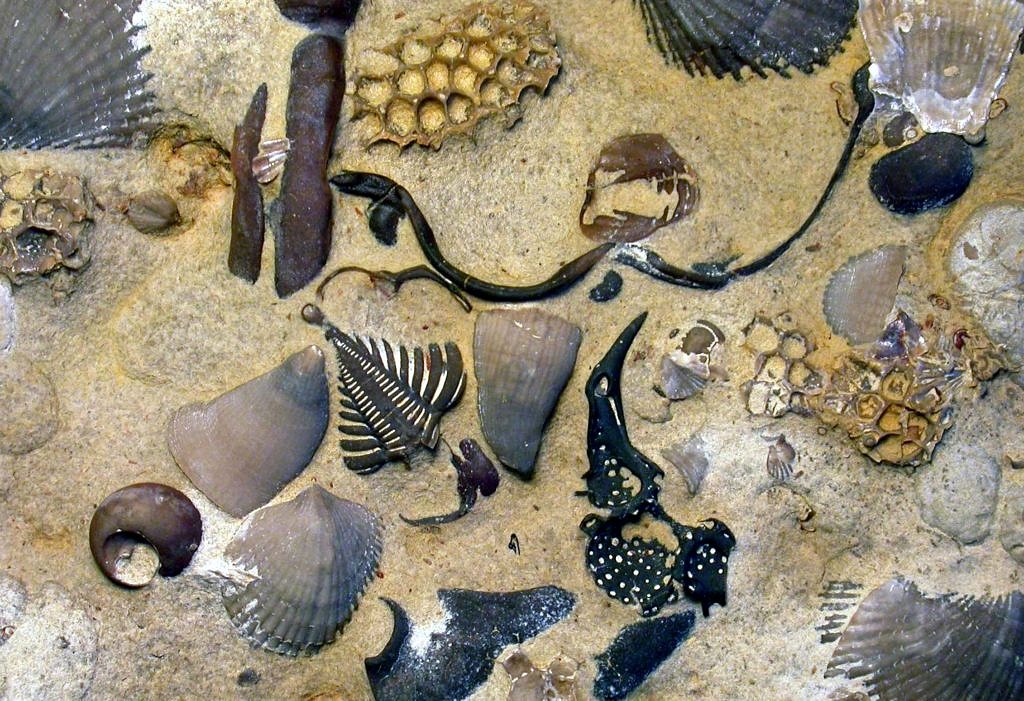
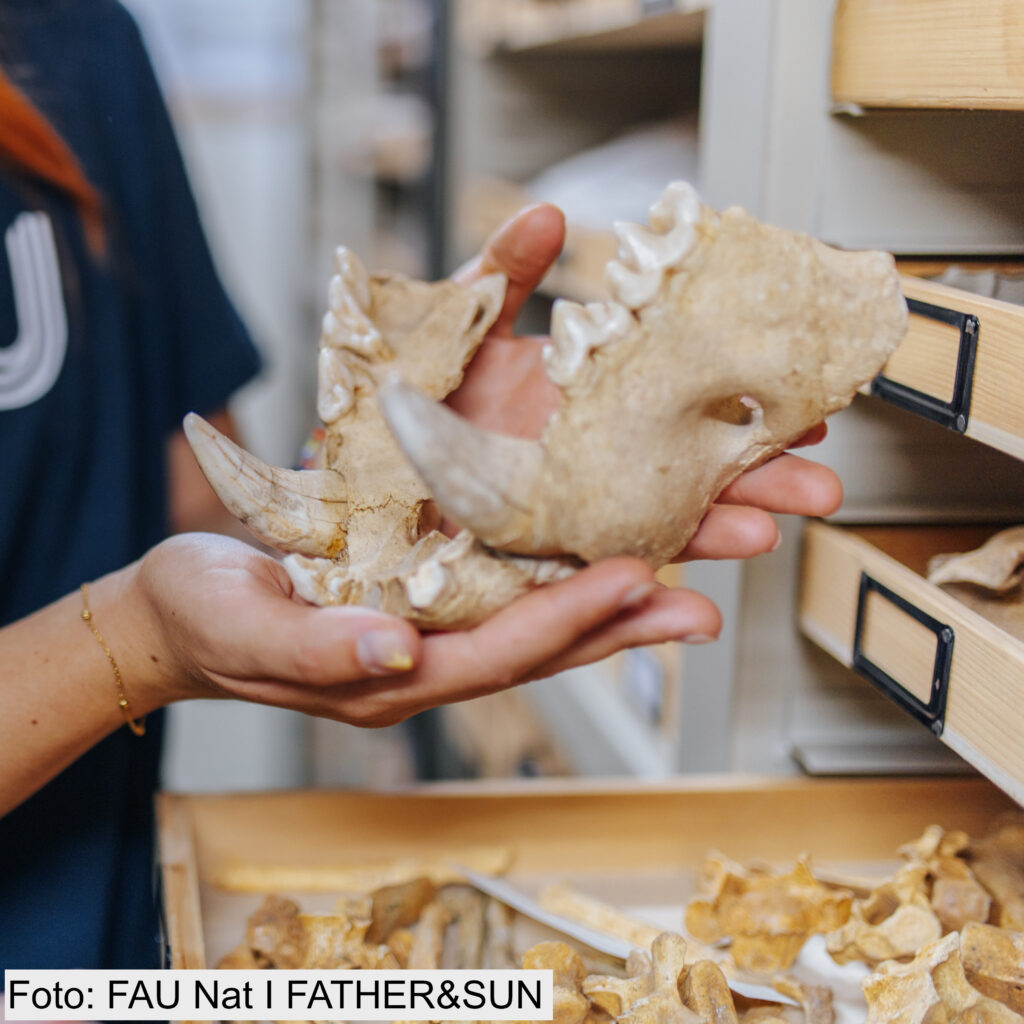
Our paleontological collection comprises ~90,000 objects, mainly collected from the local area. It consists primarily of Jurassic marine fossils and Pleistocene vertebrates from the Franconian cave deposits, with a large part from the excavation at ‘Hunas’. The vertebrate collection is available as an online digital catalogue, which can be searched online. We contribute towards databases such as GeoCASe, GBIF and the PBDB.
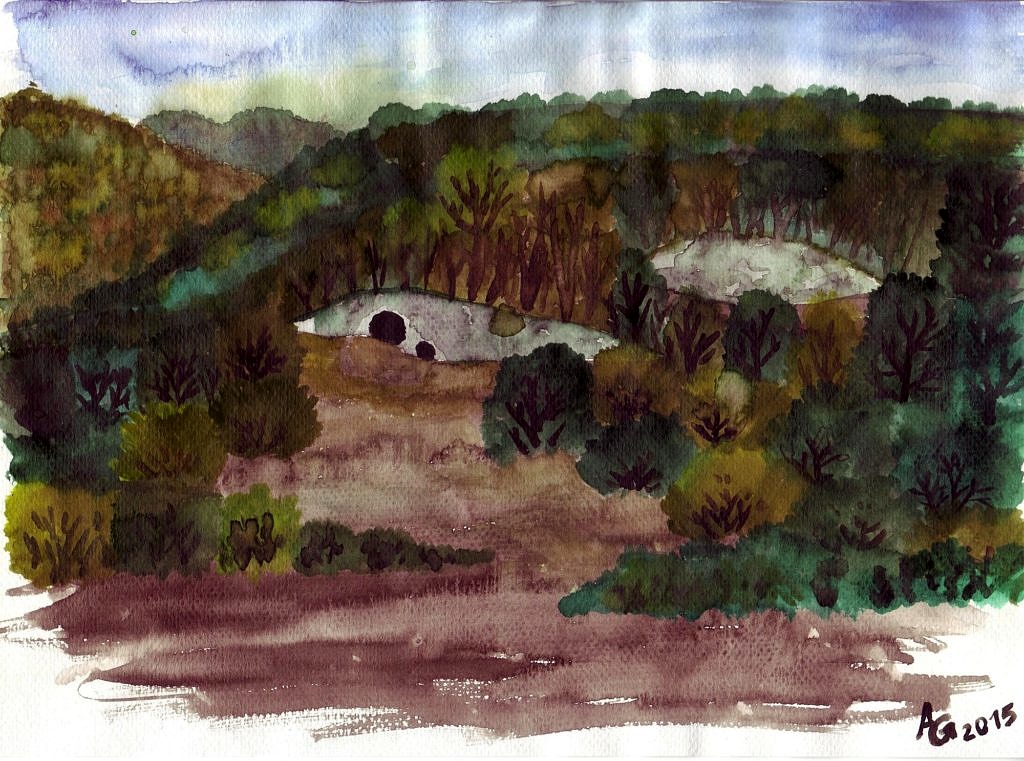
The “Excavation Hunas” – Archaeological and palaeontological research in the “Steinberg-Höhlenruine” near Hunas
Databases
PaleoReefs-Database (PARED) was developed through DFG, VolkswagenStiftung projects to improve understanding of the evolution of biogenic reefs. It contains biological, petrographic and paleogeographic records of more than 4100 Phanerozoic reef systems. The distribution of fossil reef systems is available on 32 paleogeographic maps. The database is in a searchable MySQL format and registered users can enter new data.
Paleobiology Database (PBDB) is an international scientific collaboration, with the aim of collecting fossil data from throughout Earth’s history. Nearly 360 scientists from >130 institutions in ~25 countries are working to document fossil occurrences in their stratigraphic and geological context. The database currently contains more than 1.2 million occurrences of 317,000 taxa. Statistical analysis tools enable the creation of sampling standardized diversity curves and much more. The GeoZentrum Nordbayern is one of the most active contributors of data to this project.
The Ancient Reef Traits Database (ART) is a specimen-based compilation of reef-builder traits, focusing primarily on scleractinian coral. The purpose of this novel database is to better understand the extinctions and evolution of reef-builder taxa. It is getting developed as a part of the DFG project “coralTrace”.
The StabisoDB was created to fulfill the community’s long desire for a relational database to facilitate application of stable isotope data to studies of the Earth system. The database was established by Michael Joachimski and Ethan Grossman.
Software and Extensions

The free and open source R programming and running environment is one of the most widely used tools for statistical data analysis.
Several extension packages were authored and maintained by the staff at the GeoZentrum that are used for geological/paleontoloigcal calculations.

Chronosphere: The in-development framework provides easy access and data provision for scientific analyses that depend on changing data.
A description of the available available data items can be found on the project website. Assets related to the chronosphere can be found on its GitHub Organization page.
The divDyn R package (Diversity Dynamics using Fossil Occurrence Data) implements methods to calculate metrics of diversity, extinction and extinction. It also includes various sampling standardization algorithms. The paper describing the package was published in journal Methods in Ecology and Evolution.

The icosa package (Global Triangular and Penta-Hexagonal Grids Based on Tessellated Icosahedra) implements and allows the use of coarse-scale grids based on tessellated icosahedra.

The rgplates package implements simplified interfaces to the GPlates desktop application and the GPlates web service, which can be used to reconstruct paleogeographic positions of present-day coordinates.
The package is available from the Comprehensive R Archive Network (CRAN) and from GitHub.