
Dr. Paul Sotiriou
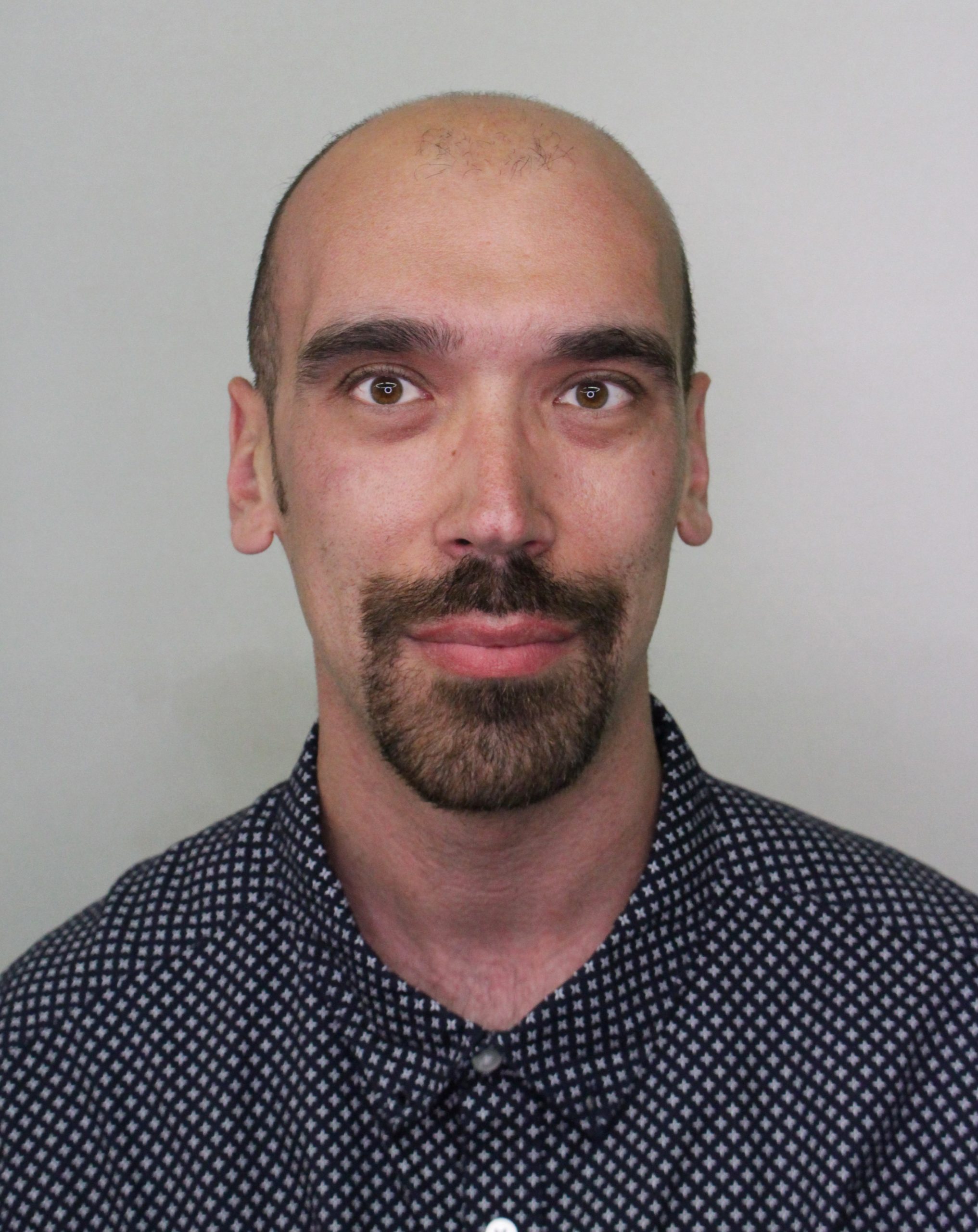
Dr. Paul Sotiriou
Chair of Endogenous Geodynamics
Research associates
Address
Contact
Alexander von Humboldt Foundation Postdoctoral Research Fellow
Tel: +447583777153
Research interests
I am fascinated by igneous petrology, petrography, geochemistry, and mineralogy and what these fields can reveal about the evolution of Earth and the magmas that go on to form such an incredibly wide array of fascinating volcanic and plutonic rocks. I have a great amount of expertise in igneous petrology, petrography, geochemistry, and mineralogy, due to the fact that I have always been interested in these fields and I have chosen to pursue these disciplines throughout my geological career.
I began my career working on crustal layered intrusions and upper mantle rocks in the Troodos ophiolite (BSc dissertation, Kingston University, UK) and layered pegmatites in southern Norway (MSc thesis, University of Exeter, UK). These studies involved investigating the mineralogy, petrology, and mineral geochemistry of these rocks. I have predominantly worked on Archaean anorthosite-bearing layered intrusions and their associated volcanic rocks in order to study their petrogenesis, geochemistry and geodynamic setting through the application of fieldwork, petrography, mineral chemistry, Raman spectroscopy, and whole-rock major and trace element and Sm-Nd and U-Th-Pb isotope geochemistry (PhD thesis, University of Windsor, Canada). Studying the geological processes that operated on the early Earth and comparing these to current geological processes is a particular interest of mine. I am also very interested in studying the petrogenesis of Archaean tonalite-trondhjemite-granodiorite (TTG) batholiths. The application of fieldwork and high-precision modern analytical techniques (e.g., whole-rock radiogenic Sm-Nd and U-Th-Pb and zircon radiogenic Lu-Hf isotopes, zircon U-Pb geochronology, whole-rock major and trace element geochemistry, mineral chemistry) to understanding the petrogenesis of igneous rocks and continental evolution and formation has always been an important aspect of my research. During my research career, I have gained considerable experience of using the SEM, Raman spectrometer, EMPA, XRD and processing and interpreting the resulting data. Over the course of my research, I have also gained considerable experience of processing and interpreting XRF, ICP-MS and TIMS data. Moreover, I have acquired some experience of interpreting zircon Lu-Hf isotope and U-Pb zircon geochronology data. I have also gained experience in preparing sample solutions for ICP-OES and ICP-MS analysis. Constraining the field relationships between igneous rocks is a vital aspect of my research because doing so provides a solid basis for geologically sound interpretations.
Alexander von Humboldt Foundation Postdoctoral Research
The title of my Alexander von Humboldt Foundation postdoctoral research is: Do Mesozoic subduction-derived analogues of Archaean anorthosite-bearing layered intrusions indicate that plate tectonics operated in the Archaean? My research partly involves comparing the petrography, mineral chemistry, geochemistry and field relationships of anorthosite-bearing layered intrusions in Mesozoic-Cenozoic island arcs (e.g., Solomon, Kohistan) with those of Archaean anorthosite-bearing layered intrusions to constrain whether plate tectonics operated in the Archaean. These Mesozoic-Cenozoic anorthosite-bearing layered intrusions are also being studied to better ascertain the processes that occur in island arcs. I am currently working on ultramafic to felsic plutonic rocks from the Pliocene-Pleistocene Koloula Igneous Complex (Solomon Islands) and Cretaceous-Miocene Kohistan Batholith (Pakistan) to determine their petrogenesis and implications for arc evolution. Furthermore, ultramafic to felsic dykes and mafic to intermediate volcanic rocks from the Kohistan arc are also currently being investigated for these purposes.
Current research
I am currently working as a postdoctoral researcher (funded by BMBF/DFG) at the GZN. My current research at GZN is a continuation of the work I began during my Alexander von Humboldt Foundation postdoctoral fellowship. Studying ultramafic to felsic plutonic rocks in the active Solomon and fossil Kohistan–Ladakh arcs has led me to investigate the growth and evolution of arcs more broadly. I focus on the relationships between crustal thickness, longevity, chemical structure, lithostratigraphy, and the composition of arc crust, and on how these characteristics have changed throughout Earth’s history.
Publications
Polat, A., Frei, R., Deng, H., Yang, X.-M., Sotiriou, P., 2022. Anatomy of a Neoarchaean continental arc-backarc system in the Cross Lake-Pipestone Lake region, southwestern Superior Province, Canada. Precambrian Research 370, 106556.
https://doi.org/10.1016/j.precamres.2021.106556.
Sotiriou, P., Polat, A., Windley, B.F., Kusky, T., 2022. Temporal variations in the incompatible trace element characteristics of Archean volcanic rocks: Implications for tectonic processes in the early Earth. Precambrian Research 368, 106487. https://doi.org/10.1016/j.precamres.2021.106487.
Zhu, C., Wang, G., Leloup, P.H., Cao, K., Mahéo, G., Chen, Y., Zhang, P., Shen, T., Wu, G., Sotiriou, P., Wu, B., 2021. Role of the Early Miocene Jinhe-Qinghe Thrust Belt in the building of the Southeastern Tibetan Plateau topography. Tectonophysics 811, 228871, http://doi.org/10.1016/j.tecto.2021.228871.
Chen, Y., Wang, G., Shen, T., Zhang, P., Sotiriou, P., Zhu, C., 2020. Tectono-geomorphic evolution of Harlik Mountain in the Eastern Tian Shan, insight from thermochronological data and geomorphic analysis. Geological Journal, https://doi.org/10.1002/gj.3951.
Sotiriou, P., Polat, A., 2020. Comparisons between Tethyan anorthosite-bearing ophiolites and Archean anorthosite-bearing layered intrusions: Implications for Archean geodynamic processes. Tectonics, http://doi:10.1029/2020TC006096.
Sotiriou, P., Polat, A., Frei, R., Yang, X.M., van Vessem, J., 2020. Evidence for Neoarchean hydrous arc magmatism, the anorthosite-bearing Mayville Intrusion, western Superior Province, Canada. Lithos 362-363, 105482, https://doi.org/10.1016/j.lithos.2020.105482.
Shen, T., Chen, Y., Wang, G., Ji, J., Wang, Y., Zhang, P., Sotiriou, P., Guo, R., Xu, Z., 2019. Detrital zircon geochronology analysis of the Late Mesozoic deposition in the Turpan‐Hami basin: Implications for the uplift history of the Eastern Tian Shan, northwestern China. Terra Nova 32(2), 166-178.
Chen, X., Liang, H., Zhang, J., Sotiriou, P., Huang, W., Ren, L., Zhang, L., Zou, Y., 2019. Geochemical characteristics and magma fertility for the Jurassic arc rocks in the Gangdese belt, Tibet. Ore Geology Reviews 115, 103169. https://doi.org/10.1016/j.oregeorev.2019.103169.
Sotiriou, P., Polat, A., Frei, R., Yang, X.-M., van Vessem, J., 2019. A back-arc origin for the Neoarchean megacrystic anorthosite-bearing Bird River Sill and the associated greenstone belt, Bird River subprovince, Western Superior Province, Manitoba, Canada. International Journal of Earth Sciences 108, 2177-2207.
Sotiriou, P., Polat, A., Frei, R., 2019. Petrogenesis and geodynamic setting of the Neoarchaean Haines Gabbroic Complex and Shebandowan greenstone belt, Southwestern Superior Province, Ontario, Canada. Lithos 324-325, 1-19.
Chen, X., Liang, H., Richards, J.P., Huang, W., Zhang, J., Wu, J., Sotiriou, P., 2018. Age and granite association of skarn W mineralization at Niutangjie district, South China Block. Ore Geology Reviews 102, 268-283.