Pal

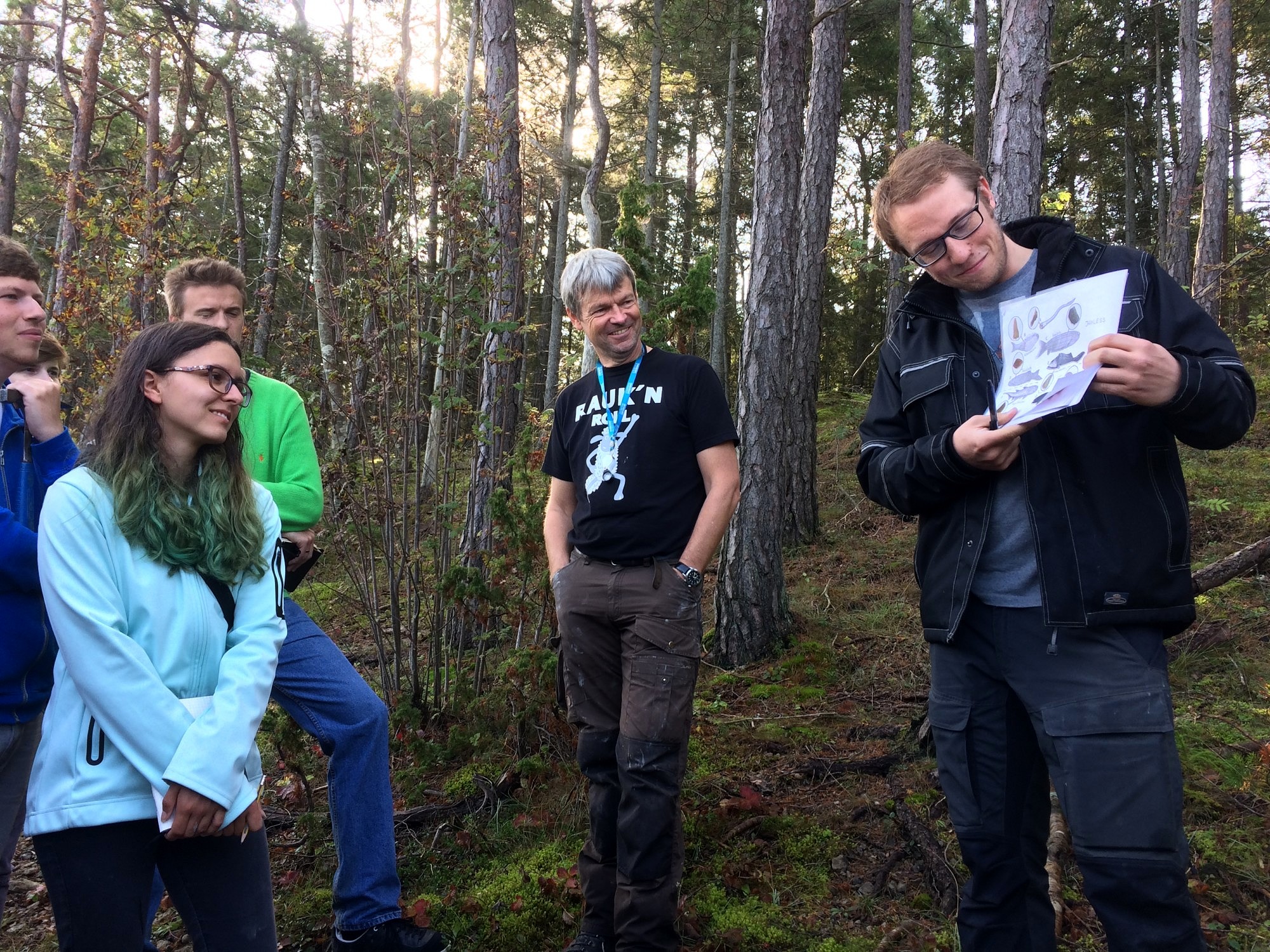
Montag, 29.01.2018, 17:15, Hörsaal Geologie. Dr.Oskar Bremer, Uppsala University, "Early fishes, old bones". The majority of vertebrates today are represented by those with jaws (gnathostomes) including chondrichthyans (sharks, rays, and ratfishes) and osteichthyans (bony fishes and tetrapods), while jawless vertebrates are only represented by the cyclostomes (hagfishes and lampreys). This division was largely established in the Devonian Period (419–359 mya), often called the “Age of Fishes”, when gnathostomes increased in abundance and diversified to fill a wide variety of trophic roles.

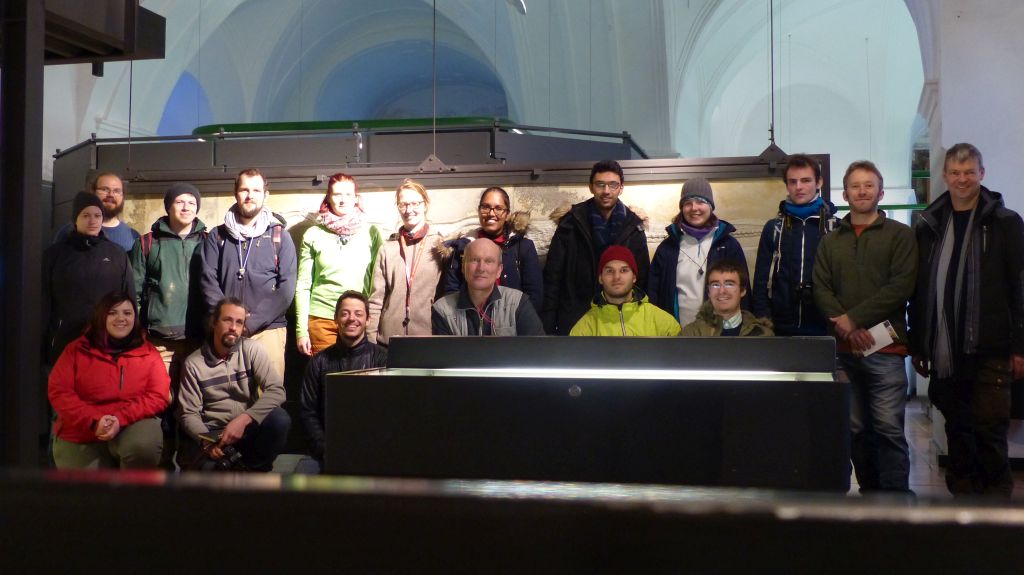
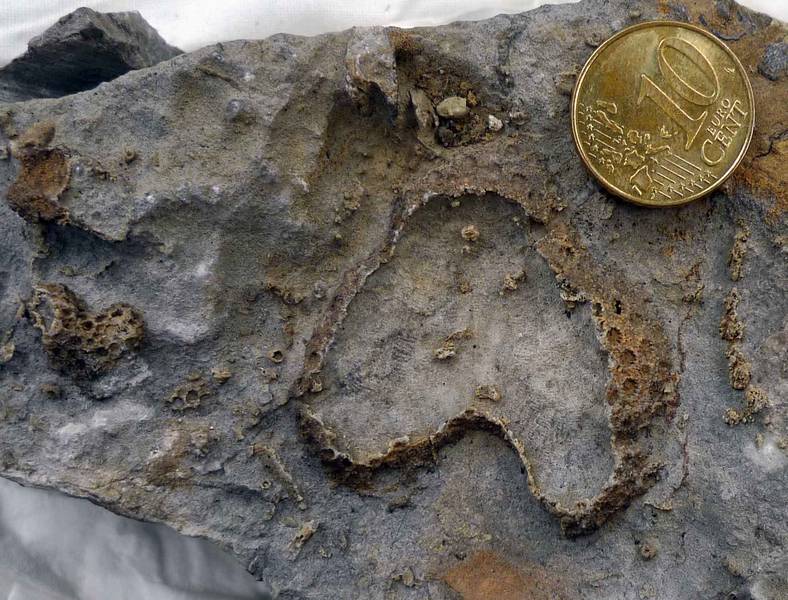
Our group had on Friday (08/12/2017) an exciting field trip to the famous lithographic limestones of Solnhofen including a visit to one of coral reefs protecting the lagoon and the beautiful Eichstätt museum. For more info on our Master Programme please visit International Master in Geosciences: Pa...

We offer a PhD position for a motivated and creative PhD candidate who wants to work at the forefront of palaeobiology integrating fossil data analyses and modelling approaches. The position is available from March 2018 for three years with salary defined according to the German E13/2 TV-L scale. ...

Significant events during the transition from an icehouse to a greenhouse world in the late Paleozoic ice age have not received the attention they deserve. The Kungurian stage marks a critical period of significant reduction in atmospheric carbon dioxide concentrations with noticeable changes in ca...

Dr. Alexandra Oppelt from Trinity College Dublin will be visiting the GZN from October 31 to November 4, 2016. Together with Matthias López Correa, she will be evaluating geochemical data from deep-sea corals in the North Atlantic. The samples were collected during two ship expeditions with the RV ...